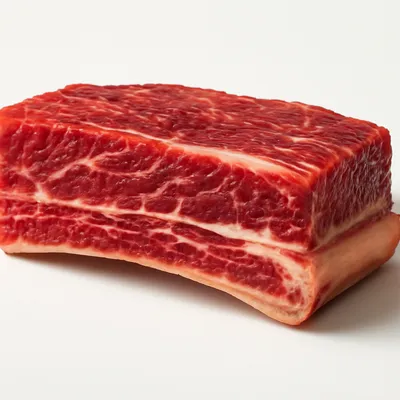
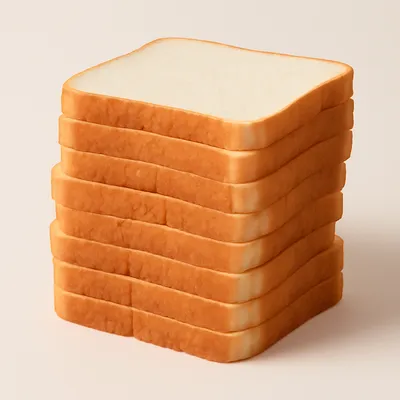
The central-Texas smoked beef plate rib — the huge, single-bone 'dino rib' cut from rib bones six through eight of the short plate, where the meat sits in a thick slab entirely on top of the bone. Seasoned only with coarse salt and black pepper and smoked low over post oak for many hours, it renders to a spoon-tender, heavily marbled slab under a black peppery bark. It is plated as one massive bone per person and eaten with white bread, pickles, and raw onion, in the same market-style manner as Texas brisket.


The beef plate rib is central Texas's other great smoked-beef dish alongside brisket, descending from the same German and Czech meat-market tradition of the Lockhart-Taylor-Elgin region. Early Texas ranchers had little access to spices and leaned on coarse salt, black pepper, and the beef itself — the minimalist seasoning that became the regional hallmark. The plate rib was long a staple at Louie Mueller Barbecue in Taylor, whose massive ribs are often cited as a canonical form; widely shared photographs of these ribs in the early 2010s helped ignite the international fascination with Texas barbecue.
A single bone carries a slab two to three fingers thick; the bark is near-black, crusted with cracked pepper, crackling at the edge. Beneath it the meat is so rendered it can be scooped with a spoon, the fat between the muscle fibers melted to what pitmasters call 'beef butter.' It pulls cleanly off the bone in a fatty, savory mouthful with a pink smoke ring under the crust. No sauce — coarse salt, black pepper, post-oak smoke, and beef, full stop. Rich enough that one bone is a meal.
Plate ribs are heavily marbled with thick collagen seams between meat and bone; smoked at 250-275°F (121-135°C) for roughly eight to ten hours, that collagen melts to gelatine at internal temperatures past about 200°F (93°C), giving the spoon-tender, gelatinous texture. Like brisket they push through a 'stall' around 160°F (71°C), when surface evaporation cools the meat and the temperature plateaus before climbing again. The slab is taken to about 203°F (95°C), probing like warm butter. Post oak burns clean and mild, so the flavor reads as beef and pepper rather than heavy woodsmoke, and the salt-pepper crust Maillard-browns into bark.
Variations
Central Texas plate ribs are salt-and-pepper over post oak (Louie Mueller in Taylor, and others); plate ribs (IMPS 123A, bones six to eight) are the big single-bone slab, distinct from the smaller, four-bone chuck short rib (IMPS 130) that is more often braised. Beyond Texas, beef short ribs are commonly braised — as in a red-wine pot braise — rather than smoked, and Korean galbi grills thin flanken-cut short ribs.
On the Palate
Where Texas Beef Short Rib sits in the American flavor cloud
Ingredients
Serves 4How it's made
6 steps · 20 min
- 115 min
Trim a plate of beef short ribs of excess surface fat and the membrane on the bone side.
- 210 min
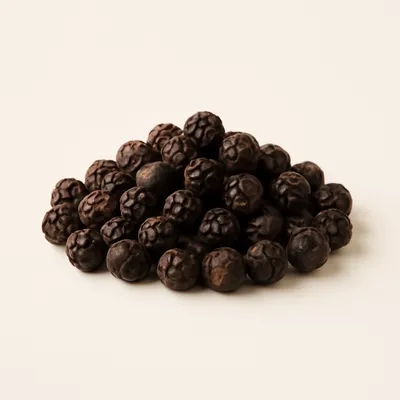
Season heavily on all sides with a roughly equal mix of coarse salt and cracked black pepper.
Watch outSeason heavily — a thick, even coat of coarse salt and pepper on every face is what builds the dark bark; a light hand leaves it pale.
- 320 min
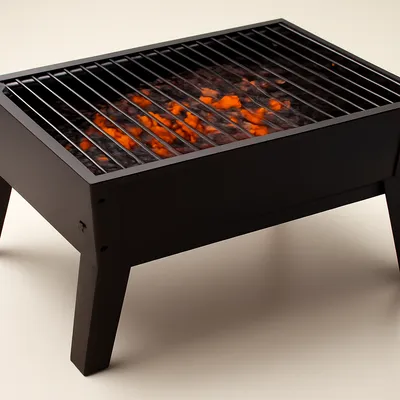
Bring a smoker to 250-275°F (121-135°C) using post oak, and set the ribs bone-side down.
- 4540 min
Smoke undisturbed through the stall, spritzing occasionally if the bark dries, for about eight to ten hours.
Watch outRide out the stall without panicking — the temperature stalls for hours near 71 as the surface sweats; hold steady heat and spritz only if the bark dries, don't crank the fire.
- 510 min
Pull the ribs at an internal temperature near 203°F (95°C), when a probe slides in like warm butter.
Watch outGo by feel, not the clock — the ribs are done when a probe slides in like warm butter around 95, meaning the collagen has melted to gelatin.
- 630 min
Rest, loosely tented, for at least 30 minutes, then serve whole on the bone with white bread, pickles, and onion.
Archive tool suggestions — not reviewed
These legacy suggestions have not been evidence-reviewed and are not presented as required tools.