The barbecue of the western, Piedmont half of North Carolina, centered on the town of Lexington. Unlike the eastern Carolina tradition, which smokes the whole hog and dresses it in a thin vinegar-and-pepper sauce, Lexington cooks only the pork shoulder over hickory, then chop or coarsely pull it and dress it with a thin red 'dip' of vinegar, ketchup, sugar, and pepper. It is served with hush puppies and a tomato-tinged red slaw made from the same dip rather than the white, mayonnaise-based slaw of the east.




Lexington-style barbecue grew out of the early 20th-century Piedmont, where pitmasters of German descent began cooking pork shoulder over hickory and adding ketchup to the older vinegar base. Barbecue historian John Shelton Reed dates the first commercial joints to around 1919 in Lexington and nearby Salisbury, with Sid Weaver and George Ridenhour and, separately, Jess Swicegood among the earliest. The style was carried forward by Warner Stamey, considered the father of Lexington barbecue, and by his protege Wayne Monk, whose Lexington Barbecue (opened 1962) became the tradition's most celebrated restaurant. Lexington has billed itself the Barbecue Capital of the world and holds an annual October festival.
The chopped pork is moist and a little chewy from the shoulder's worked muscle, threaded with darker, smoke-edged bark from the outside of the roast — locals can order it 'outside brown' to get more of that crusty chopped bark. The red dip reads sour and lightly sweet at once, sharper than a sauced rib and far thinner, just coating the meat rather than drowning it. The red slaw on top is cold, crunchy, and tangy, echoing the dip. It eats as a sandwich on a soft bun or off a tray with hush puppies, the vinegar cutting the pork fat at every bite.
Pork shoulder is rich in collagen and intramuscular fat; smoked low at 225-250°F (107-121°C) for roughly eight to ten hours, the collagen converts to gelatine at internal temperatures above about 195°F (90°C), which is what lets a tough shoulder pull or chop tender and moist. Hickory smoke supplies a heavier, sweeter woodsmoke than the post oak of Texas. The vinegar dip works as a finishing seasoning rather than a glaze: its acetic acid cuts the rendered pork fat and brightens the smoked, savory amino-acid notes, while the ketchup adds just enough body and sweetness to mark the Piedmont style apart from the clear vinegar-pepper sauce of the east.
Variations
Eastern North Carolina smokes the whole hog and dresses it with a clear vinegar-and-pepper sauce and white slaw; South Carolina's Midlands favor a yellow mustard sauce on pulled pork; Lexington (Piedmont) is shoulder-only with the red ketchup-vinegar dip and red slaw. Within Lexington, 'outside brown' denotes the crustier chopped bark, and many trays come with the dip on the side for adjusting.
On the Palate
Where Lexington-Style Pulled Pork sits in the American flavor cloud
Ingredients
Serves 6

How it's made
6 steps · 20 min
- 110 min
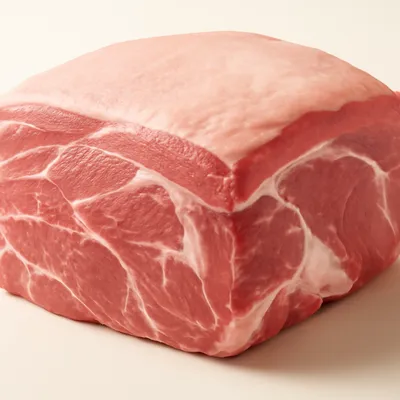
Season a bone-in pork shoulder generously with salt and black pepper and let it sit while the smoker heats.
- 220 min
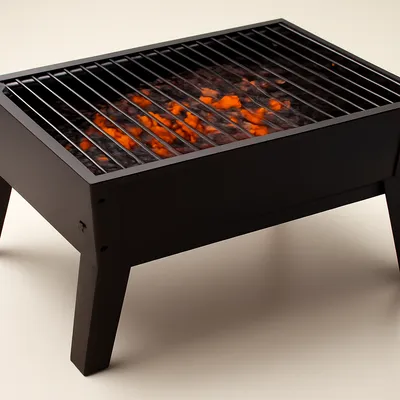
Bring a smoker to 225-250°F (107-121°C) using hickory wood.
- 3540 min
Smoke the shoulder fat-side up for about eight to ten hours, until the internal temperature reaches roughly 195-203°F (90-95°C).
Watch outDon't chase the clock — pull it only when the center hits about 90 to 95 degrees and a probe slides in like butter; that's when the collagen has turned to gelatin and it'll pull apart.
- 410 min
Whisk the red dip from cider vinegar, ketchup, sugar, salt, black pepper, and red pepper flakes.
- 535 min
Rest the shoulder 30 minutes, then chop or hand-pull the meat, including the dark outside bark.
Watch outRest a full 30 minutes before pulling — chop it straight off the smoker and the juices run out onto the board instead of staying in the meat.
- 615 min
Toss the meat with enough red dip to moisten, dress finely shredded cabbage with more dip for red slaw, and serve together.
Watch outFold in the dip a little at a time until the meat is just glossy and moist — drown it and the bark goes soggy and you lose the smoky bite.
Archive tool suggestions — not reviewed
These legacy suggestions have not been evidence-reviewed and are not presented as required tools.