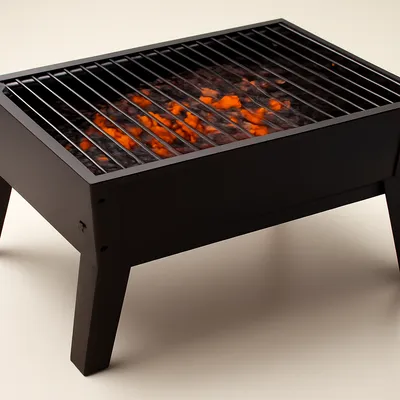
German-Wisconsin pork bratwurst par-poached in beer with onions, then finished on a charcoal grill until blistered, served on a hard roll with sharp brown mustard and sauerkraut.





Bratwurst arrived in Wisconsin with the wave of German immigrants in the mid-19th century — Wisconsin still has the highest German ancestry percentage of any U.S. state. Sheboygan, on Lake Michigan, became the bratwurst capital, with butcher shops like Miesfeld's and Johnsonville (later a national brand) emerging from local German charcuterie. The beer-bath finish is a Wisconsin invention — there's no German precedent for it. It evolved from tailgate-grill culture where the Sheboygan move of holding par-grilled brats in beer-onion bath kept them juicy through a long football game.
Sheboygan invention — the beer-and-onion bath has no German precedent. It evolved from Packers tailgate culture, where par-poaching at sub-82°C holds the casing intact while the grill takes the inside to 71°C. Single-grill brats go leather in 20 minutes.
The casing snaps audibly on first bite, then the bratwurst forcemeat is dense, finely emulsified, with caraway and white pepper, no fennel — this is a German sausage, not Italian. Beer-poaching plumps it; charcoal gives the casing its bitter-sweet char. The hard roll is the right amount of jaw work. The brown mustard cuts the fat sharply; the sauerkraut adds a vinegar lift; the soft beery onions tie everything together. Eaten outdoors during a Packers tailgate, in any weather including snow.
Par-poaching at sub-boil (under 82°C / 180°F) holds the casing intact while bringing the interior to a safe-ish 60°C — the hard finish on the grill takes it the rest of the way to 71°C and adds Maillard browning. Going straight from raw to grill is what produces a brat with a charred shell and a still-pink center, or worse, a burst casing. The double-bath is the secret: Sheboygan brats stay juicy hours into a tailgate, while a single-grill brat cools to leather in 20 minutes.
Variations
Sheboygan-style (double-bath, on hard roll); Miesfeld's Market (Sheboygan butcher); Johnsonville (national brand from Wisconsin); Usinger's of Milwaukee; the «Wisconsin double brat» (two on one bun, with sauerkraut).
On the Palate
Where Wisconsin Bratwurst (Beer Brat) sits in the American flavor cloud
Ingredients
Serves 4How it's made
5 steps · 25 min active + 10 min waiting
- 15 min
In a wide pan, combine 4 fresh raw bratwurst (Sheboygan-style, ~120g each), 2 thinly sliced yellow onions, 4 cans (1.4L) of cheap American lager (Pabst, Old Style, or Miller), 2 tbsp butter, 1 tsp black peppercorns. Bring to a tremble — never a boil.
Watch outBoiling will burst the casings — you want 80°C / 175°F surface, no rolling bubbles.
- 212 min
Hold at the simmer 12 minutes — internal temperature 60°C / 140°F. The brats will firm up and turn pale grey. They are now par-cooked. Remove brats; keep the onion-beer mixture warm on the side.
- 38 min
Heat a charcoal or gas grill to medium-hot direct heat. Grill the brats 3-4 minutes per side, turning once — the casings should blister, brown, and crackle. Internal 71°C / 160°F.
Watch outDon't pierce — every prick releases the trapped juice that's keeping it moist.
- 45 min
Return the grilled brats to the warm beer-onion bath off heat for 5 minutes — the casing reabsorbs flavor and the onions sweeten further. This double-bath is the Sheboygan move.
- 53 min
Place each brat in a sturdy hard roll (a Sheboygan hard roll, or a Kaiser if unavailable — a soft hot dog bun is wrong). Top with a heap of the beer-cooked onions, a spoon of stone-ground brown mustard, and 2 tbsp sauerkraut. Serve with German potato salad on the side.
Watch outThe roll has to fight back — soft buns dissolve in the onion juice.
Archive tool suggestions — not reviewed
These legacy suggestions have not been evidence-reviewed and are not presented as required tools.