A New England breakfast hash of diced corned beef, potato, and beets, fried in a heavy skillet until a deep, crisp crust forms underneath. The beets are what set it apart from plain corned-beef hash — they stain the whole mixture a mottled red, the 'red flannel' of the name. It is the classic next-day use for the leftovers of a New England boiled dinner, often topped with a fried or poached egg and served with toast.
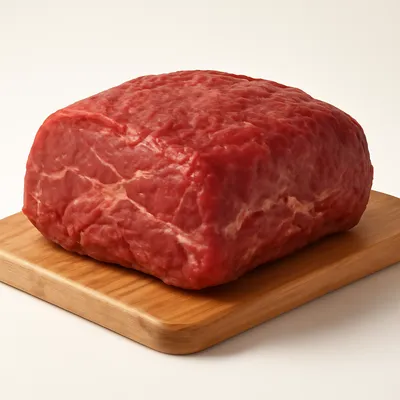





Red flannel hash is the thrift dish of the New England boiled dinner — corned beef simmered with cabbage, potatoes, and root vegetables including beets — whose leftovers were chopped and fried the next morning. The earliest references place it in New England around the late 18th and 19th centuries, though its precise origin is unrecorded. The name is usually traced to a folk story of a New England lumberman who looked at his chopped breakfast and said it resembled his red flannel shirt; a competing tall tale credits Vermont's Green Mountain Boys, but neither is documented and both are best read as folklore.
The pleasure is in the contrast: a dark, crackling crust scraped up from the bottom of the pan against a soft, steamy interior. The beets bring an earthy sweetness that plays against the salt of the corned beef, and the whole thing is stained a deep magenta-red. With a runny egg broken over the top, the yolk loosens the hash into something rich and savory. A good hash is crisp in patches, not stirred to mush; the cook's job is to press it down and leave it alone until the crust sets.
The crust is built by the Maillard reaction and starch browning. Diced cooked potato pressed flat against a hot, fat-filmed skillet loses surface moisture and its starches and the meat's proteins brown into a dark, crisp layer. The trick is restraint: pressing the hash down and letting it sit undisturbed lets that crust form, where constant stirring would only steam it grey. Beets, already cooked soft from the boiled dinner, need only to warm through and bleed their pigment — betalains — through the mix, which is what dyes the hash red.
Variations
The everyday sibling is plain corned-beef hash, identical but without beets and so not red. Some New England cooks bind the hash with a splash of cream or leftover broth for a softer, less crusted version, while diners favor the dry, hard-fried style. The dish leans entirely on the leftovers of a New England boiled dinner; where no beets were boiled, the hash simply stays brown. It is closely related to the broader American diner tradition of corned-beef hash served under eggs.
On the Palate
Where Red Flannel Hash sits in the American flavor cloud
Ingredients
Serves 4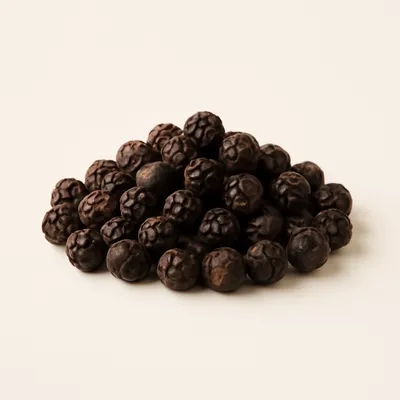
How it's made
7 steps · 15 min
- 16 min
Dice 2 cups cooked corned beef, 2 cups cooked potato, and 1 cup cooked beets into small, even cubes.
- 25 min
Finely chop 1 onion and soften it in 3 tablespoons butter or beef fat in a heavy skillet over medium heat.
- 32 min
Add the corned beef, potato, and beets and season with black pepper; the beef supplies most of the salt.
- 48 min
Press the mixture down firmly into an even layer and let it cook undisturbed 6-8 minutes until a crust forms underneath.
Watch outPress it flat and leave it completely alone for 6 to 8 minutes — poke or stir and it never crusts, it just steams grey.
- 58 min
Turn in sections to bring the crust up, press down again, and fry another 6-8 minutes.
Watch outTurn in sections rather than tossing, so the dark crust comes up in slabs — that browned layer is the whole point of the hash.
- 65 min
Meanwhile fry or poach 4 eggs.
- 72 min
Plate the hash crust-side up, top each portion with an egg, and serve with toast.
Archive tool suggestions — not reviewed
These legacy suggestions have not been evidence-reviewed and are not presented as required tools.