
A dark amber syrup boiled down from the pressed juice of sweet sorghum cane, long the everyday sweetener of the Appalachian mountains. The tall cane stalks are crushed for their green juice, which is then cooked for hours in a long open pan, skimmed constantly, until roughly ten parts juice reduce to one of syrup. It is poured over hot biscuits and cornbread, stirred into stack-cake batter, and used wherever sugar might be. Its flavor is deeper and more tart than cane molasses or maple.



Sweet sorghum, a tall grass grown for its sugary stalk juice, came into wide cultivation in the United States in the nineteenth century and took firm root in Appalachia, where cane sugar was expensive and hard to come by. For generations it was the primary sweetener of the rural South, holding that place until cheap refined sugar spread after the Second World War. Crucially, sorghum syrup is not molasses: true molasses is a byproduct of refining tropical sugarcane, while sorghum is the cooked-down juice of a different, frost-tolerant grass, with its own sharper taste. Fall syrup-making was a communal event much like hog-killing — neighbors shared the cane mill and cook pan and gathered to work and socialize.
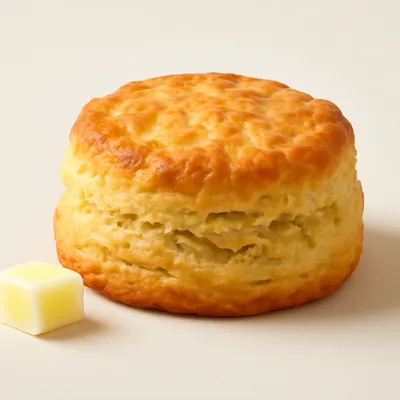
Pourable but viscous, the color of dark honey shading toward brown, with a glossy sheen. The taste is sweet but layered — earthy and grassy underneath, with a tangy, almost sour edge and a faint mineral bitterness that keeps it from cloying. It is noticeably more assertive than maple syrup and sharper than sugarcane molasses. On a hot buttered biscuit it melts into the crumb, sweet and tart at once.
Syrup-making is controlled evaporation: the thin, sugary cane juice is boiled in a shallow open pan with huge surface area so water flashes off fast while the sugars concentrate. Constant skimming removes the green plant froth and impurities that rise, keeping the syrup clear and clean-tasting. The ratio runs about ten gallons of juice to one of finished syrup, and the cook must pull it at exactly the right density — too thin and it sours or ferments, too far and the sugars scorch and turn bitter. Timing is judged by sheeting off a paddle and by color, a skilled and watchful job.
Variations
Pure sorghum is graded by color and clarity, from pale early-season syrup to darker, stronger late batches. It substitutes for molasses or sugar in gingerbread, baked beans, barbecue sauce, and especially apple stack cake, though its tartness shifts the result. It is also eaten plainest of all — simply poured over biscuits, cornbread, or pancakes, sometimes whipped together with softened butter into 'sorghum butter' for spreading.
On the Palate
Where Sorghum Syrup sits in the American flavor cloud
Ingredients
Serves 40How it's made
8 steps · 8 hours
- 130 min
Harvest the sweet sorghum cane and strip off the leaves and seed heads.
- 240 min
Press the stalks through a cane mill to extract the green juice, then strain it.
- 310 min
Pour the juice into a wide, shallow evaporating pan set over a steady, even fire.
- 420 min
Bring to a gentle boil and skim off the rising green froth and impurities continuously.
Watch outSkim off the rising green froth continuously as it boils — this is what keeps the syrup clear and clean-tasting.
- 5300 min
Keep the juice moving and the heat even, never letting it scorch, as it slowly thickens and darkens over several hours.
- 610 min
Watch the color and how the syrup sheets off a paddle to judge doneness, at roughly a ten-to-one reduction.
Watch outJudge doneness by color and how the syrup sheets off the paddle at about a ten-to-one reduction — too thin it ferments, too far it scorches bitter.
- 72 min
Pull the finished syrup from the heat the moment it reaches the right density.
- 810 min
Skim a final time, then strain and pour the hot syrup into clean jars to seal.
Archive tool suggestions — not reviewed
These legacy suggestions have not been evidence-reviewed and are not presented as required tools.



