
A football-shaped cured pork product — chopped fatty pork, garlic, salt, and pepper packed into a pig's stomach (or large casing), pressed under weight for weeks, cold-smoked, and aged 2-3 months until firm and intensely savory. Lithuania's EU-protected cured meat (a Traditional Speciality Guaranteed); sliced paper-thin like prosciutto, eaten with rye bread and beer.




Skilandis traces to at least the 16th century in Lithuanian Grand Duchy household-curing tradition (the word appears in Grand Duchy documents from the 16th-18th centuries) — every farm slaughtered a pig in late November, with skilandis being one of the long-aged products that fed the family through the year. It is protected by the EU not as a Protected Designation of Origin but as a Traditional Speciality Guaranteed (TSG), registered as 'Lietuviškas skilandis' by Commission Implementing Regulation (EU) 2016/657 of 27 April 2016 (the name was changed from the bare 'Skilandis' after a national opposition procedure). The dish lost ground during Soviet collectivization but artisanal producers (especially in Aukštaitija) have revived it. Industrial versions exist but lack the depth of aged farmhouse skilandis.
Paper-thin slice is mahogany-red with white fat marbling visible — sea-salt and slow-cured pork concentrated into a dense, deeply flavored slice that melts on the tongue. Garlic hits second, smoke third, pepper as a backbone. Spread on dark rye bread with butter, the smoke and salt absorb into the crumb. Bite of raw onion follows — pure cure-tradition Lithuanian table.
Long aging is the food-science key: enzymes naturally present in pork muscle break down proteins into shorter, more umami amino acids over 2-3 months. Curing salt (sodium nitrite) is non-negotiable for safety — it prevents Clostridium botulinum growth during the long room-temp aging. The pig's stomach casing is permeable to smoke and moisture but contains the meat — this is why the shape and casing matter for the final flavor profile.
Variations
Aukštaitija-style is the strongest-smoked variant. Suvalkija version uses more juniper berry. Modern artisanal producers (Tikra Mėsa, Lukšiai) offer different aging periods (3, 6, 9 months) at different price points. Diaspora kitchens often substitute soppressata or other dry-cured sausages where skilandis is unavailable.
On the Palate
Where Skilandis sits in the Lithuanian flavor cloud
Ingredients
Serves 16

How it's made
10 steps · 1 hour 30 min active + 2 days 22 hours 30 min waiting
- 15 min
NOTE: This is an artisanal-curing recipe. Read carefully; food-safety requires precise salt ratios and proper aging environment (0-4°C with controlled humidity). Below is a traditional approach; first-timers should consult a curing-meat specialist.
- 222 min
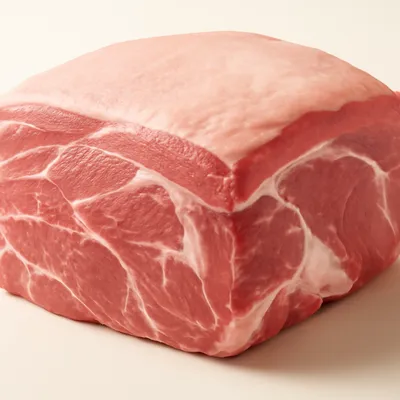
Trim 1.5 kg pork shoulder of any sinew. Cut 70% lean and 30% pork fat into 8 mm cubes (hand-chop, don't grind).
- 38 min
Combine cubed meat with 50 g sea salt (3.3%), 3 g curing salt (Insta Cure #2 — essential for food safety in long-aged products), 15 g black pepper, 10 cloves garlic minced, 5 g sugar.
- 41445 min
Mix vigorously 5 min until sticky and uniform. Refrigerate 24 hours covered.
- 525 min
Stuff into a thoroughly cleaned natural pig's stomach (or large beef bung casing). Pack tight, eliminating all air pockets. Tie off with butcher twine.
Watch outPack the casing tight with zero air pockets — any trapped air is where the cure fails and spoilage starts over the long aging.
- 610080 min
Press under weight (a brick wrapped in plastic) for 7 days at 4°C — turning daily. This compresses the mass and expels excess water.
- 72880 min
Cold-smoke at 18-24°C with hardwood (oak, alder, juniper) for 2-3 days, in 4-hour sessions, then rest at room temp.
- 886400 min
Hang in a controlled-temperature aging room: 10-14°C, 75-80% relative humidity, for 2-3 months. Weight should decrease by 30% — that's how you know it's ready.
Watch outThe sausage is ready only when it has lost about 30% of its weight — weigh it, don't guess; that water loss is the whole cure.
- 93 min
Test by squeezing: skilandis should feel uniformly firm with no soft spots.
Watch outSqueeze along the length — it should feel firm and even all over; any soft spot means moisture is still trapped inside and it isn't done.
- 1012 min
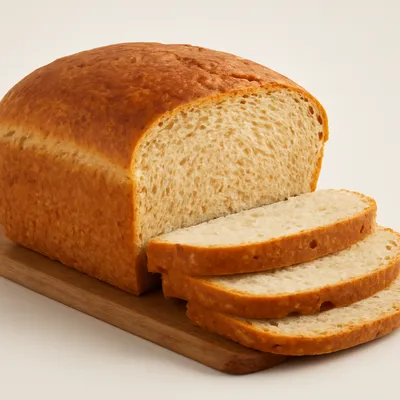
To serve: slice paper-thin with a sharp slicing knife. Arrange on a board with thick-sliced black rye bread, butter, raw onion, and a glass of cold dark beer.


