Paper-thin buckwheat crêpes from Qingjian County in northern Shaanxi — stone-ground batter swirled to translucency on a hot griddle, then rolled around pork shreds, tofu and bean sprouts and dipped in a sharp garlic-vinegar sauce. The Yuan-dynasty agronomist Wang Zhen documented the same preparation in 1313.





Buckwheat's tolerance of the poor, dry loess soils of northern Shaanxi made it the primary grain of Qingjian County through lean centuries — maturing in sixty to eighty days where millet failed. The agronomist Wang Zhen documented crepe-making in his Nong Shu (ca. 1313 CE): 'Hull the buckwheat, grind into flour, spread as pancakes, pair with garlic' — a preparation unchanged today. Qingjian jianbing evolved from a peasant survival food into the county's signature dish, carried by migrants as gifts for home and featured at formal banquets as a mark of Shaanbei identity.
Almost weightless on the tongue — a cool, silky-resilient sheet that gives a mild earthy-nutty buckwheat note. The sharp garlic-vinegar dip cuts through cleanly; pork shreds and tofu add warmth and body. Each bite cycles through cool freshness, savoury richness, and a bright acidic finish.
Buckwheat starch has a high amylose content (ca. 25%), which gelatinizes rapidly on the hot griddle (around 180 °C). The paper-thin layer (roughly 0.5 mm) evaporates moisture almost instantly; on cooling, amylose chains partially retrograde — re-ordering into a semi-crystalline network — delivering the crepe's elastic, non-sticky texture. Buckwheat's dominant flavonoid, rutin (ca. 0.5% by weight), survives the brief high-heat cook and remains largely bioavailable, supporting capillary integrity. Buckwheat protein's biological value reaches 86 versus wheat's 54, owing to higher lysine content, making this simple crepe a nutritionally dense meal.
Variations
Seasonal fillings vary widely: scrambled egg with smoked pork, or pickled vegetables in summer. Some households roll sweet versions with sesame paste and sugar. Dried crêpes can be stacked and carried on journeys, then restored to softness with a few seconds of steam. Neighboring Zichang County makes a close cousin with slightly thicker batter.
On the Palate
Where Qingjian Buckwheat Crepe sits in the Chinese flavor cloud
Ingredients
Serves 4



How it's made
8 steps · 20 min
- 1240 min
Soak husked buckwheat groats in cold water for 3–4 hours until fully swollen; drain.
- 215 min
Grind the soaked groats in batches with added water on a stone mill or blender to a fine, smooth slurry; transfer to a cloth bag, add a little extra water, and knead repeatedly until the liquid strains through evenly; collect the silky batter, season lightly with salt, and rest 10 minutes.
Watch outGrind the buckwheat to a fine, silky slurry — any grit and the crepe tears and won't spread paper-thin.
- 310 min
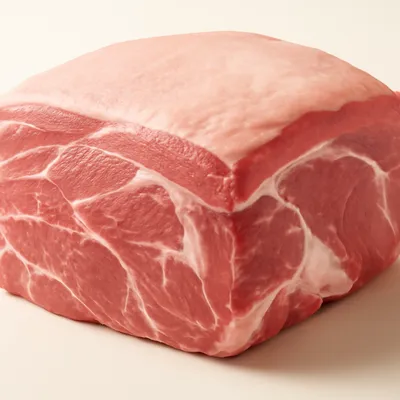
Prepare fillings: slice pork shoulder into fine shreds; stir-fry with soy sauce and a pinch of salt until cooked through. Shred firm tofu. Blanch mung bean sprouts in boiling water for 30 seconds; drain.
- 45 min
Make dipping sauce: pound garlic to a fine paste; combine with rice vinegar, ginger powder, sesame oil, and salt in a bowl; thin with a splash of cold boiled water and stir well.
- 52 min
Heat a flat griddle or non-stick skillet over medium-high heat; brush lightly with oil.
- 615 min
Ladle a small spoonful of batter onto the center of the hot griddle; use a small scraper to swirl outward in one smooth 360-degree motion, spreading to a thin circle about 20 cm across.
Watch outSwirl the batter outward in one smooth motion to a thin round — hesitate and it sets uneven, thick in patches.
- 710 min
When the crêpe surface turns translucent and edges lift slightly (about 1 minute), slide a thin spatula underneath and lift off gently; stack on a plate. Repeat with remaining batter.
Watch outLift the crepe once the surface turns translucent and the edges just lift, about a minute — pull it too late and it dries brittle.
- 85 min
Lay a crêpe flat; arrange pork, tofu and bean sprouts across the center; roll into a cylinder and serve immediately with the dipping sauce on the side.


