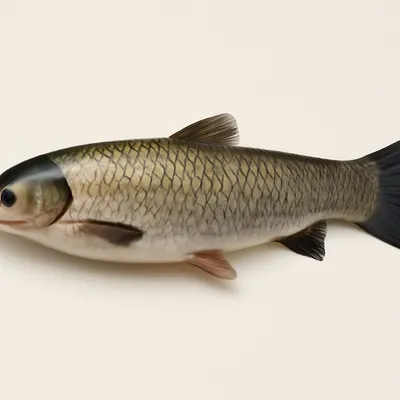
A venerable Hakka specialty of Xingguo County, Ganzhou: grass carp flesh is kneaded with sweet potato starch and salt into a pliable dough, rolled thin, steamed, sliced into flat shreds, and sun-dried. The result combines clean fish freshness with a springy, noodle-like chew. Boiled, stir-fried, or served cold, it is the most celebrated preserved fish product of Gannan.



Xingguo County in Ganzhou has produced fish shreds for centuries within its Hakka food-preservation tradition. Local oral history attributes the technique's invention to a woman who, unable to keep fish fresh for her travelling husband, processed grass carp into dried shreds that could be sent on the road (相传); the shreds were reputedly named 与你相思. In 1914, Xingguo fish shreds won a provincial special award at the Jiangxi Speciality Competition, extending their reputation beyond the Gan River basin. The 百丈泉 brand received national food industry recognition in 1999, cementing the product's status as a defining emblem of Gannan Hakka cuisine.
Silky, springy strands with a clean oceanic freshness — boiled, they absorb broth like thick rice noodles; stir-fried, the edges catch a light char while the centre stays tender and bouncy.
Salt causes actomyosin proteins in the minced fish to partially denature and cross-link, forming a cohesive gel — the same principle that underpins Japanese surimi. Sweet potato starch, richer in amylose than corn starch, reinforces this protein network after gelatinisation and contributes the characteristic snap. Steaming sets the gel at around 70°C; subsequent sun-drying reduces water activity below 0.85, inhibiting microbial growth and concentrating free glutamates and inosinates responsible for the shreds' intense savouriness when rehydrated.
Variations
Fresh (undried) shreds can be used immediately after steaming for a softer, more delicate texture. Some households add a small amount of egg white to the paste for extra smoothness. In summer, the shreds are served cold with a sesame-garlic dressing as a popular Gannan appetiser.
On the Palate
Where Xingguo Fish Shreds sits in the Chinese flavor cloud
Ingredients
Serves 4
How it's made
7 steps · 1 hour
- 120 min
Scale, gut, and thoroughly debone the grass carp; scrape the pure white flesh away from the skin and any remaining bones.
- 210 min
Mince the fish flesh to a very fine paste using a heavy cleaver or food processor.
- 310 min
Add sweet potato starch (about 40% of the fish flesh by weight) and salt; knead firmly for 10 minutes until the paste is smooth, cohesive, and slightly elastic.
Watch outAdd the sweet-potato starch and knead a full ten minutes until the paste is smooth and slightly springy — this is what gives the dried shreds their snap; underworked paste stays crumbly.
- 415 min
Divide into portions; use a rolling pin on a lightly dusted bamboo mat to roll each portion into a thin, even sheet about 2 mm thick.
- 512 min
Steam the sheets over high heat for 10–12 minutes until fully cooked and set; remove and cool to room temperature.
Watch outSteam ten to twelve minutes until the sheet is fully set and no longer glossy-raw — a soft, undercooked sheet tears when you cut and dry it.
- 62880 min
Fold each cooled sheet and cut into shreds about 5 mm wide; separate gently, then spread on bamboo trays and sun-dry for 1–2 days until firm and low in moisture.
Watch outSun-dry until the shreds are firm and leathery, one to two days — pull them in still-damp and they'll mould instead of keeping.
- 720 min
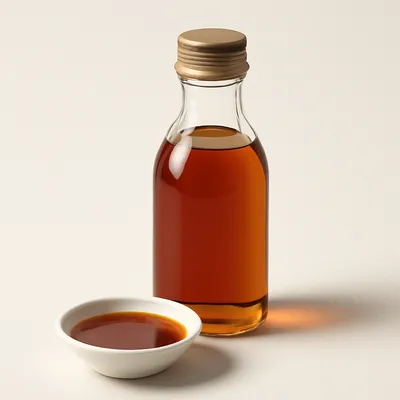
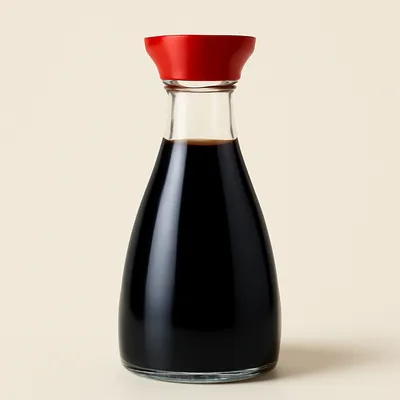
To serve: soak dried shreds in cold water for 15 minutes; boil for 5 minutes until tender; drain and toss with sesame oil, soy sauce, scallion, and garlic, or stir-fry with vegetables.
Archive tool suggestions — not reviewed
These legacy suggestions have not been evidence-reviewed and are not presented as required tools.

