A sweet brioche baked across Belgium and northern France for Saint-Nicolas Day and Christmas, shaped to resemble the swaddled infant Jesus; enriched with eggs, milk, and butter, and filled with raisins or pearl sugar.






Cougnou originated in ancient Hainaut and spread throughout the southern Low Countries. Its name varies by region—cougnolle in Hainaut, coquille in Romance Flanders (Lille and Tournai), quéniolle in the Cambraisis, pain de Jésus in Walloon-speaking areas—but the shape is consistent: a central oval body flanked by two round ends representing the head and feet of the swaddled Christ child. Bakers sell it from Saint-Nicolas Day (December 6) through the days after Christmas; it is considered indispensable at Belgian Christmas breakfast.
Soft and pillowy with a gentle eggy richness; plump raisins or pearl sugar add bursts of sweetness; best torn warm and dipped in hot chocolate.
Milk, eggs, and butter enrich the dough: fat from butter and egg yolks coats gluten strands, limiting network formation and producing a soft, close crumb. Milk proteins (casein and whey) contribute to a tender crust that browns evenly through Maillard reactions at 150–165°C. Two fermentation rises develop ester and alcohol flavor compounds alongside CO₂ leavening. The swaddled-infant form is achieved through hand-molding: a central oval flanked by two smaller rounds for head and feet.
Variations
Chocolate-chip cougnou; plain versions decorated with terracotta discs (ronds) rather than embedded fruit; regional coquille variant from Romance Flanders with slight shape differences; sugar-free versions.
On the Palate
Where Cougnou sits in the Belgian flavor cloud
Ingredients
Serves 10
How it's made
7 steps · 20 min
- 110 min
Warm milk to 35°C; dissolve yeast with a pinch of sugar; let stand 10 minutes until foamy.
- 210 min
Mix flour, sugar, and salt; add eggs, melted butter, and yeast mixture; combine until a rough dough forms.
- 312 min
Knead 10–12 minutes until smooth and elastic; dough should pull away cleanly from the bowl.
Watch outKnead ten to twelve minutes until smooth, elastic and clearing the bowl — the rich butter-and-egg dough needs the gluten well-developed to rise into a soft close crumb.
- 490 min
Place dough in a lightly oiled bowl; cover with a cloth; let rise at room temperature for 1.5 hours until doubled.
- 515 min
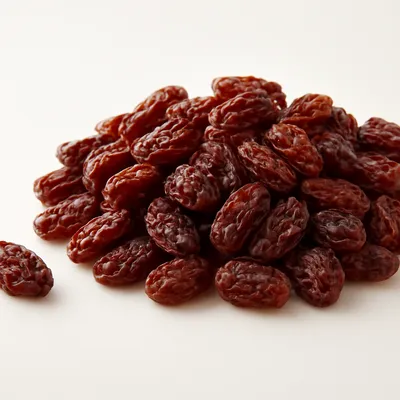
Punch down; fold in raisins or pearl sugar; divide and hand-shape each portion into a central oval with two smaller balls attached at each end for the swaddled-infant form.
- 625 min
Place on a lined baking tray; cover and proof 45 minutes; brush with egg wash; bake at 180°C for 20–25 minutes until golden.
Watch outBrush with egg wash and bake to an even gold, twenty to twenty-five minutes — the wash gives the shine; pull it the moment it's golden or the enriched dough dries.
- 75 min
Cool briefly on a rack; serve warm with hot chocolate or sliced with butter for Christmas breakfast.
Archive tool suggestions — not reviewed
These legacy suggestions have not been evidence-reviewed and are not presented as required tools.

