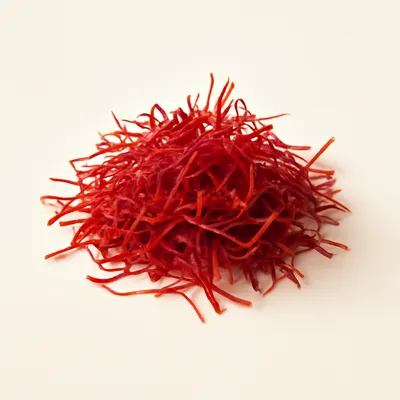
The DOP saffron of the Navelli plateau (L'Aquila province): stigmas of Crocus sativus hand-picked before dawn while the flowers are still closed, toasted over almond- or oak-wood embers, and stored whole. Around 200,000 flowers and 500 hours of labor yield one kilogram. Introduced to Abruzzo by a Dominican friar from the Santucci family in the 13th century, documented in 1317 by King Robert of Anjou, traded across medieval Italy and northern Europe. DOP protected since 2005.


By tradition, saffron reached Abruzzo through a Dominican friar of the Santucci family from Navelli, who brought bulbs from Toledo, Spain, around the 13th century — a date accepted by local historians though the exact year is uncertain. The earliest firm documentary evidence is a 1317 diploma issued by King Robert of Anjou, attesting to saffron's importance in the region's trade. By the late medieval period, L'Aquila had become the dominant saffron-trading city in Italy: its merchants supplied Milan, Venice, and markets in France and northern Europe, commanding prices alongside pepper as one of the most valuable spices of the era. The Navelli plateau's karst limestone soils — which drain rapidly and prevent waterlogging fatal to Crocus bulbs — and the dry mountain climate at altitude proved ideal for cultivation. DOP recognition was awarded February 4, 2005, with the Consortium of Producers established May 13, 2005.
Dissolved in warm liquid, Zafferano dell'Aquila releases an intense golden-amber color, a warm floral honey aroma, and a flavor that is rich without the medicinal bitterness common in lower-grade saffrons. The high-altitude, dry cultivation on karst soil concentrates the crocin and safranal content above the European average. A pinch — three to five stigmas — is enough to color and perfume an entire risotto or stew.
Saffron's color derives from crocin — a water-soluble carotenoid glycoside — while its aroma comes from safranal (a volatile aldehyde formed during drying from the precursor picrocrocin) and its bitter note from picrocrocin itself. Toasting the fresh stigmas over wood embers at controlled low heat drives off free water (reducing from ~80% to ~12% moisture), concentrates safranal precursors, and triggers mild Maillard reactions that enhance warm, hay-like notes without burning the pigments. The karst limestone soils of the Navelli plateau drain rapidly, avoiding the waterlogged roots that block photosynthesis and dilute secondary metabolites, resulting in higher crocin and safranal concentrations than saffrons grown in heavier soils. At culinary temperatures (70–80 ℃), crocin dissolves freely and binds to proteins and starches in the dish, fixing the golden color permanently.
Variations
Zafferano dell'Aquila is used whole (stigmas) or ground into powder. In Abruzzo it flavors scapece alla vastese (marinated fried fish), mussels (cozze allo zafferano), risotto, lamb brodetto, and pasta with lamb ragù. A licensed DOP saffron liqueur is also produced. The Navelli Consortium enforces strict grading standards — only stigmas with a specific minimum safranal and crocin content qualify for DOP labeling. For storage, stigmas must be kept in a sealed, dark glass container away from humidity and heat.
On the Palate
Where Zafferano dell'Aquila sits in the Italian flavor cloud
Ingredients
Serves 4How it's made
7 steps · 1 hour
- 160 min
Harvest Crocus sativus flowers before dawn when the petals are still closed; pick only that morning's blooms — flowers open and lose aroma within hours.
- 230 min
Remove the three crimson stigmas from each flower by hand (each flower yields exactly three); discard the yellow stamens and petals.
- 325 min
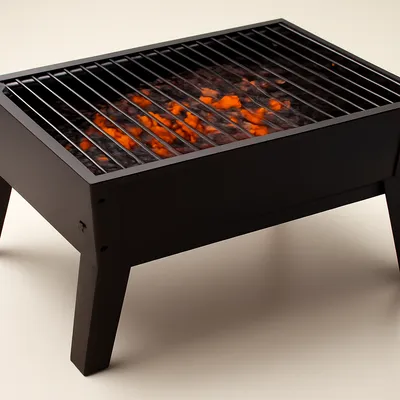
Spread the fresh stigmas in a single layer on a metal or ceramic tray; toast slowly over low almond- or oak-wood embers for 20–25 minutes, turning gently, until moisture drops to ~12% and the stigmas are dry and brittle.
Watch outToast over low embers just until the stigmas turn dry and brittle — real heat scorches the pigments and kills the color.
- 415 min
Cool completely on the tray; seal in a dark glass jar immediately to prevent humidity absorption.
- 520 min
To use: steep 3–5 stigmas per serving in 2–3 tablespoons of warm (not boiling) water or white wine for 20 minutes; the liquid will turn deep amber.
Watch outSteep in warm, never boiling, water until it runs deep amber — boiling water drives off the safranal aroma.
- 610 min
Add the saffron liquid — stigmas and all — to the dish near the end of cooking (for risotto: at the final stir; for stews: in the last 10 minutes); heat gently at 70–80 ℃.
Watch outAdd near the end and keep it gently hot, around seventy to eighty degrees — a hard boil flattens the fragrance.
- 75 min
Store any unused saffron sealed, in a dark dry place; whole stigmas retain potency for up to 2 years.
Archive tool suggestions — not reviewed
These legacy suggestions have not been evidence-reviewed and are not presented as required tools.