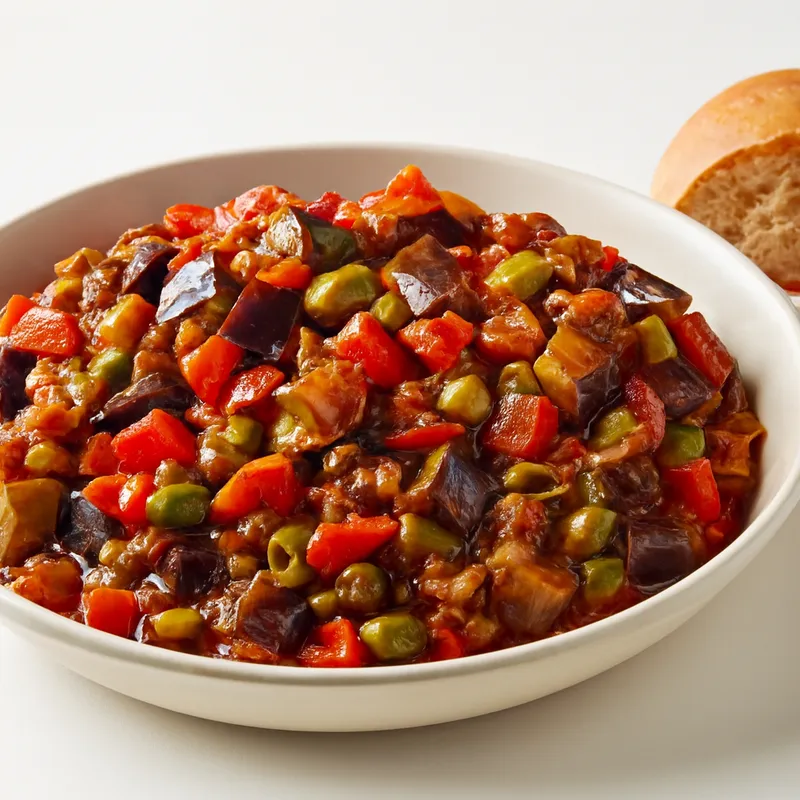
Chifeletti are Trieste's fried potato crescents, a gnocchi-like dough of riced potato, egg yolk, butter and flour rolled into little horseshoes and deep-fried until puffed and golden. They live a double life: salted as a first course or a contorno to roast pork shin and braises, or dusted with sugar and cinnamon as a sweet, above all at Carnevale and Easter. Either way they must reach the table straight from the pan, hot and crisp.





The name is Mitteleuropean, from the German 'Kipfel', a crescent or little horn, and in Triestine dialect the dumplings are also called kipfel, kifel or chifel. Folk memory ties the crescent shape to the relief of the Turkish siege of Vienna in 1683: bakers are said to have formed crescent rolls in mockery of the Ottoman standard after the siege was broken, though that account belongs first to the chifel bread-roll rather than the potato version. The potato crescents themselves are a fixture of Trieste and the Carso, made sweet for Carnevale and Easter and savoury the year round, and served in the homely gostilne of the plateau.
The shell is thin, blistered and crisp, shattering into a soft, steamy potato interior somewhere between a gnocco and a fritter. Salted, they are faintly sweet from the potato and rich with butter, ready to soak up meat juices; sugared and cinnamoned, they turn into a warm, doughnut-like sweet.
Yellow-fleshed, floury potatoes are chosen because they hold less water and more starch, so the dough binds with little flour and stays light rather than gluey. Ricing the hot potato keeps the starch granules intact; egg yolk lends emulsifying lecithin and butter coats the starch to tenderise, while just enough flour gives structure. In hot oil the surface moisture flashes to steam and puffs the crescent, dehydrating and Maillard-browning the crust; the low water of a good potato means less oil is drawn in, for a crisper result. They stale fast as the starch retrogrades on cooling, which is why they are eaten at once.
Variations
The savoury chifeletti are dusted only with salt and served as a first course or a contorno to roast pork shin, breaded cutlets and dishes with a rich sauce; the sweet version is rolled in caster sugar, sometimes with cinnamon or honey and often scented with lemon zest. There are two shaping schools: rolling ropes into crescents, or cutting thin discs and folding them into half-moons. A lighter baked version cooks at 180C for about 45 minutes instead of frying.
On the Palate
Where Chifeletti sits in the Italian flavor cloud
Ingredients
Serves 6

How it's made
7 steps · 40 min
- 125 min
Boil 1 kg unpeeled yellow-fleshed potatoes in salted water for about 25 minutes, until a fork slides in easily; drain and peel while still hot.
- 210 min
Rice the hot potatoes onto a board and let them cool to lukewarm.
Watch outRice the potatoes while hot and let them cool — ricing keeps them dry and fluffy, and cooling firms the starch so the dough isn't gluey.
- 310 min
Work in 2 egg yolks, 80 g melted butter, 250 g flour, 1 tsp salt and the grated zest of 1 lemon to a smooth, gnocchi-like dough; do not overwork it.
Watch outWork it just until smooth — over-kneading develops the potato starch into a gummy dough that fries dense instead of light.
- 415 min
Roll the dough into ropes about 1 cm thick, cut into 10 cm lengths and bend each into a crescent.
- 58 min
Heat plenty of olive oil in a deep pan to 170C.
- 66 min
Fry the crescents a few at a time for 5-6 minutes, turning, until puffed and deep golden; drain on paper.
Watch outThey're done when puffed and deep golden — the crescents balloon as the surface moisture steams out; pull them before the crust darkens past gold.
- 72 min
Serve at once, hot: dusted with salt as a contorno, or with sugar and cinnamon as a sweet.