Whole-wheat flour slow-roasted in ghee until deeply golden and nutty, then bound with grated jaggery (gur) and shaped into round laddus enriched with cashews, dry ginger powder, cardamom, and edible gum crystals (gondh) that are puffed in hot ghee before being crushed and folded in. A Punjabi winter staple associated with the Lohri harvest festival in January and long established as a postpartum recovery food, pinni can be stored at room temperature for up to three weeks — its shelf life a product of low moisture and the preservative properties of ghee and jaggery.




Roasted-flour and jaggery sweets have been prepared across North India for centuries, with wheat-and-ghee confections among the oldest recorded Indian sweet traditions; jaggery predates refined sugar in the subcontinent by at least two millennia. Pinni as a specifically Punjabi form is inseparable from Lohri — the harvest festival marking the end of the winter solstice, observed on January 13 — when families prepare batches in advance to distribute among neighbors and relatives. Its role as a postpartum food is rooted in the dietary logic of Punjabi folk medicine: edible gum (gondh, derived from Acacia trees) is widely credited with promoting lactation, dry ginger warms the body after childbirth, and the combination of ghee and jaggery provides high-density calories during the nursing period. All three functions — festival sweet, winter restorative, and postpartum supplement — are long-established practice.
Densely compact yet crumbling as you chew, pinni packs a concentrated sweetness from the jaggery undercut by the dry, warming bloom of ginger; the roasted wheat gives a deep nutty base note, and the puffed gondh creates a faintly airy, crunchy texture against the smooth cashew pieces.
Slow-roasting whole-wheat flour in ghee over low heat induces two simultaneous transformations: Maillard browning of the amino acids on the flour surface, which generates the nutty aroma, and dextrinization of starch at 155–165°C, where long amylose and amylopectin chains fragment into shorter, more soluble dextrins that are easier to digest and taste faintly sweet. Dropping edible gum (gondh) crystals into hot ghee causes the small amount of moisture trapped in the resin matrix to flash-vaporize, expanding the crystals in seconds into a puffed, porous foam — the same mechanism as deep-frying puffed rice. Jaggery's complex sugar matrix, which retains trace minerals and a slight caramel character absent in refined sugar, acts both as binder and flavoring as it softens and coats the warm flour.
Variations
Almonds, walnuts, or mixed dried fruits substituted for or added to cashews; some households omit gondh entirely and rely on jaggery alone for binding; a version with semolina (suji) replacing part of the whole-wheat flour for a lighter texture; poppy seeds (khus khus) added for subtle nuttiness; sweetened with date syrup instead of jaggery in some contemporary recipes.
On the Palate
Where Pinni sits in the Indian flavor cloud
Ingredients
Serves 6
How it's made
7 steps · 15 min
- 18 min
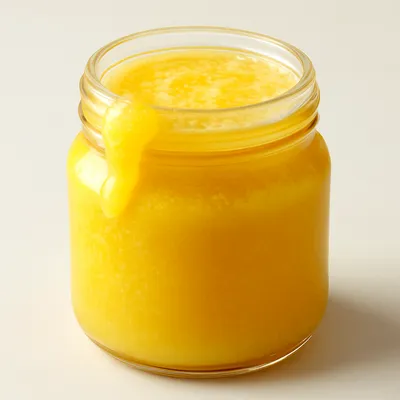
Heat 2 tbsp ghee in a heavy-bottomed kadai or pan over medium heat until shimmering; add edible gum crystals (gondh) a few at a time — they will puff dramatically within 10–15 seconds. Remove with a slotted spoon, drain on paper, and repeat until all gondh is puffed. Let cool, then crush lightly with a rolling pin.
Watch outThe gondh puffs into a porous foam within seconds of hitting the hot ghee — scoop it out the instant it swells, or it browns and turns bitter.
- 225 min
Add the remaining 4 tbsp ghee to the same pan over low heat; add 2 cups whole-wheat flour and stir continuously with a wooden spoon for 20–25 minutes, ensuring even contact with the pan, until the flour turns deep golden and releases a pronounced nutty aroma.
Watch outStir the flour constantly for the full twenty-odd minutes until it's deep golden and smells strongly nutty — patchy roasting leaves a raw, floury taste.
- 315 min
Remove the pan from heat and allow the roasted flour-ghee mixture to cool for 12–15 minutes until warm but not hot to the touch.
- 45 min
Grate or finely crumble 1 cup jaggery (gur) into a small pan; warm over very low heat, stirring, just until the jaggery softens to a paste. Do not boil.
- 57 min
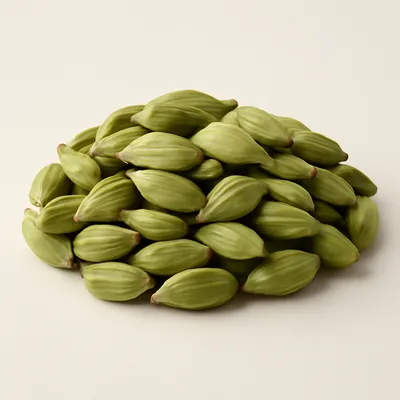
Add the softened jaggery, 1 tsp dry ginger powder, ½ tsp cardamom powder, ½ cup roughly chopped cashews, and the crushed gondh to the warm flour; mix thoroughly with clean hands until the mixture is uniform and holds together when pressed.
Watch outMix and shape while the flour is still warm and pliable — let it cool first and it won't bind, and the balls crack apart in your palm.
- 610 min
While the mixture is still warm and pliable, pinch off portions of about 40 g each and roll firmly between your palms into smooth round balls approximately 4 cm in diameter.
- 730 min
Arrange pinni on a plate in a single layer and let cool completely at room temperature until firm, about 30 minutes; store in an airtight tin for up to 3 weeks.


