A thick, unleavened flatbread of pearl millet flour, hand-patted into a round and cooked first on a cast-iron griddle, then finished directly over an open flame until the edges char. The daily staple of Kathiawar and Saurashtra, served hot with ghee, raw garlic chutney, and jaggery.





Pearl millet, called bajra in Hindi and Gujarati, thrives in the semi-arid, low-rainfall soils of the Kathiawar peninsula and Saurashtra where wheat cannot reliably grow. Archaeobotanical studies document millet cultivation across the Indian subcontinent from at least the second millennium BCE. Because bajra requires minimal water and tolerates poor soil, it became the foundation grain for pastoral and farming communities throughout these regions, and the hand-patted rotlo evolved as their primary bread. Traditional preparation requires no rolling pin; cooks wet their palms and gradually pat the dough outward from the center, a skill passed from mothers to daughters across generations.
Thick and hearty with a pleasantly coarse grain; the charred edges deliver a gentle smokiness and bitterness that offsets the mild, slightly sweet millet interior. Hot from the flame, the interior is moist and steamy while the crust is dry and cracked.
Pearl millet contains no gluten, so the dough is kneaded with near-boiling water to gelatinize the starch granules, which provides enough cohesive plasticity for hand-patting without any binder. On the tawa, surface temperatures drive Maillard reactions, forming a crust; steam from the gelatinized starch cooks the interior. When transferred to a direct open flame, surface temperatures exceed 200 ℃, rapidly charring the outer layer while radiant heat finishes the already-gelatinized interior.
Variations
Some households blend a small amount of whole wheat flour into the dough to improve pliability. Enriched versions include finely chopped fenugreek leaves or minced green chili kneaded in. In Rajasthan, a similar bread is rolled thinner and cooked only on a tawa. Leftover rotlo is eaten the following morning soaked in buttermilk or chai.
On the Palate
Where Bajra Rotlo sits in the Indian flavor cloud
Ingredients
Serves 4How it's made
7 steps · 10 min
- 13 min
Bring water to near-boiling; measure the pearl millet flour into a wide bowl with a pinch of salt.
- 25 min
Pour the hot water gradually into the flour, mixing first with a spoon until cool enough to handle, then knead firmly into a smooth, pliable dough.
Watch outKnead with near-boiling water — gluten-free millet only turns pliable once the hot water gelatinizes its starch, or it cracks apart.
- 32 min
Divide the dough into 4 equal balls; cover with a damp cloth to prevent drying.
- 43 min
Wet both palms with water, place one dough ball on the center of one palm, and hand-pat it gradually outward until it forms a round disc about 15 cm in diameter and 5–6 mm thick.
- 53 min
Heat a cast-iron tawa over high heat until very hot; place the rotlo on it and cook for 2 minutes until the underside shows dark spots.
- 64 min
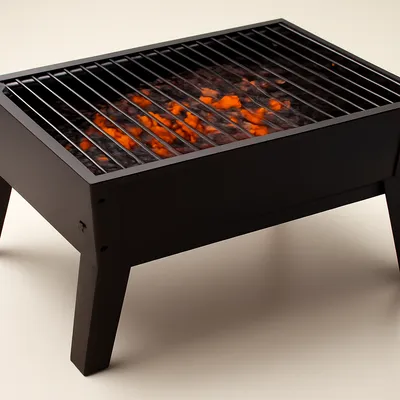
Flip and cook the second side for 2 minutes, then use tongs to hold the rotlo directly over a medium open flame for 30–60 seconds per side until the edges char and the bread puffs slightly.
Watch outHold it over the open flame until the edges char and it puffs slightly — that direct-fire char is the rotlo's signature.
- 72 min
Remove from the flame, spread generously with ghee while still hot, and serve immediately with raw garlic chutney and jaggery.
Watch outSpread the ghee on while it's still hot so it soaks in — on a cooled rotlo it just sits greasy on the surface.
Archive tool suggestions — not reviewed
These legacy suggestions have not been evidence-reviewed and are not presented as required tools.