Assam's simplest and most beloved Bihu sweet: freshly grated coconut is roasted, bound in melted jaggery (or sugar), and rolled into small balls while still warm. With just two or three ingredients, it is the quintessential harvest-festival laddoo, made for Magh Bihu and Rongali Bihu and exchanged with guests and family.


Narikol laru (narikolor laru) is the simplest and most beloved sweet of the Assamese Bihu festivals, made for both Magh Bihu (Bhogali Bihu, the mid-January harvest festival) and Rongali (Bohag) Bihu (the spring new year). Its name is its recipe: narikol is Assamese for coconut, laru for the laddoo or ball form, and the sweet is nothing more than freshly grated coconut bound in jaggery (traditionally date-palm jaggery, nolen gur, when in season) or sugar, rolled into small balls. The dish belongs to the wider Indian harvest-festival tradition of coconut-and-jaggery laddoos, and it sits alongside tilor laru (sesame) and the various pithas on the Bihu platter. Its simplicity reflects the agrarian Assamese kitchen — fresh coconut, new jaggery, and the labor of rolling — and its seasonal use of date-palm jaggery ties it to the winter months when that jaggery is freshly drawn. It is one of the easiest Bihu sweets to make and is made in large batches, exchanged with guests and offered to family through the festival days.
Soft, chewy, and intensely coconutty, with the warm caramel of jaggery and a clean, fresh-nut sweetness that dissolves into a glossy chew.
The laddoo's texture rests on the jaggery syrup's cooking stage and the coconut's fat. Roasting the fresh grated coconut first drives off its surface moisture and develops a light Maillard browning on its sparse proteins, deepening its flavor; it also concentrate its oils, which lubricate the final mass. The jaggery, melted and cooked to a soft-ball stage (around 110–115°C), is concentrated enough that, when mixed with the coconut and cooled, it sets into a cohesive, slightly chewy mass that holds the ball shape — under-cooked and it stays sticky and won't bind; over-cooked and it turns brittle. Rolling while still warm is essential, because the syrup sets as it cools; the coconut's cell-wall fiber gives the ball its slightly chewy texture, and its emulsified oil keeps it moist rather than dry. Date-palm jaggery, when used, contributes its own molasses-rich depth.
Variations
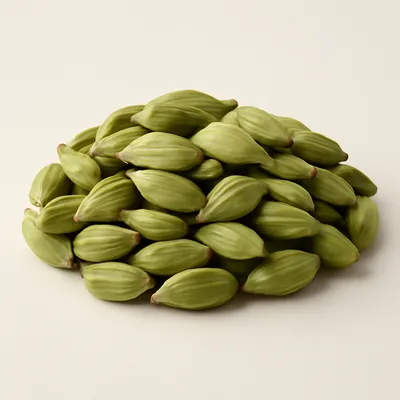
A richer form folds in a little khoya; some use sugar instead of jaggery for a cleaner, lighter color, and cardamom is a common addition.
On the Palate
Where Narikol Laru sits in the Indian flavor cloud
Ingredients
Serves 8How it's made
6 steps · 15 min
- 15 min
Roast freshly grated coconut in a dry pan for a few minutes to drive off moisture and deepen flavor.
- 28 min
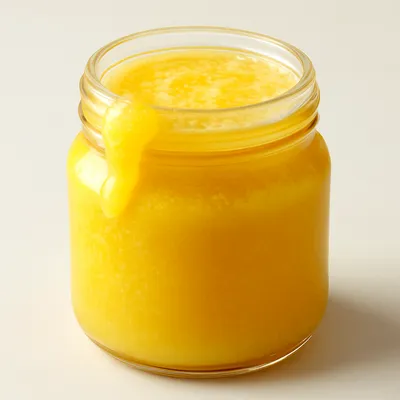
Melt grated jaggery with a little water or ghee to the soft-ball stage.
Watch outCook the jaggery to the soft-ball stage — under-done it stays sticky and won't hold a ball, over-done it turns brittle and hard.
- 36 min
Stir in the roasted coconut and cook briefly until the mixture thickens and leaves the sides of the pan.
- 42 min
Add ghee and cardamom powder.
- 55 min
While still warm, grease your palms and roll small portions into round balls.
Watch outRoll the balls while the mixture is still warm — it sets firm as it cools, and once cold it crumbles instead of holding shape.
- 62 min
Cool on a plate until set; store airtight.
