A savory-sweet loaf of grated potatoes layered with diced cured pork, prunes, raisins, sugar, and cream, baked for hours in a special cylindrical mold lined with pork belly or slices of bacon. A traditional festive dish of the Savoy, eaten in the mountain villages on feast days and at family celebrations.





Farcement — also called farcement savoyard or farcement de Beaufortain — is a traditional festive dish of the Savoy, specifically the Beaufortain valley. No specific inventor or founding year is documented; it is a regional peasant dish of the high valleys, where potatoes, salt-cured pork, dried fruit, and cream were the staples of winter cooking. The special cylindrical mold with a central funnel — allowing heat to penetrate from the inside out — is the dish's defining piece of equipment, and the long, slow bake gives the loaf its characteristic texture: crisp and caramelized on the outside, soft and layered within.
A slice of farcement shows concentric layers: grated potato, ivory against the rust of diced cured pork, the dark smudges of prune and the pale flecks of raisin, all bound in cream. The outside is a deep, caramelized brown from the lining bacon; the inside is soft, almost melting, the salt of the pork set against the sweetness of the dried fruit. Eaten in slices as a main or substantial side, particularly at celebratory meals.
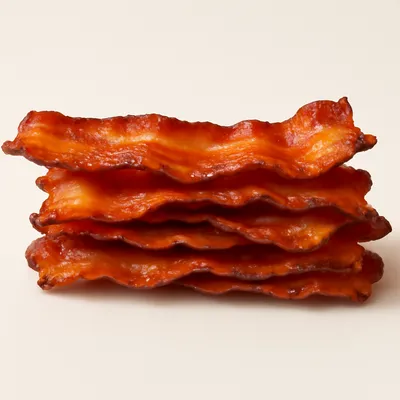
Farcement savoyard is built in layers around a central funnel that allows heat to penetrate from the inside out as well as from the outside in, which is what makes the long bake possible without burning the exterior. Grated raw potatoes — chosen for high starch so they bind as they cook — are layered with diced cured pork, soaked prunes and raisins, sugar, and cream; the mold is lined with slices of bacon or pork belly, which render their fat into the loaf during the long bake, basting it from within. The extended cooking time — three to four hours — gelatinizes the potato starches fully, converting them into a cohesive, soft mass, while the rendering pork fat and cream emulsify into the layers, keeping them moist. The bacon lining, exposed to the mold's hot metal, crisps and Maillard-browns into the characteristic dark crust.
Variations
Recipes vary by valley: some add cubes of Beaufort cheese, others include apples or pears; the layered potato-dried-fruit-pork construction and the cylindrical funnel mold are the constants.
On the Palate
Where Farcement Savoyard sits in the French flavor cloud
Ingredients
Serves 8

How it's made
6 steps · 1 hour
- 110 min
Soak prunes and raisins in warm water or tea; drain.
- 210 min
Line a farcement mold — cylindrical with a central funnel — with thin slices of bacon or pork belly.
- 315 min
Grate the potatoes and squeeze out excess moisture; season with salt, pepper, and sugar.
Watch outGrate the potatoes and squeeze out the excess water — too wet and the loaf won't set; the starch needs to bind, not swim.
- 420 min
Begin layering: a layer of grated potato, then diced cured pork, prunes, raisins, and a spoonful of cream; repeat to fill the mold.
- 590 min
Cover with the overhanging bacon, set the central funnel in place, cover tightly, and bake in a water bath for three to four hours.
Watch outBake in a water bath for three to four hours — the long, gentle heat gelatinizes the potato through and lets the bacon baste it from within.
- 65 min
Invert onto a plate, slice in rounds, and serve hot.
Archive tool suggestions — not reviewed
These legacy suggestions have not been evidence-reviewed and are not presented as required tools.


