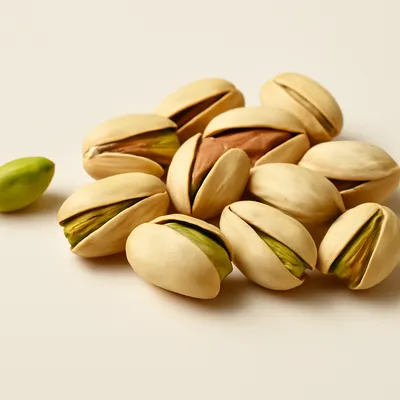
A large cured pork sausage of Lyon, classically studded with pistachios or truffles, dry-cured and air-dried to a firm, sliceable texture. The related cervelas de Lyon — finely minced pork with pistachios or truffles — is the pistachio-studded variant; dry versions are called rosette or Jesus.




Saucisson de Lyon is a large cured pork sausage of Lyon. Wikipedia documents it as a traditional Lyonnais charcuterie, sometimes including beef or a liqueur. The closely related cervelas de Lyon is a finely minced pork sausage distinguished by the addition of either truffles or pistachios; dry-cured versions of the cervelas are called rosette or Jesus, the latter named for its plump, rounded shape. The saucisson belongs to the broad family of French dry-cured sausages, but the Lyonnais version — with its characteristic pistachio or truffle inclusions — is regionally distinctive. The sausage is cured with salt and nitrite, fermented by lactic-acid bacteria that drop the pH and develop the tangy flavor, then air-dried slowly to concentrate the texture.
A slice of saucisson de Lyon shows a firm, dry, deep-red farce studded with bright green pistachio nuts or dark flecks of truffle, encased in a white, bloomed rind. The texture is firm and slightly chewy; the flavor is savory, tangy, and complex — the lactic tang of the cure, the pork's richness, and the distinctive contributions of the pistachio or truffle. Eaten thinly sliced as an aperitif, with bread and a glass of Beaujolais.
Saucisson de Lyon rests on curing, fermentation, and slow air-drying. The ground pork — lean and fat — is mixed with salt and curing salt containing nitrite, which fixes the meat's pink color and inhibits Clostridium botulinum. A starter culture of lactic-acid bacteria is added; during the initial fermentation, these bacteria convert sugars to lactic acid, dropping the pH, which firms the meat's texture and develops the tangy, slightly sour flavor characteristic of dry sausages. The pistachios or truffles are mixed in before stuffing. The sausage is then hung in a cool, humid environment to dry slowly over many weeks; during this time, moisture evaporates, concentrating the flavor and firming the texture to the sliceable consistency. The white bloom on the rind is a benign mold that contributes to flavor and regulates moisture loss.
Variations
The pistachio and truffle versions are the two classic Lyonnais inclusions; dry-cured cervelas is called rosette or Jesus. The pork, the dry cure, and the slow air-drying are the constants.
On the Palate
Where Saucisson de Lyon sits in the French flavor cloud
Ingredients
Serves 20How it's made
6 steps · 50 min
- 120 min
Grind lean pork and back fat coarse; mix with salt, curing salt, and a lactic starter culture.
- 210 min
Fold in pistachios or diced truffles if using.
- 315 min
Stuff into natural casings; prick to release trapped air.
Watch outPrick the stuffed casing to release trapped air — an air pocket left inside spoils and rots the sausage from within as it dries.
- 424 min
Ferment briefly in a warm, humid room to develop acidity.
- 51440 min
Hang in a cool, humid drying room for several weeks, until firm and sliceable.
Watch outHang in a cool, humid room for weeks until firm and sliceable — dry too fast and warm and the outside case-hardens over a still-raw center.
- 65 min
Slice thin and serve as charcuterie, with bread and Beaujolais.