A raw smoked pork sausage from the Montbeliard area of Franche-Comte, coarse-ground, seasoned with cumin, and cold-smoked over conifer wood in the region's traditional farmhouse chimney. Distinguished by its smoky, resinous aroma and the signature note of cumin, it is gently poached before serving, never fried.


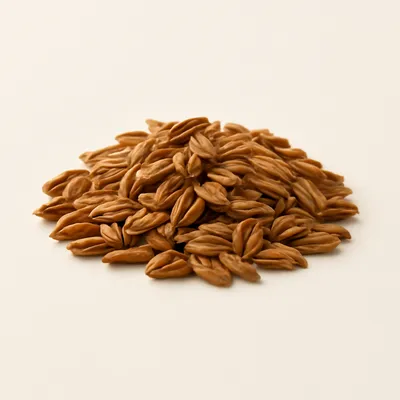



Saucisse de Montbeliard is a smoked raw sausage of the Montbeliard area in Franche-Comte, eastern France, with origins traced to the nineteenth century. Its character is inseparable from the region's traditional large open farmhouse chimney — the tuye — where meats were hung to smoke over the household fire. The product holds a Protected Geographical Indication, the French IGP, whose specifications were homologated in France in 2011 and which was registered at European level in 2013, restricting the name to sausages produced to specification in the defined zone. The pigs are traditionally raised in Franche-Comte, often fed on the whey — the petit-lait — left over from the local Comte and Morbier cheese-making, a tradition reflected in the spec though not universally mandated.
A poached Saucisse de Montbeliard is firm and coarse-textured, with a clean pork flavor layered under a distinctive resinous smoke and the warm, almost bready note of cumin. The casing is smooth and snappy; the interior is juicy but not fatty, the texture of a well-bound coarse sausage. Served hot, traditionally with lentils, potatoes, or sauerkraut, it is the warmer centerpiece of a Franc-Comtois table.
The defining technique is cold smoking over conifer wood, traditionally in the tuyé. Coarse-ground lean pork and hard pork fat, seasoned with salt, pepper, and cumin, are stuffed into a natural casing and hung in the smoke of resinous wood — fir or spruce sawdust. Cold smoking, at temperatures below roughly twenty-five degrees, deposits phenolic, carbonyl, and other aromatic compounds from the wood smoke onto the sausage surface and casing; these compounds are antimicrobial, helping preservation by inhibiting surface bacteria and mold, antioxidant, preventing the fat from turning rancid during the long storage, and flavoring, giving the characteristic smoky, resinous aroma. Combined with the salting, this yields a shelf-stable raw smoked sausage. The traditional service is gentle poaching — simmering, never frying — because high heat would render the fat, split the casing, and wash out the smoke.
Variations
A close cousin, the Saucisse de Morteau — sometimes called Jesus de Morteau — comes from the neighboring area and is similarly smoked in the tuyé; the two are often served together as part of a Franc-Comtois charcuterie platter. The cumin note is the signature of the Montbeliard variety.
On the Palate
Where Saucisse de Montbeliard sits in the French flavor cloud
Ingredients
Serves 6How it's made
6 steps · 45 min
- 115 min
Cube lean pork and hard pork fat; chill everything very cold.
- 210 min
Grind coarse and season with salt, pepper, and cumin.
- 315 min
Stuff the farce into natural casings and twist off into links.
- 430 min
Hang the sausages in the tuyé or smokehouse and cold-smoke over conifer sawdust for one to two days.
Watch outKeep the smoke cold, below about twenty-five degrees — cold smoke lays down the aroma and preserves; let it warm and the fat renders and the sausage half-cooks.
- 525 min
To serve, simmer gently in hot — not boiling — water for twenty to thirty minutes until heated through.
Watch outTo serve, hold the water hot but never boiling — a boil bursts the casing and toughens the meat.
- 65 min
Slice and serve hot with lentils, potatoes, or sauerkraut.
Archive tool suggestions — not reviewed
These legacy suggestions have not been evidence-reviewed and are not presented as required tools.