
Pitina is the smoked meatball of the high valleys above Pordenone — Val Tramontina, Val Colvera and Val Cellina — a casing-less polpetta that solved the problem of preserving meat where there were no pig guts to make sausage. Lean meat, historically chamois, roe deer, mutton or goat and any preserved trimmings, is finely minced, seasoned with garlic, salt, pepper, wild fennel and a splash of red wine or grappa, rolled by hand into balls, dusted in cornmeal and cold-smoked for days over a low resinous fire. The cornmeal coat and the smoke together stand in for the missing skin, sealing and drying the surface. It is eaten thinly sliced and raw-cured like a salami, grilled, simmered in broth, or set over hot polenta. Pitina carries a European protected mark, generally dated to its registration in 2018, that ties it to these Carnic Prealp valleys.




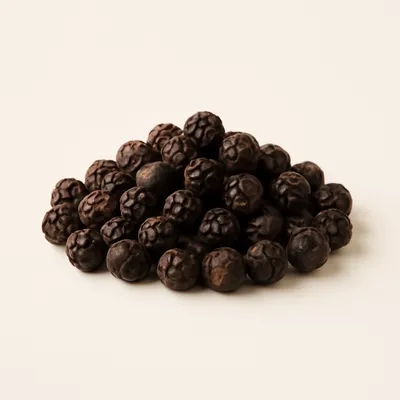

Pitina is a survival food of the southern Carnic Prealps, generally traced to Frassaneit, a now-abandoned hamlet of Tramonti di Sopra, in the first half of the nineteenth century. In these remote upland valleys of the Pordenone province the household pig was a rarity and so were the intestines that turn mince into sausage; meat instead came from the hunt — chamois and roe deer — or from sheep and goats, and any cut that risked spoiling, including the wounded or aged beast, had to be preserved at once. The answer was to mince and season the meat, bind it by hand into a ball with no casing at all, armour it in a crust of cornmeal — the polenta flour that was the valleys' staple — and hang it in the smoke of the hearth to dry and keep. The name is thought to derive from the local dialect, and the food long defined the diet of the Tramonti communities. Production is now governed by a European protected geographical indication, generally dated to its registration in 2018, covering a tight zone of municipalities in Val Tramontina, Val Colvera and Val Cellina; the related larger pidùin and the smaller peta are recognised within the same tradition.
Sliced raw and thin, pitina is firm and chewy, a deep brick-to-russet red speckled through with the pale, slightly gritty cornmeal crust at its rim. The first note is wood-smoke, then a strong, gamey-savoury meatiness that is leaner and more rustic than any pork salami, with garlic and an aniseed lift of wild fennel running under it and a tannic whisper of wine. It is drier and denser than a soft cured sausage, more like a coarse, hard-pressed meat than something that melts. Warmed in broth or over polenta it softens and turns mellower, the smoke easing back and the meat releasing its savour into the liquid; grilled, the cornmeal crust crisps and the smoke comes forward again.
Pitina preserves meat by stacking several hurdles against spoilage at once, in the classic hurdle-technology sense. Salt and the acidity of the wine lower water activity and tilt conditions against microbes; the dense, hand-pressed ball and the cornmeal crust limit the meat's contact with air, slowing oxidation and rancidity at the surface. Above all it is the cold smoke that does the preserving: drawn slowly over a low resinous and juniper fire, the smoke deposits phenols, aldehydes and other antimicrobial and antioxidant compounds on and into the crust while the gentle warmth drives off moisture, drying the outside into a protective rind without ever cooking the meat — true cold-smoking stays low enough that the proteins do not set. The cornmeal coat both holds the loose mince in shape without a casing and gives the smoke and dry air a surface to work on. The flavour follows the same chemistry: smoke phenols and Maillard-driven, slightly toasted notes from the cornmeal layer the savour, while wild fennel and garlic season a meat whose leanness and game character the process concentrates rather than masks.
Variations
The meat is the great variable. The oldest pitina is game — chamois or roe deer — but mutton, goat, pork and beef, or any blend of them, all appear, and the modern protected versions lean more on farmed meat than on the hunt. The same family runs by size: the small peta and the larger pidùin are made the same way but cure differently, the bigger ball drying more slowly. Seasoning shifts valley to valley — wild fennel is common, but juniper, more or less garlic, and a measure of red wine or grappa all vary — and so does the smoking wood. Serving is the other fork: cured and sliced raw as an antipasto, simply grilled, dropped into a bean or vegetable broth, or stewed and spooned over soft polenta, which remains its most traditional partner.
On the Palate
Where Pitina sits in the Italian flavor cloud
Ingredients
Serves 6

How it's made
8 steps · 1 hour
- 125 min
Trim the lean meat of sinew and dice it, keeping it very cold, then mince it finely by hand or machine.
- 210 min
Pound or work in a paste of crushed garlic, salt, black pepper and wild fennel seed, with a small splash of red wine or grappa, until evenly seasoned.
- 310 min
Wet your hands and press the mince firmly into compact balls a little larger than a golf ball, packing out any air.
Watch outPress the mince into tight balls, packing out every air pocket — trapped air is where the meat oxidizes and goes rancid over the long cure.
- 45 min
Roll each ball thoroughly in fine cornmeal until the whole surface is coated.
- 5180 min
Set the balls on a rack and rest them cold for a few hours so the crust sets and the surface dries.
- 64320 min
Cold-smoke them over a low fire of resinous wood and juniper for several days, keeping the temperature low enough that the meat never cooks, until firm and darkened.
Watch outCold-smoke over a low fire kept cool enough that the meat never cooks — too warm and it cooks instead of curing, losing its preserved, sliceable firmness.
- 72880 min
Hang them to finish drying in a cool, airy place until they are firm enough to slice.
- 810 min
Serve sliced thin and raw as antipasto, or grill them, or simmer in broth and plate over soft polenta.
Archive tool suggestions — not reviewed
These legacy suggestions have not been evidence-reviewed and are not presented as required tools.


