The savory buckwheat crepes of Brittany — galettes de sarrasin — made from buckwheat flour, water, and salt, cooked on a hot flat surface and filled with eggs, ham, cheese, or other savory ingredients. Documented in Brittany from about the thirteenth century, following the introduction of buckwheat to Europe.


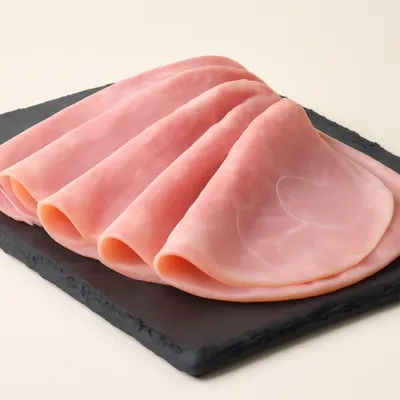

Galettes bretonnes — savory buckwheat crepes — are a specialty of Brittany. Buckwheat, or sarrasin, was introduced to Europe in the Middle Ages and reached Brittany by about the thirteenth century; the galette de sarrasin is documented from that period. Unlike the sweet wheat-flour crepe, the galette uses only buckwheat flour, water, and salt — no milk, no egg — because buckwheat contains no gluten-forming proteins, the batter does not require resting to relax gluten, and its naturally rustic, nutty character suits savory fillings. The galette is cooked on a large flat cast-iron surface — a billig — and is classically filled with a fried egg, ham, and grated cheese — the galette complete — though many other fillings are used.
A galette complete is a large, lace-edged buckwheat crepe folded around a fried egg, ham, and melted cheese. The buckwheat gives the crepe a dark, speckled appearance and a distinctive nutty, earthy flavor that no wheat crepe can match; the edges are crisp and lacy, the center soft. Eaten hot, folded into a square or rolled, it is the savory meal of the Breton creperie.
Galettes bretonnes rest on the properties of buckwheat flour. Buckwheat — despite its name — is not wheat but a relative of rhubarb; its flour contains no gluten-forming proteins. This means the batter can be mixed and used immediately without resting (no gluten to relax), and the resulting crepe is naturally tender rather than chewy. The high proportion of water to flour gives a thin, pourable batter that spreads quickly on the hot surface; the starches gelatinize on contact, setting the crepe in seconds. The buckwheat's own complex carbohydrates and aromatic compounds give the galette its dark color and nutty flavor. The billig — a large flat cast-iron disc — conducts heat evenly across the whole surface, essential for cooking the thin batter uniformly.
Variations
Fillings are countless — egg, ham, cheese, mushrooms, spinach, ratatouille; the buckwheat batter and the flat-surface cooking are the constants.
On the Palate
Where Galettes Bretonnes sits in the French flavor cloud
Ingredients
Serves 4
How it's made
6 steps · 20 min
- 15 min
Whisk buckwheat flour with water and salt to a thin, smooth batter; rest briefly if you like.
- 23 min
Heat a large flat cast-iron surface or crepe pan; wipe with a little oil or butter.
- 33 min
Pour a ladle of batter and spread quickly to a thin round.
Watch outPour and spread the batter fast — buckwheat has no gluten, so it sets almost on contact; hesitate and you get thick, torn patches instead of a thin round.
- 45 min
Cook until set and lacy at the edges; flip briefly.
- 55 min
Add fillings — a cracked egg spread across, sliced ham, grated cheese — to one half.
Watch outAdd the egg and fillings once the galette is set and lacy at the edges — too early and the crepe tears when you fold it.
- 65 min
Fold the galette over the filling; cook until the cheese melts and serve hot.


