Basque festival street food: a thin corn-flour flatbread (talo) folded around a length of small pan-fried txistorra — the slim, fast-cured Basque chorizo.


Talo is a pre-Roman corn-substitute flatbread of the Basque Country — originally made with millet or chestnut flour, it switched to maize after the New World import in the 16th–17th centuries became affordable to Basque farmers. Txistorra is a fast-cured, paprika-loaded fresh sausage from Navarre and Aragón that was eaten young (within days of stuffing) rather than air-dried. The pairing — talo wrapping txistorra — is the food of Basque village winter festivals and Santa Águeda celebrations on February 5th, sold from market stalls and eaten standing in the cold.
Pre-Roman Basque flatbread, switched from millet to maize after the 16th-17th century New World import. Boiling water — not cold — gelatinizes the corn starch and lets the disc bend instead of cracking.
Hot in the hand, slightly heavy. The talo is bendy with a nutty corn flavour — not crisp like a tortilla chip, more like a thin Mexican tortilla but coarser and earthier. The txistorra inside is paprika-orange, juicy, more loose-textured than chorizo, with audible pop from the casing on first bite. Some of the orange fat has bled into the bread, staining it like a watercolour. Eaten standing up at a winter festival or cider-house bar — sit-down meals miss the point. Cold talo cracks; cold txistorra goes greasy. Both must be hot.
The talo's flexibility depends on starch gelatinization — corn flour mixed with boiling water (not warm) lets the starch granules absorb water and turn translucent, which is what allows the bread to bend. Add cold water and you get a brittle disc that cracks at the fold. The dry-pan cook keeps it pliant: oil would create a crust at the surface that snaps. Txistorra's signature paprika-fat must render into the talo for the dish to work — a sausage cooked separately and slipped into a separately-cooked talo is just bread and meat, not talo con txistorra.
Variations
Santa Águeda festival stalls (February 5) sell the canonical version; San Sebastián's Mercado de la Bretxa runs a thicker disc; some Navarrese cooks fold in a slice of Idiazabal cheese before the sausage.
On the Palate
Where Talo con Txistorra sits in the Spanish flavor cloud
Ingredients
Serves 4How it's made
5 steps · 30 min active + 5 min waiting
- 18 min
Mix 250g fine corn flour (Basque «irinharbi» or polenta-grade fine cornmeal — not masa harina, which is nixtamalized and behaves differently) with 1/2 tsp salt in a bowl. Pour over 220ml just-boiled water and stir with a wooden spoon until a stiff dough forms. Cover and rest 5 minutes.
Watch outUse boiling water, not warm — it gelatinizes the cornstarch and is what makes the talo flexible enough to fold without cracking.
- 28 min
Divide dough into 4 balls (about 100g each). On a sheet of parchment, press each ball flat under a second sheet, then roll with a pin to a 22cm round about 2mm thick. Trim the edge with an inverted plate for a clean circle.
Watch outKeep dough covered between rolls; corn dough dries out fast and cracks.
- 38 min
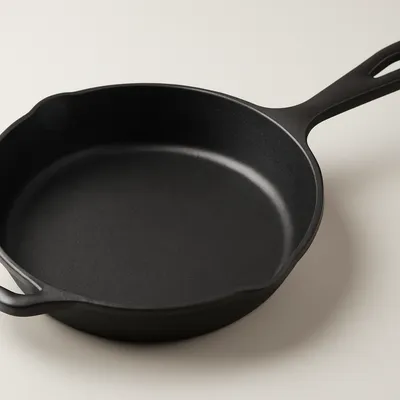
Heat a dry cast-iron griddle or heavy skillet over medium-high until water sparks off it. Cook each talo 90 seconds per side — small brown spots, no continuous brown sheen. Stack between a clean towel to keep pliable.
Watch outHot dry pan, no oil — fat scorches the corn flour and leaves a bitter rind.
- 47 min
In a separate skillet over medium, cook 4 lengths of txistorra (about 15cm each) without added fat — they release their own paprika-stained orange oil within 60 seconds. Roll for 5 minutes total until skin is crisp and inside hot through. Reserve the orange fat.
Watch outDon't pierce the casings — the orange fat is part of the eating, you want it to migrate to the talo, not leak out into the pan.
- 52 min
Lay each warm talo flat. Place a txistorra across the diameter, brush a teaspoon of the reserved orange oil onto the bread, and fold the talo in half over the sausage like a taco. Eat immediately by hand.
Archive tool suggestions — not reviewed
These legacy suggestions have not been evidence-reviewed and are not presented as required tools.