
Milanese raw-chopped finish — lemon zest, parsley, garlic. The osso buco topping; its acid cuts the marrow's fat.


Lombard, named gremolata or gremolada from the dialect verb gremolàre, to grind coarsely. Documented as the osso buco alla milanese finish in 19th-century Milan trattorie; codified in Artusi's 1891 La Scienza in Cucina recipe 210.
Artusi 1891 recipe 285 lists the spec: half a lemon's zest, two parsley sprigs, one small garlic clove, for one osso buco. Trattoria Masuelli San Marco (Milan, since 1921) keeps the original Lombard formula; Carlo Cracco's modern version adds a touch of orange zest.
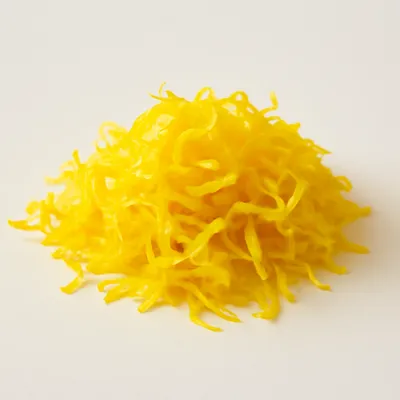
Bright yellow-green confetti, raw and dry — no oil, no liquid. Lemon zest hits the nose first, parsley sharp behind it, garlic raw and biting. Sprinkled over hot osso buco at the table, melts into the marrow and sauce.
Microplane the zest off the lemon — only the yellow, never the white pith (bitter). Hand-chop parsley and garlic together until uniform fine confetti, then fold the zest in last so the volatile oils don't dry out. Add at the moment of serving; sitting longer than 10 minutes flattens the lemon.
Variations
Standard Milanese (lemon, parsley, garlic), the Artusi 1891 formula, anchovy-added Lombard variant, orange-zest Cracco take, and the rosemary-orange Roman-influenced version served with bollito.
On the Palate
Where Gremolata sits in the Italian flavor cloud
Ingredients
Serves 4How it's made
4 steps · 8 min
- 12 min
Zest 1 large lemon avoiding white pith.
Watch outZest only the bright yellow skin — stop the moment you hit the white pith underneath, it turns the whole thing bitter.
- 23 min
Mince 1 small bunch flat-leaf parsley very fine.
- 32 min
Mince 2 garlic cloves to fine paste.
- 41 min
Toss together in small bowl; spoon over osso buco just before serving.
Watch outToss and spoon it on right before serving — let it sit past ten minutes and the fresh lemon lift goes flat.


