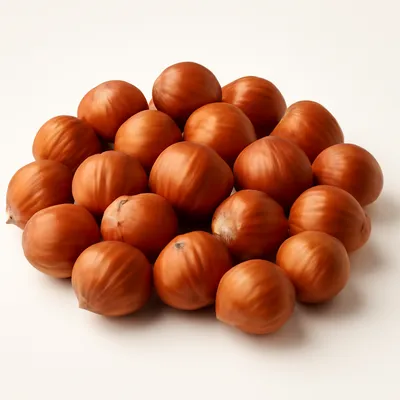
The great festive rolled sweet of Trieste and Gorizia, of Slovene origin and a probable ancestor of the Friulian gubana. A rich, three-times-worked leavened dough is rolled paper-thin and coiled snail-like around a dense, dark filling led by walnuts, with hazelnuts, raisins, pine nuts, dark chocolate, honey, rum or grappa, citrus zest and cinnamon, then proved and baked into a soft, spiralled loaf. Softer and richer than its cousins gubana and presnitz, it is the Christmas and Easter cake of the Julian table.





Putizza takes its name from Slovene 'potica', from the verb 'poviti', 'to wrap or roll', and belongs to the Slovene lands that ring Trieste. The sweet is old: the Slovene reformer Primož Trubar is said to name potica as early as 1575, and it recurs in 18th-century Viennese recipe collections and in Katharina Prato's 1890 Graz cookbook 'Die süddeutsche Küche'. In 1864 a putizza was presented to Archduke Maximilian and Archduchess Charlotte at Miramare Castle above Trieste, and Maria Stelvio recorded it as 'potiza di Gorizia' in her 1927 'Cucina triestina'. It belongs to the Mitteleuropean family of Austro-Hungarian rolled cakes alongside gubana and presnitz, set apart by its leavened, softer three-dough construction and the richness of its filling. In 2016 the Trieste Chamber of Commerce fixed a production standard for 'putizza di Trieste', and it is a recognised Friuli Venezia Giulia traditional food product.
Soft and tender-crumbed, moist from the leavened dough, the spiral revealing a near-black filling that is intensely nutty from walnut and hazelnut, sweet with raisins and honey, deepened by dark chocolate and warmed with rum and cinnamon.
Working the dough in three stages builds a strong, extensible gluten network that can be rolled almost translucent without tearing, while repeated yeast fermentation aerates the crumb and develops flavour, giving putizza its softness. Walnuts and hazelnuts are rich in oil, which keeps the baked filling moist and carries fat-soluble aromas; honey and raisins are hygroscopic and hold water, so the loaf stays moist for days. Coiling the thin sheet around the filling creates the many-layered spiral, and an egg wash browns the surface through the Maillard reaction while the enclosed filling steams and sets.
Variations
Fillings vary by household: walnut leads, but hazelnuts, almonds, pine nuts, raisins, dark chocolate, breadcrumb, honey, apricot jam, rum or grappa, cloves and citrus zest all appear. The related presnitz uses a flaky puff pastry and coils into a tight ring, while the Friulian gubana is smaller and often soaked in grappa; the Slovene potica, its direct ancestor, was granted EU protected status in 2021. Some bakers coil the roll into a round tin, others leave it as a long loaf.
On the Palate
Where Putizza sits in the Italian flavor cloud
Ingredients
Serves 10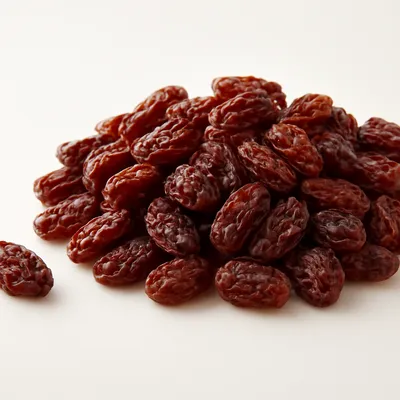



How it's made
8 steps · 1 hour active + 3 hours waiting
- 130 min
First dough (starter): dissolve 15 g fresh yeast in 100 ml warm milk with 50 g flour; cover and leave until frothy, about 30 minutes.
- 260 min
Second dough: mix the starter with a further 150 g flour, 1 egg, 40 g sugar and 40 g softened butter; knead, cover and prove until doubled, about 1 hour.
- 340 min
Third dough: work in a final 100 g flour, an egg yolk, 30 g butter, a pinch of salt and grated lemon zest to a smooth, elastic dough; prove again 30-40 minutes.
- 415 min
Make the filling: toast and grind 250 g walnuts with 80 g hazelnuts; mix with 80 g sugar, 50 g raisins, 50 g grated dark chocolate, 2 tbsp honey, 2 tbsp rum, cinnamon and citrus zest, loosening with a little warm milk.
- 510 min
Roll the dough on a floured cloth as thin as possible into a large rectangle, then spread the filling evenly to the edges.
Watch outRoll the dough until you can almost see through it — the paper-thin sheet is what gives putizza its many fine spiral layers.
- 610 min
Using the cloth, roll the sheet up tightly from the long side, then coil the roll snail-like into a buttered round tin.
Watch outRoll it up tight from the long side so no air pockets form — a loose coil bakes with gaps instead of a clean spiral.
- 740 min
Cover and prove a final 40 minutes, then brush with beaten egg.
- 850 min
Bake at 170°C for about 45-50 minutes until deep golden; cool before dusting with icing sugar and slicing to show the spiral.
Watch outBake to a deep gold — a pale loaf means the coiled center is still doughy and the spiral won't hold when sliced.
Archive tool suggestions — not reviewed
These legacy suggestions have not been evidence-reviewed and are not presented as required tools.


