
Cramique is the raisin brioche of French Flanders and Picardy, a rich loaf of an enriched yeast dough — flour, milk, butter, eggs and sugar — studded with raisins and baked in a tin to a deep golden crust. Softer and lighter than a plain bread but less buttery than a Parisian brioche, it is the everyday sweet loaf of the north, sliced and buttered for breakfast or the afternoon goûter. Its sister loaf, the craquelin, swaps the raisins for pearl sugar. It is a staple of the bakeries of Lille and the Flemish towns.





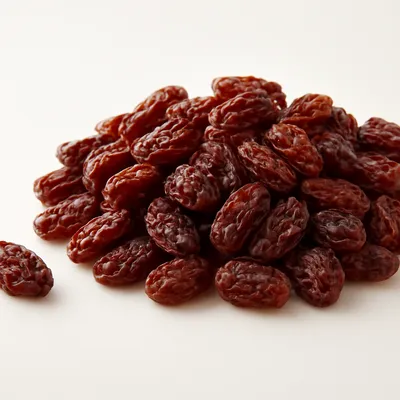
Cramique is a classic of the boulangeries of French Flanders, Picardy and Belgium, part of the shared bread culture of the northern plain that straddles the Franco-Belgian border. It belongs to the family of enriched milk-and-butter breads that bakers of the cool dairy north made for feast days and Sundays, the raisins and sugar marking it out from everyday bread. Its close cousin, the craquelin, replaces the raisins with crunchy pearl sugar. Both are traditional bakery loaves of the Nord rather than the work of any single pâtissier, eaten at breakfast and at the afternoon goûter.
The crumb is soft, golden and faintly sweet, lighter and more open than a buttery Parisian brioche, with sweet, plumped raisins scattered through. The crust is thin and deep-brown, a little chewy where the eggwash has glazed it. Fresh, it is tender enough to eat plain; a day on, it is at its best toasted and spread thickly with butter, the raisins turning jammy in the heat. It is gentle, comforting bakery food, the smell of warm milk bread and dried fruit.
Cramique is an enriched dough, where milk, butter, eggs and sugar are worked into the flour. Enrichment tenderizes: fat coats the gluten strands and shortens them while egg and sugar hold moisture, giving a soft, fine crumb instead of a chewy bread one. The trade-off is that fat and sugar slow the yeast, so the dough needs a long, patient proof, and the butter is worked in only after the gluten has developed. The raisins are usually soaked so they stay plump rather than drawing water from the crumb, and an eggwash gives the deep, glossy crust through sugar browning in the oven.
Variations
The everyday split is between cramique, with raisins, and craquelin, which carries pearl sugar through the crumb instead — some loaves carry both. The sweetness and butter content vary from a near-bread to a richer brioche, and the raisins are sometimes soaked in tea or a little rum. It is baked in a loaf tin or as small individual buns. The Parisian brioche is its richer, more cake-like cousin; the cramique is the plainer, milk-bread version of the north, made for slicing and buttering.
On the Palate
Where Cramique sits in the French flavor cloud
Ingredients
Serves 8

How it's made
8 steps · 40 min active + 2 hours 50 min waiting
- 115 min
Soak the raisins in warm water until plump, then drain well.
- 212 min
Mix the flour, sugar, salt and yeast, then work in warm milk and the eggs to a dough.
- 312 min
Knead until smooth and elastic, then work in the softened butter a little at a time.
Watch outWork the softened butter in only after the dough is smooth and elastic — added too early it coats the gluten and the crumb never develops.
- 470 min
Mix in the drained raisins, then cover and let the dough rise until doubled.
- 550 min
Knock back, shape into a loaf and place in a buttered tin, then let it prove again.
- 63 min
Brush the top with beaten egg for a glossy crust.
- 733 min
Bake at about 180 degrees Celsius for 30 to 35 minutes until deep golden and hollow-sounding.
Watch outIt's baked through when it's deep golden and sounds hollow tapped underneath — that hollow knock means the crumb is set.
- 815 min
Cool on a rack, then slice and serve with butter.
Archive tool suggestions — not reviewed
These legacy suggestions have not been evidence-reviewed and are not presented as required tools.


