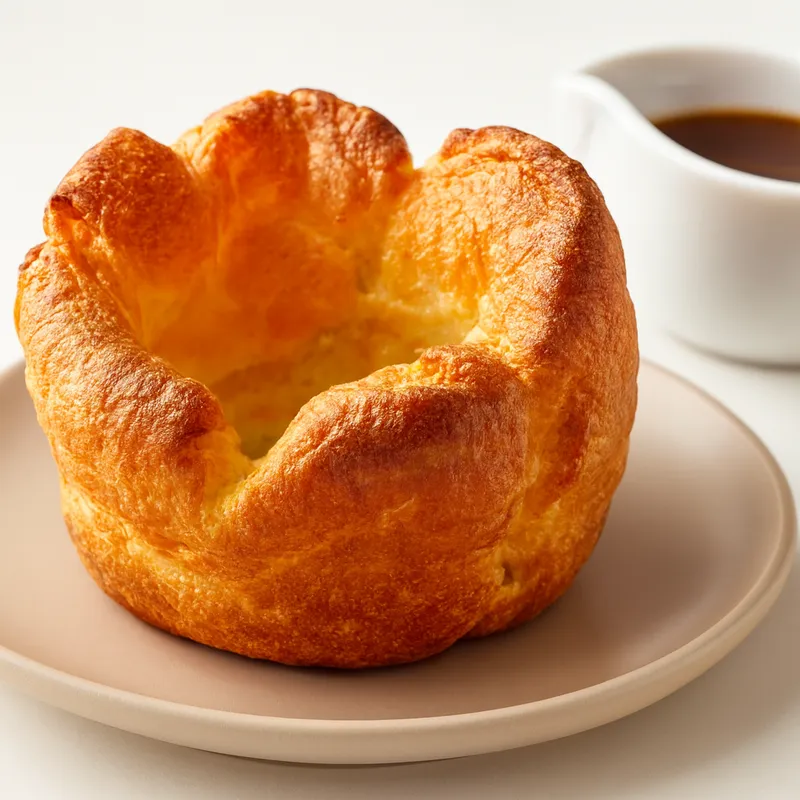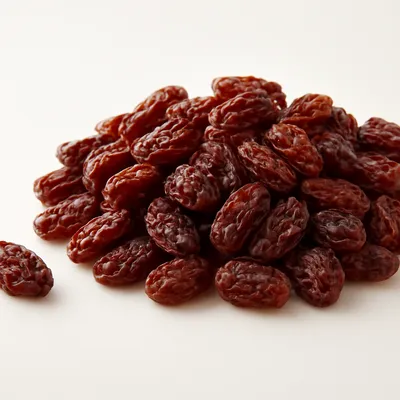



The Selkirk bannock is a rich, buttery, sultana-laden tea bread that originated in the Royal Burgh of Selkirk in the Scottish Borders in 1859. Its creator was Robbie Douglas, a Selkirk baker who is said to have adapted an earlier plainer bannock by enriching the dough with butter and packing it with sultanas, producing a round, flat, fruit-dense loaf that became a regional sensation. The bannock's fame spread when Queen Victoria, passing through the Borders, was presented with one and is said to have refused to travel without it thereafter, a story that fixed its prestige. The word 'bannock' is an ancient Scots term for a round flat bread, but the Selkirk bannock is uniquely leavened, sweet and fruit-filled, distinct from the oat-based griddle bannocks of the Highlands. It is listed in the Slow Food Foundation's Ark of Taste, which catalogues distinctive regional foods at risk of extinction, and remains a specialty of Selkirk bakeries, served split, buttered and toasted, with a cup of tea.
A dense, soft, pale-yellow crumb shot through with plump sultanas, buttery and lightly sweet, with a tender crust. Eaten in thick slices, split and toasted with more butter, with tea.
The Selkirk bannock is an enriched dough defined by an exceptionally high proportion of fruit. A strong dough of plain flour, yeast, milk, butter, sugar and a little salt is proved once, then an extraordinary quantity of sultanas, often equal in weight to the flour, is kneaded in, the dough becoming more fruit than batter. After a second short prove the dough is shaped into a large flat round and baked at a moderate temperature, around 180 degrees C, for 35 to 45 minutes, until deep golden. The high butter content keeps the crumb soft and tender, the sultanas plump in the moisture of the dough, and the flat shape ensures even baking through the dense fruit mass. The bannock is brushed with butter or sugar syrup on coming out of the oven for a soft, glossy top. Like all enriched fruit breads it keeps well for several days and is improved by toasting, which warms the butter and re-plumps the fruit.
Variations
Some recipes add a little mixed peel or cinnamon. A savoury version, the 'Selkirk bannock with cheese', splits the loaf with cheese. Modern bakers sometimes add a sugar glaze.
On the Palate
Where Selkirk Bannock sits in the British flavor cloud
Ingredients
Serves 10
How it's made
7 steps · 30 min
- 15 min
Warm 200ml milk with 75g butter and 50g caster sugar until melted; cool to lukewarm, then whisk in 1 beaten egg.
- 28 min
Mix 500g strong white flour with 1 tsp salt and 7g instant yeast, add the milk mixture, and knead to a soft dough for 8 minutes; prove 1.5 hours until doubled.
Watch outProve until fully doubled before adding fruit — the sultanas are heavy and will weigh the dough down, so it must have risen well first or the crumb bakes dense.
- 36 min
Knead 400g sultanas into the dough until evenly distributed.
- 45 min
Shape into a large flat round about 22cm across, place on a lined tray, cover and prove 45 minutes until puffy.
- 58 min
Bake at 180 degrees C for 35 to 45 minutes until deep golden and hollow-sounding underneath.
Watch outIt's done when deep golden and the base sounds hollow when tapped — the heavy fruit keeps the middle moist, so use the hollow knock, not just the color.
- 64 min
Brush the top with melted butter while hot; cool on a wire rack.
- 73 min
Serve sliced, split and toasted with butter.
Archive tool suggestions — not reviewed
These legacy suggestions have not been evidence-reviewed and are not presented as required tools.