






Mlyntsi are the Ukrainian first cousin to Russian blini — thinner, more fragile, made from a wheat-flour-and-milk batter rather than the buckwheat blini of old Russia. Eaten daily across Ukraine in many forms: with butter and sour cream at breakfast, filled with cottage cheese (naleshnyky), folded around mushroom caviar at the Easter table, or topped with red caviar at New Year. The mlyntsi's thinness is a point of skill — done right, they should be transparent enough to read newsprint through.
A fold of mlyntsi on the plate — translucent thin, dotted with browned spots from the pan. Spread melted butter on top; the heat melts it instantly into golden pools. A spoonful of sour cream beside; for celebration, a small mound of red caviar. Roll up and bite.
Mlyntsi's thinness comes from a high water-to-flour ratio (1.6:1 vs 1:1 for thicker pancakes) — the extra water means the batter spreads easily and cooks in under 2 minutes. The two-stage liquid (cold milk + warm water) helps the gluten relax during the rest, producing a more tender crêpe than all-cold liquid would.
Variations
Central Ukrainian mlyntsi are plain crêpes; naleshnyky are mlyntsi filled with cheese; Russian blini are buckwheat — three Slavic pancakes.
On the Palate
Where Mlyntsi z Maslom sits in the Ukrainian flavor cloud
Ingredients
Serves 4
How it's made
5 steps · 30 min active + 10 min waiting
- 15 min
Whisk 2 eggs with 200ml milk, 200ml warm water, ½ tsp salt, 1 tbsp sugar, 2 tbsp melted butter until smooth.
- 212 min
Gradually whisk in 250g plain flour until no lumps remain. Rest batter 10 min.
- 33 min
Heat a 22cm crêpe pan or non-stick skillet over medium-high heat. Brush lightly with butter.
Watch outWait until the pan is properly hot before the first pour — a lukewarm pan makes the batter stick and tear instead of releasing clean.
- 42 min
Pour ¼ cup batter into hot pan, swirling to coat the bottom into a thin even round. Cook 60-75 seconds until edges lift; flip and cook 30 seconds more. Stack on a warm plate.
Watch outSwirl fast and thin, and flip only when the edges lift on their own — chase it too early and the delicate crêpe rips.
- 518 min
Continue with remaining batter, buttering pan as needed. Fold mlyntsi into quarters; serve hot with butter, sour cream, and a side of jam (sweet) or red caviar (savory).
Archive tool suggestions — not reviewed
These legacy suggestions have not been evidence-reviewed and are not presented as required tools.
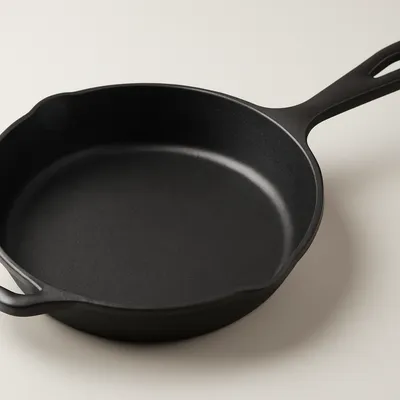
A heavy, single-piece cast iron pan, 25-30 cm across, weighing 1.5-2.5 kg. Once preheated, the thick mass holds 230°C+ even when a cold steak hits the surface — that's the secret to a deep crust. A well-seasoned skillet (multiple thin layers of polymerized oil baked into the iron) is essentially nonstick, gets better with use, and lasts a century. Lodge skillets from Tennessee have been in continuous production since 1896.

Hand-held wire loop tool for beating eggs, whipping cream, emulsifying dressings, and incorporating air into batters. Balloon whisks (large round head) for whipping cream and meringues; French whisks (narrow tear-drop) for sauces in pots; flat whisks (gravy) for pan sauces. Stainless steel is universal; silicone-coated for non-stick pans.


