
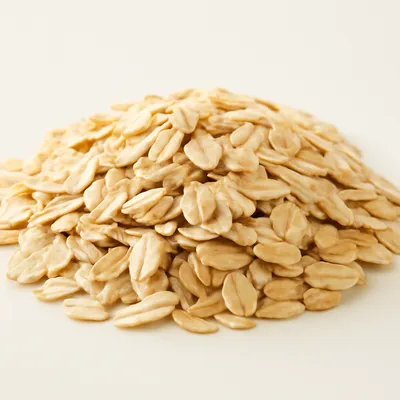
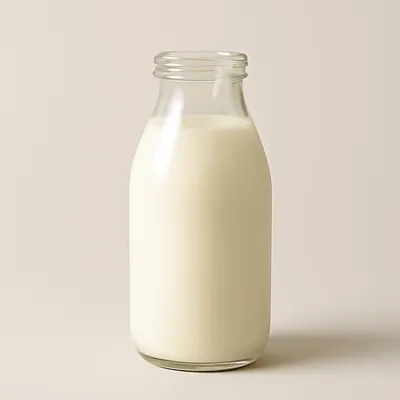
Whole wheat flour, white flour, oatmeal, buttermilk, baking soda, and salt mixed by hand into a shaggy dough, shaped into a round, slashed crosswise on top, and baked at high heat for 40 minutes. The Irish kitchen-table bread — no yeast, no kneading, no waiting — fresh in under an hour.




Baking soda reached Ireland in the 1840s, around the start of the Great Famine — perfect timing for a population that had little time and less yeast. The cross slashed on top, traditionally said to be 'letting the fairies out' or marking the bread as a Christian blessing, is functional: it lets the loaf expand without splitting unpredictably. Every Irish household has a slightly different recipe — coarser wheat flour, more or less treacle, sometimes seeds.
Crust crackles open with a knife, dark wheaty-brown with a slight bitter edge. Crumb is dense, hearty, slightly chewy — full of wheat flavor, with the baking soda contributing a faint mineral tang. Slather with cold butter — that's the whole point. Lasts only one day at peak; the second day is for toast.
Baking soda is alkaline; buttermilk (pH ~4.5) provides the acid. Their reaction produces CO₂ immediately on mixing — which is why the dough cannot wait around and must go straight into a hot oven. The cross-cut isn't symbolism alone: it relieves the rapid expansion of the rising loaf, preventing irregular cracking. Whole wheat flour gives the brown color and earthy depth; the oatmeal adds chew.
Variations
White soda bread uses only white flour and is lighter. Cake soda bread adds raisins and a bit of sugar for a sweeter loaf. Seeded soda bread folds in sunflower and pumpkin seeds. Some bakers add an egg for richer crumb; purists call that an Americanism.
On the Palate
Where Brown Soda Bread sits in the Irish flavor cloud
Mix the wet dough just until it comes together and get it straight into a hot oven — the baking-soda-and-buttermilk reaction throws off CO₂ the instant they meet, so there's no waiting and absolutely no kneading.
Ingredients
Serves 8
How it's made
8 steps · 15 min active + 35 min waiting
- 13 min
Preheat oven to 220°C. Lightly flour a baking sheet.
- 22 min
In a large bowl: whisk 300 g whole wheat flour + 150 g plain white flour + 50 g pinhead oatmeal + 1 tsp salt + 1 tsp baking soda.
- 31 min
Make a well. Pour in 400 ml buttermilk + 1 tbsp dark treacle (or molasses) optional.
- 43 min
Mix with a wooden spoon then with one hand until just combined — shaggy and slightly wet. Do NOT knead.
Watch outStop mixing the second the flour is dampened and it clumps into a rough, sticky mass — no smooth dough here.
- 52 min
Tip onto floured surface, shape into a round 5-6 cm thick. Move to baking sheet.
- 61 min
Cut a deep cross across the top, 2 cm deep. Dust with flour.
Watch outSlash the cross a full 2 cm deep so the loaf can open up freely instead of cracking randomly.
- 740 min
Bake 20 min at 220°C, then reduce to 200°C and bake 18-22 min more — sounds hollow when tapped on the base.
Watch outIt's baked through when you tap the base and it sounds hollow, like knocking on a drum.
- 830 min
Cool 30 min on a wire rack (cutting hot makes it gummy).


