An icon of Basilicata (the Lucanian region of southern Italy): sweet Senise peppers, sun-dried until brittle, then flash-fried for a couple of seconds in hot olive oil until they turn glassy, crisp and a deep bright red. The pepper used is the Peperone di Senise, a thin-fleshed, low-water sweet variety strung into garlands and dried on house walls and balconies in late summer. The fried pods are eaten as a crunchy snack or a side, and are just as often crumbled over pasta, eggs and baccalà as a flavouring. They are not hot — the heat is the frying, not the pepper.




The dish is built on the Peperone di Senise, the sweet pepper of the Sinni valley around Senise in the province of Potenza, granted Protected Geographical Indication (PGI/IGP) status in 1996 under Commission Regulation (EC) No 1263/96. The variety is prized precisely because its thin pericarp — about 1.5 to 2.2 millimetres — and low water content let it dry fully and quickly without rotting, and its sturdy stalk does not detach during drying, so the pods can be strung into the garlands the locals call serte. The fried form is registered as a traditional agri-food product (PAT) rather than under its own PGI. The dialect name «crusco» means «crisp» or «crunchy», describing the brittle texture the pepper takes on after a second or two in the oil.
A whole fried pod shatters like a thin crisp, dry and weightless, leaving a clean, faintly nutty, almost smoky sweetness with no chilli heat at all. The colour is the tell: a fried crusco is glossy, deep scarlet and translucent at the edges, never brown. Timing is everything — perfectly fried, it is brittle and bright; a few seconds too long and it turns bitter and tan, a moment too short and it stays leathery and chewy. Eaten warm and just-fried, crumbled over a dish, the shards keep their crackle against soft food.
Drying is what makes the flash-fry possible. The Senise pepper's thin flesh and low moisture mean that by the time it is sun-dried it holds almost no water, so dropped into hot oil it does not steam and stew — it crisps almost instantly as the last traces of moisture flash off and the cell walls set rigid. That same low moisture is why it scorches in seconds: with little water to buffer the heat, the sugars and the thin pod go from crisp to burnt and bitter very fast, so the pepper is plunged in and lifted out within a second or two, at a moderate oil temperature around 160 to 170°C, and drained at once on paper. Fry too hot or too long and you caramelise straight past crisp into acrid.
Variations
Beyond eating them whole as a snack or contorno, the cruschi are ground or crumbled into a great many Lucanian dishes: scattered over pasta — often with toasted breadcrumbs (mollica) in place of cheese — folded into scrambled eggs, served alongside cured meats and cheeses, or crumbled over salt cod as baccalà alla lucana. Ground finer they become a dried-pepper powder used as seasoning, and the same Senise peppers go into the local sausage tradition. The closely related pepper of Calabria is used in similar fried preparations across the neighbouring region.
On the Palate
Where Peperoni Cruschi sits in the Italian flavor cloud
The whole dish lives or dies in the one-to-two-second fry: at a moderate 160-170°C you pull the peppers the instant they turn glassy and crisp, because a moment longer scorches them bitter.
Ingredients
Serves 4How it's made
7 steps · 8 min active + 2 min waiting
- 11 min
Wipe the dried Senise peppers clean with a dry cloth — do not wash them, as any water will make them spit and stew in the oil.
- 22 min
Snap off the stalks and shake out the seeds from inside each pod.
- 33 min
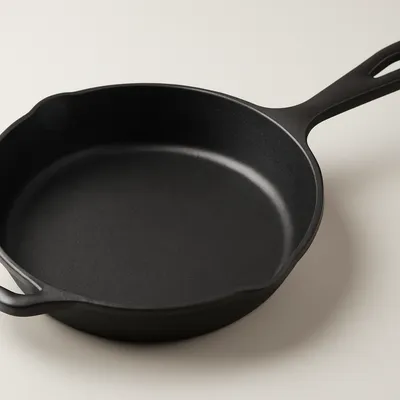
Heat a generous depth of olive oil in a small pan with a clove of garlic until the garlic turns golden and perfumes the oil, then lift the garlic out; the oil should be moderate, around 160 to 170°C — hot but not smoking.
Watch outPull the garlic once it is golden and the oil smells sweet; oil sitting around 160-170°C is hot but not smoking.
- 41 min
Drop in one or two peppers at a time and fry for only one to two seconds, until they puff, darken slightly and turn glassy and crisp.
Watch outThe pepper puffs, darkens a shade and turns glassy in one or two seconds; that is the moment.
- 51 min
Lift them out immediately with a slotted spoon, before they brown, and drain on kitchen paper.
Watch outLift them out before they brown; on the paper they should stay bright red and shatter-crisp.
- 61 min
Sprinkle with a little salt while still warm.
- 71 min
Serve at once as a snack or side, or let cool and crumble over pasta, eggs or baccalà.
Archive tool suggestions — not reviewed
These legacy suggestions have not been evidence-reviewed and are not presented as required tools.