Kintsuba is a wagashi made by setting sweetened azuki bean paste into a firm, sliceable block — essentially a thick yokan stiffened with a little agar — then cutting it into cubes or slabs. Each face is dipped in a thin wheat-flour-and-water batter and seared on a hot griddle, one side at a time, so the sweet is sheathed in a pale, papery skin while the inside stays moist and dense. It is eaten as a teatime sweet, served at room temperature, and the cut shows the smooth dark bean paste behind its thin pan-fried coat.



Kintsuba dates to the Edo period (1603–1868). It began as a sweet called gintsuba — 'silver tsuba', after the round guard (tsuba) of a Japanese sword, whose shape the early confection imitated — made in the Kyoto–Osaka region, originally with a rice-flour coating; the exact birthplace is given variously as Kyoto or Osaka. When the sweet reached Edo (Tokyo) it was renamed kintsuba, 'gold tsuba', gold being prized above silver. The round form later gave way to the square block common today, which is simpler to coat and griddle face by face. A popular story crediting the square shape to a Kabuki actor's square-guarded stage sword is not well documented.
The coat is the whole point: a thin, almost translucent skin, barely set, just firm enough to hold the block together and lend a faint griddled note. Behind it the azuki paste is dense, smooth and squarely sweet, with the gentle earthiness of red beans rather than any added flavour. A good kintsuba has a coat you can scarcely see and a filling that holds its shape yet softens on the tongue; a poor one has a thick, gummy or doughy skin, or a filling so loose it slumps. It is meant to be eaten by hand in two or three bites, with green tea to cut the sweetness.
Two starches do the work. The filling is held by agar (kanten): dissolved hot and cooled, its galactan strands form a thermo-set gel that lets sweetened bean paste be cut into clean blocks rather than smeared — a stiffer set than the gelatin used in Western sweets, and one that holds at room temperature. The coat is a slack wheat-flour batter: brushed thin on each cut face and griddled, its proteins and gelatinised starch set fast into a dry, papery skin without browning much, since the pan is kept moderate and each face cooks only briefly. Coating one face at a time is what keeps the layer thin and even all round.
Variations
The classic is the square or rectangular azuki block, but many shops make round kintsuba in a nod to the original sword-guard form. Beyond red bean, fillings of white bean paste (shiroan), chestnut, sweet potato, edamame or matcha appear, especially regionally. Kanazawa is particularly known for refined kintsuba and treats it as a local specialty. The same idea — a set block of bean sweet given a thin griddled skin — links kintsuba to yokan, of which its filling is essentially a firm form.
On the Palate
Where Kintsuba sits in the Japanese flavor cloud
Ingredients
Serves 8
How it's made
8 steps · 30 min
- 110 min
Soften agar in water, bring to a simmer until fully dissolved, then stir in smooth or chunky sweetened azuki paste with a little sugar.
Watch outDissolve the agar fully before mixing in the bean paste — undissolved agar won't gel, and the filling must set stiff enough to cut into clean blocks.
- 28 min
Cook the paste down briefly until thick and glossy, stirring so it does not catch.
- 390 min
Pour into a shallow square mould or tray and chill until firmly set.
- 45 min
Turn out the set block and cut into neat cubes or thick slabs.
- 55 min
Whisk a thin batter of wheat flour, a little glutinous rice flour and water until smooth and runny.
- 63 min
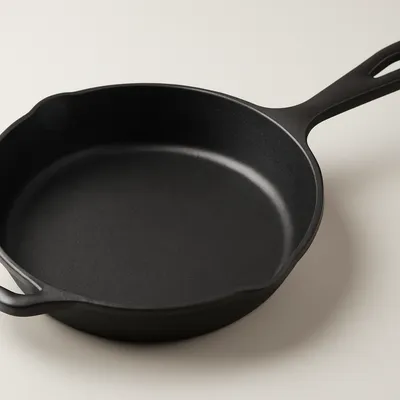
Heat a lightly oiled griddle or pan over moderate heat.
- 78 min
Dip or brush one face of each block in the batter and set it on the griddle until the coat just sets and dries.
Watch outDip one face at a time and set it down until the batter just dries — the coat has to stay thin and papery, so keep the pan moderate and each face brief.
- 812 min
Repeat face by face until all sides are coated and lightly cooked, then cool to room temperature before serving.
Archive tool suggestions — not reviewed
These legacy suggestions have not been evidence-reviewed and are not presented as required tools.