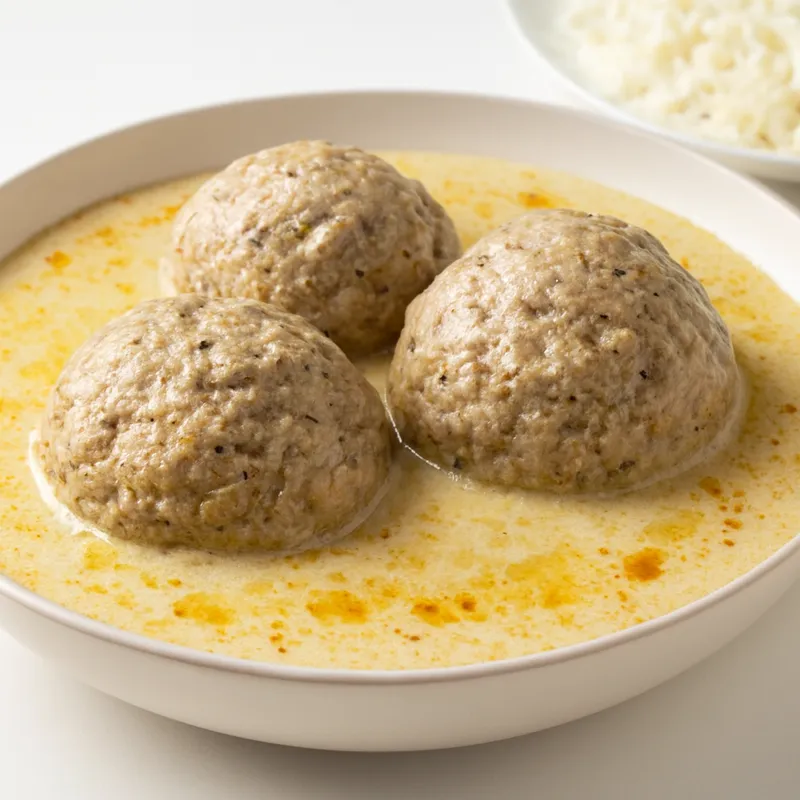
A dense, aromatic sweet made from soaked and ground split mung beans slowly fried in copious ghee until deep golden, then enriched with hot saffron-sugar syrup and green cardamom into a rich, cohesive halwa. The signature winter-and-wedding dessert of Rajasthan's Marwari community, prized for its intensely nutty, buttery depth and the patience its hour-long constant stirring demands.
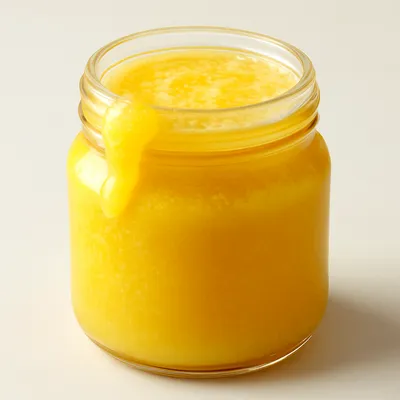


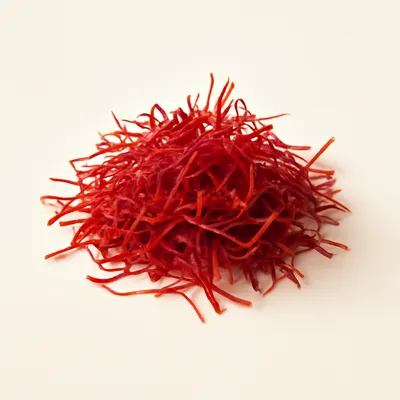


Moong Dal Ka Halwa is the centerpiece sweet of Rajasthani and Marwari festive tables, most closely rooted in the Marwar region of western Rajasthan — the homeland of the Marwari merchant community whose trade networks carried this preparation across the subcontinent. It is customarily made in the cold months of December and January, when the dense ghee content was regarded as warming and fortifying, and features at every major Marwari wedding as a marker of the host's generosity. The halwa category entered the subcontinent through Persianate and Mughal court traditions, but the moong dal variant — distinguished by its raw-batter slow-roasting method rather than a flour-and-water roux — is an indigenous Rajasthani adaptation that repurposes an everyday legume into a ceremonial sweet. The labor required — continuous stirring for up to an hour — is itself a cultural signal: the more ghee invested and the longer the stirring, the greater the respect shown to guests.
Dense and intensely rich, with a sandy-smooth texture that melts slowly on the tongue. The ghee imparts a deep, buttery lusciousness while the roasted dal delivers a distinctive toasted-nut depth. Saffron lends a warm golden perfume; cardamom cuts through the sweetness with a cool, camphor-edged spice.
Grinding soaked dal to a smooth batter and slow-frying in ghee at 150–170°C drives off all residual moisture and initiates Maillard reactions between the dal's proteins and naturally occurring sugars, producing the characteristic deep gold color and roasted-nut aroma. The high ghee ratio — often equal in weight to the dal — moderates heat transfer and prevents scorching while keeping the mass mobile. Once aromatic, hot sugar syrup (cooked to single-thread stage, ~105°C) is poured in: the fried dal mass absorbs the syrup rapidly, the gelatinized chickpea starches swell and bind the sugar solution into a dense, cohesive fudge-like body. Saffron's volatile compounds (safranal, crocin) and cardamom's terpenoids (1,8-cineole) bloom in residual hot ghee and bind into the fat phase, ensuring the aroma persists through cooling.
Variations
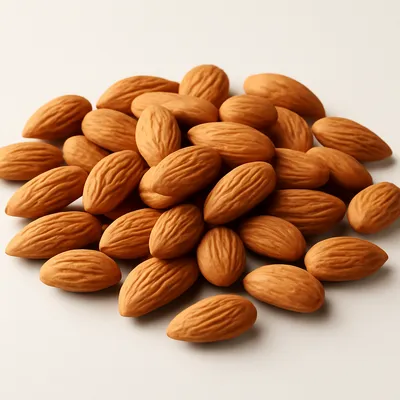
Kesar-Badam version: saffron and blanched almond-forward, with almonds folded in during the final stir. Dry-fruit-rich version: cashews, pistachios, and raisins added at the finish for textural contrast. Milk-syrup version: warm full-fat milk replaces plain water in the syrup, yielding a creamier, paler halwa. Suji-blend version: a small portion of semolina added to the batter speeds cooking and lightens the texture.
On the Palate
Where Moong Dal Ka Halwa sits in the Indian flavor cloud
Ingredients
Serves 6
How it's made
7 steps · 8 hours
- 1480 min
Rinse split mung dal in cold water, then cover generously with fresh water and soak for 6–8 hours until fully softened; drain completely and grind with the minimum water needed into a smooth, lump-free thick batter.
- 25 min
Melt ghee in a wide, heavy-bottomed pan (kadai or Dutch oven) over medium-low heat until shimmering.
- 33 min
Pour the dal batter into the ghee; immediately begin continuous stirring with a wooden spoon or flat spatula, scraping the bottom and sides of the pan constantly.
- 445 min
Continue to fry over medium-low heat, stirring without pause, for 40–50 minutes until the mass turns deep golden-brown, smells of toasted nuts, and ghee begins to pool visibly at the edges.
Watch outFry the dal batter on medium-low, stirring nonstop forty to fifty minutes until deep golden-brown and ghee pools at the edges — that pooling is the doneness sign; let it catch and it turns bitter.
- 510 min
While the dal fries, dissolve sugar in 1 cup of water in a separate saucepan, add saffron strands, bring to a boil, then reduce to a vigorous simmer until the syrup reaches single-thread consistency (~105°C).
- 65 min
Carefully pour the hot saffron syrup into the fried dal (it will splatter); stir briskly and continuously for 4–5 minutes over medium heat until the halwa absorbs all the syrup and pulls away cleanly from the pan sides.
Watch outPour the hot syrup in carefully (it spatters) and stir briskly until the halwa drinks it all and pulls cleanly from the pan sides.
- 75 min
Stir in ground cardamom and chopped nuts, mix well, and serve warm in individual portions.