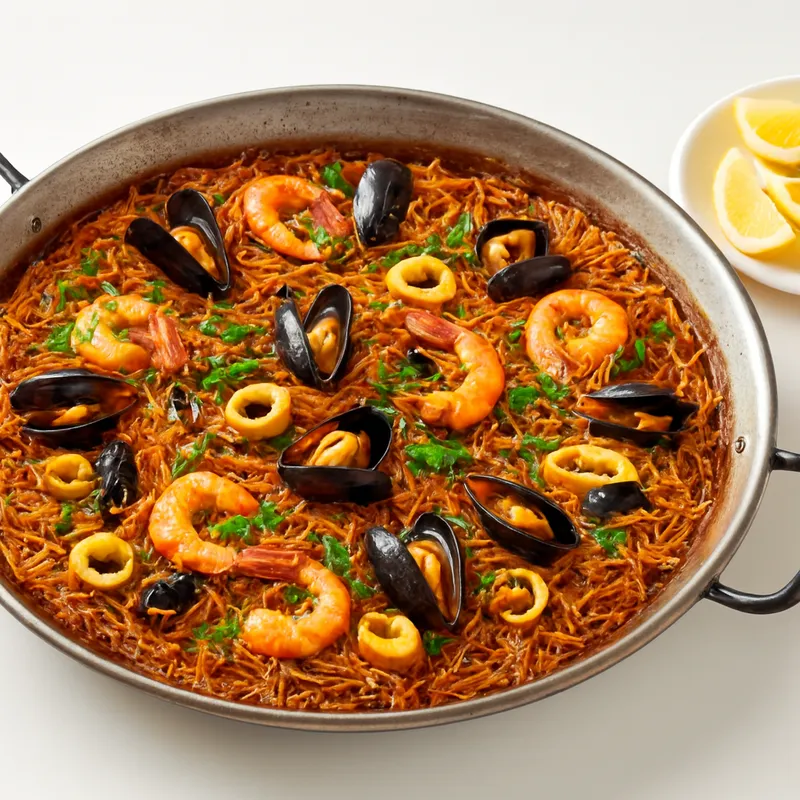
A sweet enriched-dough Easter bread of Valencia and Murcia, baked with one or more whole eggs set into the dough in their shell. The lightly sweet, brioche-like dough is shaped into a ring or a figure, a raw egg pressed into it, then baked so the egg hard-cooks in place; the top is brushed with egg, scattered with sugar or aniseed, and sometimes studded with sprinkles. In Valencia and Murcia the traditional whole hard-boiled egg has been kept, whereas in Catalonia the eggs are now usually replaced by chocolate. It is given by godparents and eaten over the Easter weekend.




A sweet mona is recorded as early as the 15th century, named in the Valencian incunable Trobes en lahors de la Verge Maria. In 1783 the Spanish royal dictionary defined the mona as a cake baked with eggs in their shell at Easter, found in Valencia and Murcia and equivalent to the hornazo elsewhere in Spain. By custom the godparents give the mona to their godchild, traditionally with as many eggs as the child's age up to a maximum of twelve, the age of first communion. The name is said to derive from an Arabic term for a gift of provisions, though this etymology is not firmly settled.
A soft, faintly sweet bread with a tender, slightly springy crumb, fragrant with citrus zest and a little aniseed. The glazed top is shiny and crusted with sugar; the baked-in egg sits firm and savoury against the sweet dough, more decoration than treat. It is eaten by hand, torn from the ring, often outdoors on the Easter Monday excursion. Light rather than rich, between a bread and a cake.
The crumb is a yeast-leavened enriched dough: yeast ferments the dough to develop flavour and lift, while the egg and a little fat tenderise the gluten so the texture is soft rather than chewy like plain bread. The raw egg is pressed in only after shaping so that it cooks through during the bake rather than overcooking, and a dough strip is often crossed over it to hold it in place as the bread rises. The egg-wash glaze browns by Maillard for shine and colour.
Variations
In Valencia and Murcia the mona keeps its whole hard-boiled egg and a ring or doll shape; in Catalonia the Easter mona has evolved into an elaborate chocolate sculpture topped with figures. Some Valencian versions, the panou or toña, are plain enriched buns without the egg. It is the Iberian counterpart of the hornazo, the savoury Easter bread of western Spain, with which the 18th-century dictionary equated it.
On the Palate
Where Mona de Pascua sits in the Spanish flavor cloud
Ingredients
Serves 8

How it's made
7 steps · 30 min
- 110 min
Warm a little milk and dissolve fresh yeast in it with a spoonful of sugar; leave until frothy.
- 220 min
Mix flour with sugar, eggs, softened butter, grated lemon zest, a little aniseed, and the yeast mixture, and knead to a smooth, soft dough.
- 390 min
Cover and leave to rise in a warm place until doubled, about 1.5 hours.
Watch outLet it rise until fully doubled — under-proofed and the enriched crumb bakes tight and bready instead of soft.
- 410 min
Knock back the dough and shape it into a ring or figure, then press a raw whole egg into it and cross a thin strip of dough over the egg to hold it.
Watch outPress the raw egg in only after shaping and cross a dough strip over it — that holds it as the bread rises so it bakes in, not out.
- 545 min
Leave to prove again for about 45 minutes until puffy.
- 63 min
Brush the surface with beaten egg and scatter with sugar (and sprinkles if liked).
- 725 min
Bake at 180°C for about 20 to 25 minutes until golden and the egg is set, then cool before serving.
Archive tool suggestions — not reviewed
These legacy suggestions have not been evidence-reviewed and are not presented as required tools.