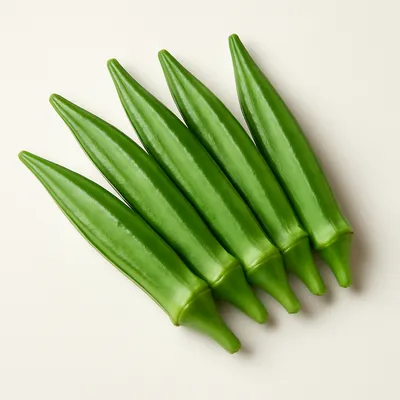
Fresh okra cut into rounds, dredged in cornmeal (often with a little flour and seasoning), and fried until crisp and golden. It is a staple Southern vegetable side, served hot and salted, the cornmeal crust crunching over a tender interior. The frying is what keeps the pods from turning slick, making it the most popular way to cook okra outside of stews.




Okra is an African crop — most likely originating in the region around Ethiopia — that reached the American South through the transatlantic slave trade in the 17th and 18th centuries, carried with the agricultural and culinary knowledge of enslaved Africans. Frying okra rounds in cornmeal developed within Southern cooking as okra became a regional staple; the cornmeal dredge ties it to the broader Southern habit of frying vegetables and fish in cornmeal. Exact dates and originators are not recorded, but the dish is firmly part of the African American and Southern table.
A dry, sandy-crisp cornmeal crust that crackles and gives way to a soft, just-tender okra round inside, the seeds popping faintly between the teeth. Salt hits first, then the mild grassy-green flavor of the pod. Done right it is not slimy at all — the crust seals each piece and the high heat keeps the interior from stewing. Eaten by the handful, often with hot sauce, while still hot enough to steam.
Okra's sliminess comes from a soluble mucilage released when the cut pods sit in moisture and heat; high-temperature frying counters it two ways. The dry cornmeal coating absorbs surface moisture before it can turn to mucilage, and frying at around 180°C drives off water fast enough that the gel never develops, while the cornmeal's coarse starch granules crisp into a hard, glassy shell. Inside, the okra cooks just to tenderness by the residual steam trapped under the crust. Cornmeal browns by Maillard and caramelization for color and a toasted flavor.
Variations
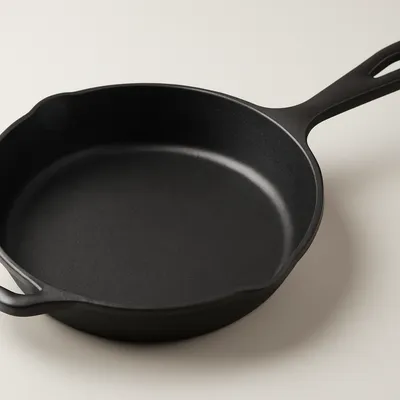
The cornmeal-only dredge is the classic; some cooks use a buttermilk dip before dredging for a thicker crust, or a flour-and-cornmeal mix. Whole small pods may be fried instead of rounds, and pan-frying in a skillet (a shallower, browner result) competes with deep-frying. It belongs to the family of cornmeal-fried Southern foods alongside fried green tomatoes and cornmeal-crusted catfish; pickled or roasted okra are non-fried alternatives.
On the Palate
Where Fried Okra sits in the American flavor cloud
Ingredients
Serves 4
How it's made
6 steps · 20 min
- 112 min
Trim and slice fresh okra into rounds about 1 cm thick.
- 23 min
Toss the rounds in buttermilk, then drain off the excess.
- 35 min
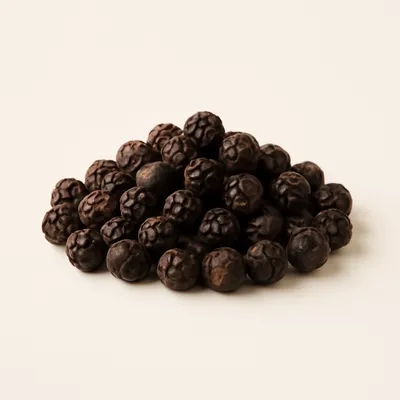
Dredge them in cornmeal seasoned with salt, pepper, and a little flour until well coated.
Watch outDredge the drained okra well in cornmeal — the dry coating soaks up surface moisture before it can turn to slime, which is the whole trick to crisp okra.
- 45 min
Heat oil to about 180°C in a deep skillet or pot.
- 58 min
Fry the okra in batches until golden and crisp, about 3 to 4 minutes, without crowding.
Watch outFry at about 180 degrees in batches without crowding — hot oil drives off the water fast so the gel never forms; a cool or crowded pan makes it slimy.
- 62 min
Drain on paper towels and salt immediately while hot.
Archive tool suggestions — not reviewed
These legacy suggestions have not been evidence-reviewed and are not presented as required tools.