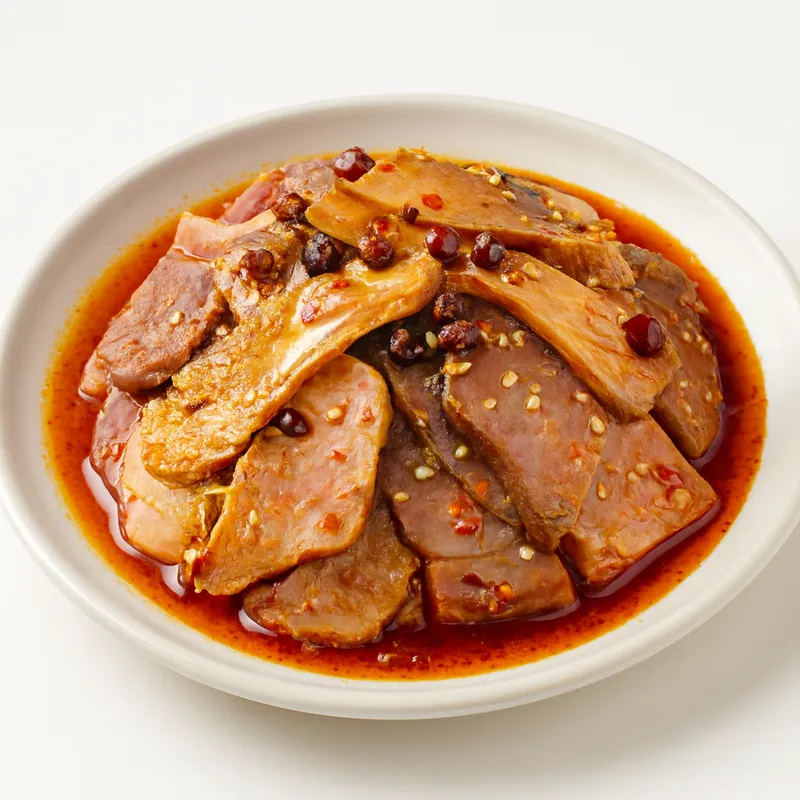
A cold summer sweet of little rice-jelly droplets shaped like tiny shrimp, served in chilled brown-sugar syrup. Rice is ground to a milk, cooked into a thick paste, then pressed through a perforated ladle so droplets fall into cold water and set with a fat head and tapered tail, which is what earns the name, though there is no actual shrimp. Soft, slippery and faintly chewy, it is a classic heat-relief street drink of the Yangtze basin. It is a different thing from clear bingfen jelly.


Liangxia is most strongly traced to Yichang in Hubei, where its making was listed as provincial intangible cultural heritage in 2020 and carried down through family lines. By most accounts it dates to the late Qing, around the time Yichang opened as a river trade hub. Carried along the Yangtze, it became a common summer heat-relief snack across Hubei, Chongqing, Sichuan, Yunnan and Guizhou, sold first from shoulder-pole stalls and then shopfronts. In Sichuan and Chongqing it belongs to the summer trio with bingfen and liangao, an adopted favorite rather than a local invention, and a folk tale of a filial son making shrimp shapes for his ailing mother is told as legend, not history.
The little shrimp are opaque and milky white, soft and slippery with a gentle bounce, just shy of melting on the tongue. They sit in cool brown-sugar syrup that is dark and lightly caramel, sometimes scented with osmanthus or mint and thick with crushed ice. You spoon or drink them down, cold and faintly sweet, the whole point being relief from the heat. Against bingfen, which is clear and jiggly with a cleaner snap, liangxia reads softer, starchier and more tender.
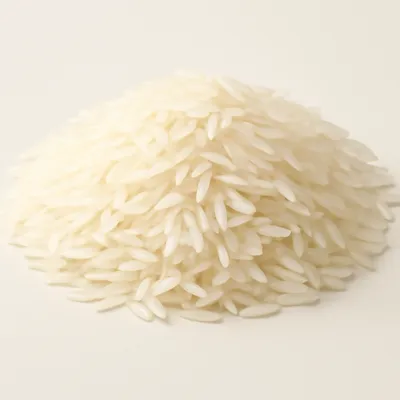
The base is rice, and indica long-grain rather than glutinous, because its low stickiness is exactly what is wanted. Cooking the rice milk gelatinizes its starch: the granules absorb water, swell and burst into a thick colloidal paste. Dropping that hot paste into cold water cools it fast, and as it cools the starch chains re-associate into a loose network that sets the droplets into soft jelly, while the holes of the ladle plus gravity and surface tension draw out the head-and-tail shrimp shape. A little limewater is traditional, raising the pH to firm the texture and neutralize the rice's sourness. This is a different chemistry from bingfen, which is uncooked: pectin rubbed from the seeds of the apple-of-Peru plant is cross-linked by calcium from limewater into a clear gel.
Variations
The canonical serving is brown-sugar syrup; spins add osmanthus, mint, fermented-rice wine, taro balls or extra crushed ice, and some shops swap in sour-plum drink. A rose version is its own named variant, and grain swaps to black rice or corn turn up. It is worth keeping three relatives apart: bingfen is set from plant pectin and calcium, clear and not cooked; liangao uses the same rice milk but is set with gypsum and cut into blocks; liangfen is a starch gel cut into strips and usually served savory.
On the Palate
Where Liangxia sits in the Chinese flavor cloud
Ingredients
Serves 4How it's made
6 steps · 20 min active + 20 min waiting
- 115 min
Soak indica rice, then grind it with water into a smooth rice milk.
- 23 min
Bring water to a boil, stir in a little limewater, then pour in the rice milk while stirring hard.
- 38 min
Cook over low heat, stirring constantly, until the paste turns thick and translucent.
Watch outCook the rice paste until it turns thick and see-through, stirring nonstop — undercooked it won't hold the shrimp shape, and it scorches the instant you stop stirring.
- 45 min
Hold a perforated ladle over a basin of cold water and pour the hot paste through, letting droplets fall and set into shrimp shapes.
Watch outPour the hot paste through the ladle straight into cold water — the cold sets the falling droplets into little tails; warm water just melts them into a blob.
- 55 min
Boil brown sugar with water into a syrup and chill it.
- 64 min
Scoop the rice shrimp into bowls, pour over the cold brown-sugar syrup, and add crushed ice.
Archive tool suggestions — not reviewed
These legacy suggestions have not been evidence-reviewed and are not presented as required tools.