A sweetened black or oolong milk tea, iced and shaken to a froth, poured over chewy amber tapioca pearls. Invented in Taiwan in the mid-1980s, it became the defining beverage of a global tea-drink revolution.
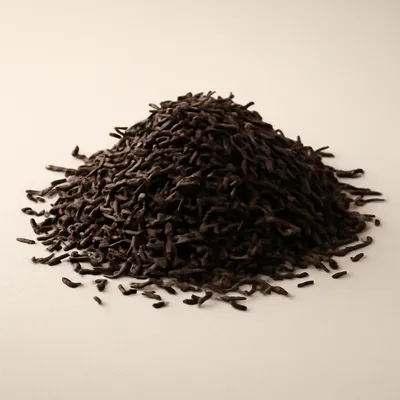


Two Taiwanese establishments contest the invention. Spring Water Hall (春水堂, Taichung) claims its product manager Lin Xiuhui added tapioca pearls to milk tea in playful experimentation around 1985, formally launching it on the menu in 1987; the drink's name refers to the lustrous black pearls rolling in milk tea like precious gems. Hanlin Tea House (翰林茶馆, Tainan) counters that owner Tu Zonghe was inspired in 1986 by seeing white tapioca balls sold at the Yamu Liao market and was the first to combine pearls with tea. The two companies entered a decade-long lawsuit; Taiwanese courts ruled in the early 2000s that bubble tea constitutes a new beverage category rather than a patentable product — neither side could claim exclusive rights, a ruling that ironically freed every tea shop to sell it and triggered the industry boom.
The drink itself is sweet, milky, and tea-fragrant; the pearls come up through the wide straw in irregular bursts — chewy, barely sweet, with a subtle caramel undertone from the brown sugar. The contrast between cold liquid and bouncy solids is the drink's entire identity.
Tapioca pearls are made from cassava starch, which is predominantly amylopectin (approximately 83%). When boiled in water, amylopectin gelatinizes fully, forming a translucent, elastic gel network. Rapid cooling in ice water causes partial starch retrogradation — crystalline regions reform within the amylopectin network, increasing firmness and creating the distinctive chewiness. Brown sugar soaking re-sweetens the pearls and forms a thin syrupy coating. The milk tea is shaken vigorously with ice to emulsify milk fat globules and incorporate fine air bubbles into the frothy top layer. Pearls are best consumed within 30 minutes before continued retrogradation makes them unpleasantly hard.
Variations
Infinite variations now exist from the original black tea base: taro milk tea, matcha latte, brown sugar boba (黑糖珍珠), fruit teas with popping boba, cheese foam tea (芝士奶盖), hojicha. Pearl size varies from small (粉圆) to extra-large (波霸). Major mainland chains have made new-style tea drinks a hundreds-of-billions-yuan industry. Taiwan maintains a more diverse independent shop culture where each street corner has its own recipe.
On the Palate
Where Pearl Milk Tea (Bubble Tea) sits in the Chinese flavor cloud
Ingredients
Serves 2How it's made
7 steps · 30 min active + 5 min waiting
- 15 min
Brew a pot of strong black tea using twice the usual amount of tea leaves; steep for 5 minutes; cool completely.
- 220 min
Bring a large pot of water to a full boil; add tapioca pearls and stir immediately to prevent sticking; boil for 15–20 minutes until the centers are fully translucent.
Watch outBoil the pearls until the very center turns fully translucent — a white opaque core means it's still raw and chalky inside.
- 310 min
Drain the pearls; transfer immediately to cold water for 30 seconds; drain again; soak in brown sugar syrup for 10 minutes.
Watch outShock the drained pearls in cold water briefly, then soak in brown sugar — the quick chill firms them into that signature chew.
- 42 min
In a cocktail shaker or lidded jar, combine 200 ml cooled tea, 60 ml whole milk, and 2–3 tablespoons of simple syrup; fill with ice.
- 51 min
Shake vigorously for 20–30 seconds until frothy, well-chilled, and a fine foam appears on top.
Watch outShake hard until frothy and a fine foam caps the top — a good shake is what emulsifies the milk and lifts that froth.
- 61 min
Place 3–4 tablespoons of pearls and their syrup in the bottom of a tall glass.
- 71 min
Pour the shaken milk tea over the pearls; insert a wide boba straw and serve immediately.
Archive tool suggestions — not reviewed
These legacy suggestions have not been evidence-reviewed and are not presented as required tools.


