A silky, scalding millet-flour paste flash-gelatinised by a single theatrical pour from a towering brass dragon-spout copper kettle, then crowned with brown sugar, osmanthus blossoms, raisins, and pine nuts — the spectacular centrepiece of the old Beijing temple-fair circuit.


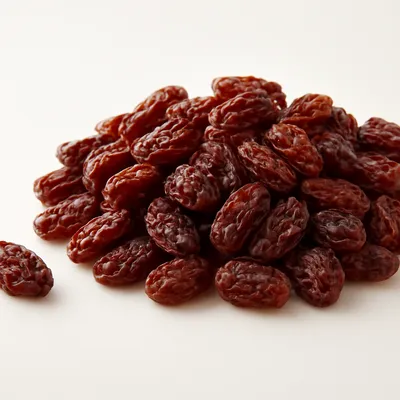

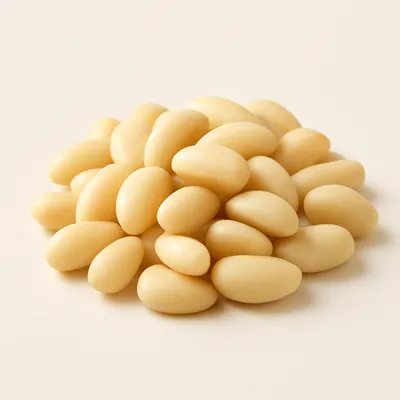
Tea broth is said to descend from the millet-porridge customs of northern nomadic peoples — one account links it to Mongolian butter tea adapted for Han street culture — and had become a Beijing staple by the mid-Qing dynasty. In 1858, during the Xianfeng reign, a vendor named Li Tonglin founded the Chatang Li stall at Changdian near the Liulichang culture quarter. He moved to Tianqiao in 1886, where the pitch became a landmark. The Li family was commissioned to prepare tea broth for Empress Dowagers Cixi and Ci'an. The brand subsequently earned Beijing's Lao Zihao designation and intangible-cultural-heritage status; at its peak, six of Beijing's nine active tea-broth copper kettles belonged to the Li family.
A single mouthful is unexpectedly silky — the gelatinised millet paste offers almost no resistance, dissolving into a sweet, faintly smoky warmth heightened by osmanthus and the caramel depth of brown sugar.
The entire technical challenge is gelatinising raw millet starch with a single, unrepeatable pour of boiling water. Broomcorn millet starch gelatinises between approximately 58 and 75°C; the vendor first mixes the flour with cool water at about a 1:1.5 ratio to form a smooth, pourable slurry, then pours boiling water at 100°C from the copper kettle held at height, creating enough thermal energy and turbulence to cook the starch through evenly in seconds. The vendor's semi-squat stance and precise tilt angle control flow rate: too slow and the outer paste solidifies before the centre cooks; too fast and the water splashes out. Years of practice encode the motor memory needed for a perfect pour every time.
Variations
Brown-sugar tea broth: the most common version, topped with red-sugar cakes and osmanthus syrup only. Eight-treasure tea broth (八宝茶汤): adds pine nuts, walnuts, raisins, candied hawthorn strips, and dried longan for a layered topping — the festive temple-fair version.
On the Palate
Where Millet Tea Broth sits in the Chinese flavor cloud
Ingredients
Serves 2How it's made
6 steps · 10 min
- 15 min
Whisk broomcorn millet flour with cold water in a bowl at a 1:1.5 ratio until completely smooth with no lumps, producing a pourable slurry.
Watch outWhisk the millet flour and cold water perfectly smooth first — any lump left here won't cook out and you'll get raw floury knots in the finished paste.
- 210 min
Fill the copper kettle (or a heavy-bottomed kettle) with water and bring to a hard, rolling boil; maintain at full boil throughout service.
- 32 min
Set up each wide, shallow serving bowl with 60–70 g of the millet slurry ready, and arrange all toppings — brown sugar, osmanthus syrup, pine nuts, raisins, walnuts — within reach.
- 42 min
Holding the bowl at waist height with one hand tilted slightly, pour boiling water from the kettle held at shoulder height in a steady, controlled stream; the slurry should gelatinise instantly into a smooth, thick paste; stir briefly if any raw pockets remain.
Watch outPour boiling water in one confident stream from height — the force and heat gelatinize it instantly; pour too slow and the outside sets before the center cooks, leaving raw pockets.
- 51 min
Immediately spoon brown sugar over the surface, drizzle osmanthus syrup, and scatter chosen toppings.
- 61 min
Serve at once; eat hot — the gelatinised paste firms rapidly as it cools and loses its signature silky texture.
Archive tool suggestions — not reviewed
These legacy suggestions have not been evidence-reviewed and are not presented as required tools.



