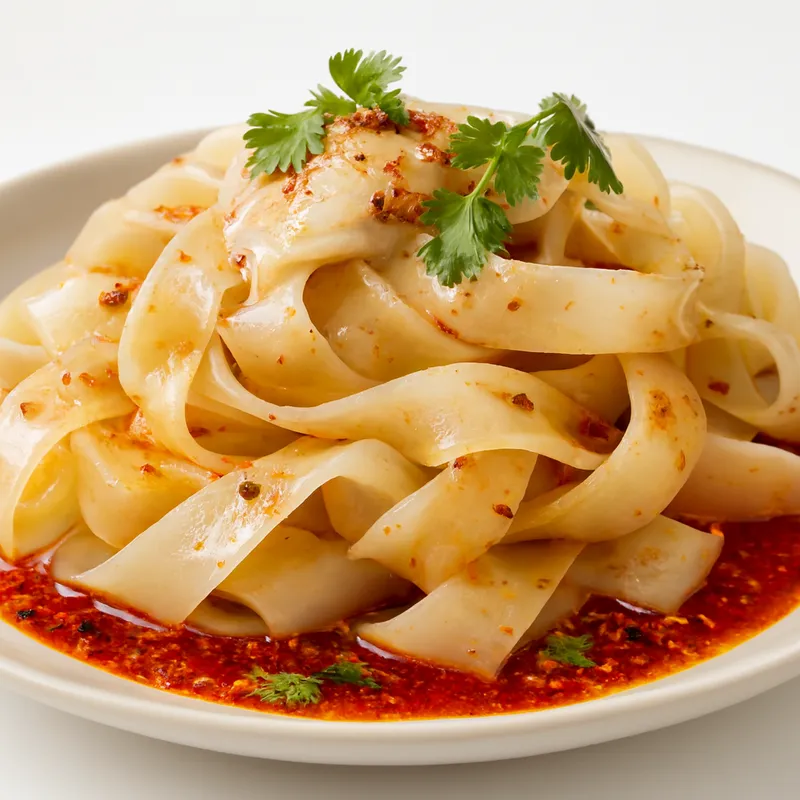
Tianshui's signature cold noodle dish — translucent, golden wheat-starch sheets steamed from washed-wheat batter, cut into thick strips and dressed with a ten-condiment aromatic-chili sauce. Unlike the sour-first profile of most northwest China cold noodles, the flavor here is boldly spicy and fragrant, with sesame paste and mustard oil layering over the chili heat.



The dish descends from Tang dynasty cold noodle traditions that evolved across the Qinling-Longshan agricultural belt. By the Qing period, Tianshui artisans had developed two distinct forms: the washing-method version, which separates gluten and starch by kneading the dough in water before steaming, and the shoulder-pole version sold by street vendors.
Silky-springy sheets with a faint alkaline edge; chili oil seeps into every pore of the surface; a nip of mustard cuts through the sesame richness — a rare layered complexity in cold noodles.
Kneading the dough submerged in water leaches soluble starch granules into suspension while trapping gluten proteins in a cohesive elastic mass. The separated starch batter is thinned and alkalized (food-grade soda ash), raising the pH to approximately 8–9. The alkaline environment cross-links starch chains more tightly during steaming at 100°C, yielding exceptional chewiness; it also reacts with flavonoid pigments in the wheat flour, producing the characteristic golden hue. Steaming in thin layers in flat pans gelatinizes the starch into a translucent, flexible gel sheet.
Variations
Washing-method sheets are thicker and served alongside a slab of steamed gluten. Shoulder-pole sheets are thinner, sold without gluten, cut to order. Some stalls add cucumber, bean sprouts, or shredded carrot. A separate dipping-bowl version called 'wine-dish noodle skin' (酒碟面皮) pairs the strips with an extra bowl of aromatic vinegar.
On the Palate
Where Tianshui Wheat Sheet Noodles sits in the Chinese flavor cloud
Ingredients
Serves 2


How it's made
8 steps · 1 hour active + 1 hour waiting
- 135 min
Knead flour and cold water (2:1 by weight) into a stiff dough; cover and rest 30 minutes
- 215 min
Submerge dough in a bowl of cold water; knead and squeeze repeatedly, straining cloudy liquid into a second vessel; replenish water and repeat until the dough water runs nearly clear — the mass left is raw gluten
Watch outKeep washing and swapping water until the dough-water runs nearly clear — the clean rinse means you've pulled all the starch out; what's left in your hands is the gluten.
- 360 min
Let the collected starch liquid settle undisturbed for 1 hour; carefully pour off the clear top water; stir in a small pinch of food-grade soda ash (碱面)
- 420 min
Steam the gluten mass over high heat for 20 minutes until springy; cool completely, then slice thin
- 520 min
Lightly oil flat-bottomed plates or trays; ladle in a thin layer of batter; steam each 3–4 minutes until the sheet sets and turns translucent; peel off and cool
Watch outLadle the batter into a thin, even layer and steam just till it turns translucent — thick or uneven pours give you a gummy, patchy sheet.
- 65 min
Stack cooled sheets and cut into strips about 1 cm wide; arrange in bowls with gluten slices
- 75 min
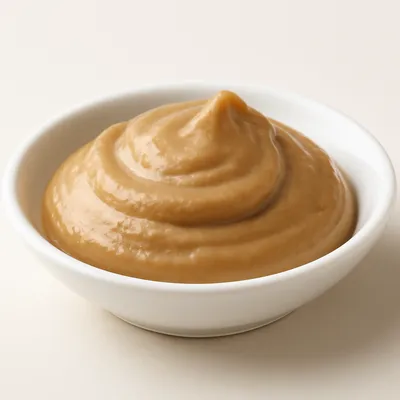
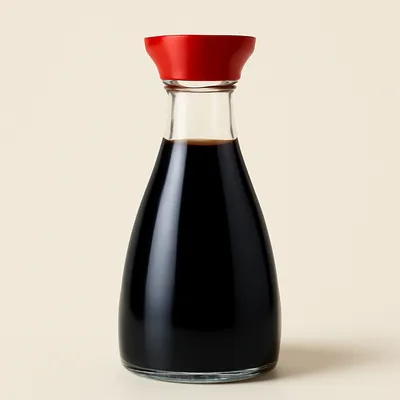
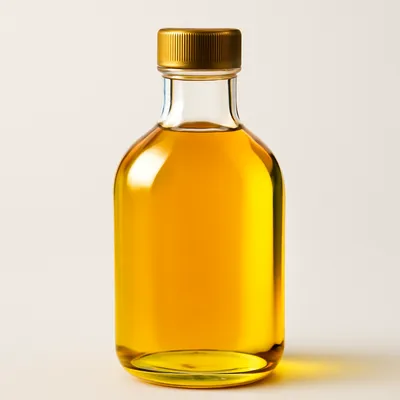
Whisk together the dressing: chili oil, sesame paste thinned with water, soy sauce, garlic paste, mustard oil, a pinch of salt, and rice vinegar
- 83 min
Pour dressing over sheets; top with blanched bean sprouts and cucumber strips; serve cold immediately
Archive tool suggestions — not reviewed
These legacy suggestions have not been evidence-reviewed and are not presented as required tools.