A deep-emerald glutinous rice cake made by working blanched fresh mugwort leaves into rice dough, wrapping a sweet peanut-sesame-sugar filling inside, and steaming over banana leaves. A signature spring sweet eaten across Guangxi around Qingming and the Zhuang Third-of-March festival.


The tradition of making mugwort cakes in southern China is tied to the ancient Cold Food Festival, when cooking fires were forbidden for three days before Qingming and families prepared cold foods in advance. The Ming-dynasty materia medica Bencao Gangmu (1596) records mugwort's properties and notes its use in foods, confirming the custom was established by that period. In Guangxi, mugwort cakes are most closely associated with the Zhuang Third-of-March festival (三月三), a public holiday in the Guangxi Zhuang Autonomous Region, and with the Qingming tomb-sweeping season—folklore holds that families carried them as travel food on long pilgrimages to ancestral graves. The 2024 Guangxi Commerce Department evaluation of Famous Guicai Dishes and Snacks officially named 艾叶粑 a Guangxi-style famous snack.
The deep-green skin yields with a soft bounce, releasing a wave of grassy, herbal fragrance; the peanut-sesame filling is lightly sweet and nutty with a faint crunch; the pleasantly bitter edge of the mugwort and the sweetness of the filling resolve into a lingering, gentle warmth.
Mugwort's volatile oil contains eucalyptol (1,8-cineole) as its dominant compound—over 30 percent of total volatiles—alongside borneol, camphor, and multiple sesquiterpenes. During steaming these compounds partially dissolve into the fat phase of the glutinous rice dough, infusing the cake with its characteristic cool, herbal fragrance. Brief blanching for under one minute damages cell walls to release more pigment while preserving around 70 percent of the chlorophyll; prolonged heat or acidic conditions would degrade chlorophyll into brown pheophytin, dulling the color. Flavonoids remaining in the cooked mugwort contribute mild antioxidant activity.
Variations
A savory version with spring bamboo shoot, wood ear mushroom, and pork filling is more common in western Guangxi Zhuang communities. A fried version (炸艾粑) has a crisp exterior with a still-soft glutinous interior. Some families add cooked glutinous rice to the dough for extra chewiness. Jackfruit leaves replace banana leaves in some villages, lending a subtly different fragrance.
On the Palate
Where Mugwort Glutinous Rice Cake sits in the Chinese flavor cloud
Ingredients
Serves 4How it's made
8 steps · 25 min
- 15 min
Pick young mugwort leaves and tender stems; wash clean. Bring a pot of water to a rolling boil, blanch the mugwort for 45 seconds, then immediately transfer to a bowl of ice water. Drain and squeeze very dry.
Watch outBlanch the mugwort just 45 seconds, then shock it in ice water — a quick dunk keeps it green; boil it longer or let it sit hot and the color dulls to brown.
- 25 min
Finely mince the blanched mugwort, then pound in a mortar until it forms a coarse green paste—or blend briefly with 1 tablespoon of water.
- 310 min
Combine the mugwort paste with glutinous rice flour in a 1:2 ratio by weight; knead with warm water added gradually until the dough is smooth, pliable, and an even deep green. Cover with a damp cloth and rest 10 minutes.
- 410 min
Prepare filling: dry-fry peanuts until lightly toasted, rub off skins, and roughly chop. Combine with toasted sesame seeds, brown sugar, and softened lard; mix until crumbly.
- 515 min
Divide the dough into portions of about 40–45 g each. Flatten each into a disk about 8 cm wide; place a heaped tablespoon of filling at the center, fold the dough up around the filling, and pinch firmly to seal.
- 65 min
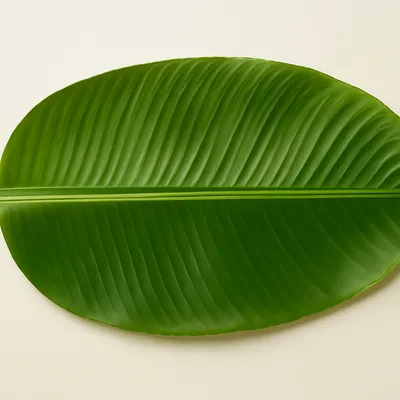
Line the base of a bamboo steamer with banana leaves; arrange the cakes seam-side down, spaced slightly apart.
- 725 min
Steam over vigorously boiling water on high heat for 20–25 minutes until the skins are glossy and deep emerald-green.
Watch outSteam until the skins turn glossy and deep emerald — a dull, matte surface means they need a few minutes more.
- 82 min
Remove from the steamer; brush the surface lightly with cooked oil to prevent sticking. Serve warm or at room temperature.
Archive tool suggestions — not reviewed
These legacy suggestions have not been evidence-reviewed and are not presented as required tools.


