A Guizhou heirloom cake of glutinous rice blended with fresh soybean milk and brown sugar, wrapped in bamboo leaves and steamed for ten or more hours until the white mash turns a deep amber-gold. The prolonged steam draws out and caramelizes the natural sugars, yielding a dense, chewy cake perfumed with bamboo and sweet bean.
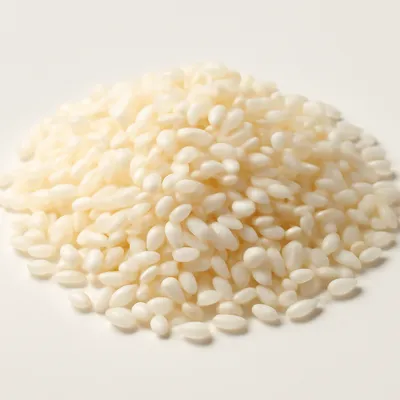


Guizhou's yellow sticky cake traces its history to the late Ming and early Qing periods, when it served as a staple trail food among Miao and Tujia mountain communities—compact, calorie-dense, and self-preserving through days of steaming. Qing-dynasty local gazetteers record regional varieties, with Qingzhen (now part of Guiyang) traditionally esteemed for the superior quality of its glutinous grain. Weng'an County in central Guizhou holds the informal title of 'China's Yellow Sticky Cake Hometown' and maintains the broadest production tradition. The distinguishing mark of the Guizhou method—mixing soybean milk into the rice before wrapping—sets it apart from Sichuan variants that use ginger leaves and omit the bean slurry entirely. A popular folk legend traces the dish to Zhuge Liang's southern campaigns, when soldiers accidentally combined leftover soybean liquid with rice and slow-steamed it for two days, yielding a golden, fragrant cake the troops favored—though unverifiable, the tale captures the essential technique: soy milk and glutinous rice cooked together under sealed steam.
Dense yet slowly yielding — each slice melts across the tongue in stages, releasing sweetness in waves. A faint smokiness from the bamboo wrapping threads through the finish, with clean soybean back notes that keep the sweetness from turning cloying.
Two reactions run simultaneously during the long steam. First, free amino acids released by soybean protein degradation react with reducing sugars from enzymatic starch breakdown in a Maillard reaction, generating hundreds of aromatic compounds and the characteristic amber color through melanoidin formation. Second, glutinous rice starch — nearly entirely amylopectin — gelatinizes fully at sustained steaming temperatures, then retrogrades slowly during cooling, forming a firm-yet-elastic crumb. The sealed bamboo leaf wrapper traps moisture, maintains an even humidity gradient inside the parcel, and contributes trace phenolic aromatics that add a woody background note.
Variations
Qingzhen-style adds red dates and black glutinous rice for deeper color and extra sweetness. Luzhou (Sichuan) variants use ginger leaves instead of bamboo, yielding a sharper floral note. Contemporary producers offer matcha, red bean, and sesame-filled versions, along with vacuum-packed formats for shipping nationwide.
On the Palate
Where Yellow Sticky Cake sits in the Chinese flavor cloud
Ingredients
Serves 6How it's made
7 steps · 1 hour
- 1480 min
Soak glutinous rice and japonica rice (combined 650g, ratio 3:1) in cold water for at least 8 hours; soak yellow soybeans separately in cold water for 6 hours
- 215 min
Drain soybeans; blend with 350ml fresh water until completely smooth; strain through cheesecloth or a fine-mesh sieve to yield thick soybean milk, discarding the pulp
- 330 min
Drain the soaked rice; steam over high heat for 30 minutes until grains are 70 percent cooked — centers still firm to the bite
Watch outPull the rice at 70 percent cooked — centers still firm to the bite — so it can drink up the soy milk instead of going mushy in the long steam.
- 410 min
Transfer hot rice to a large basin; pour warm soybean milk and crumbled brown sugar over the rice and fold vigorously until all liquid is fully absorbed and the mass is glossy
Watch outFold the warm soy milk in hard until every drop is absorbed and the mass turns glossy — that's when the grains will steam into a firm, springy crumb.
- 510 min
Blanch bamboo leaves (or bamboo shoot husks) in boiling water for 2 minutes to soften; lay 2 to 3 overlapping leaves as a wrapping mat
- 615 min
Spoon 220g of rice mixture onto each leaf mat; shape into a compact log; fold leaves over tightly and tie with string at both ends and the middle to seal
- 7660 min
Arrange parcels in a large steamer; steam on high heat for 10 to 12 hours, replenishing hot water every 2 hours; remove from heat, cool completely, then unwrap and slice 1.5 cm thick to serve
Watch outKeep the water topped up across the long steam — let the pot run dry and the cake steams unevenly, gummy in some spots and dry in others.
Archive tool suggestions — not reviewed
These legacy suggestions have not been evidence-reviewed and are not presented as required tools.


