A cornerstone of Tianjin's fine Eight Great Bowls, pairing whole braised sea cucumbers with hand-pounded pork meatballs in a crystal-clear, richly layered chicken stock. The meatballs are made by long hand-pounding—building a springy, bouncing texture through protein cross-linking—then simmered alongside rehydrated sea cucumber until the broth draws every strand of umami from both. Simultaneously humble in presentation and technically demanding, it is a precise study in how two incompatible textures—gelatinous and elastic—can share a bowl in complete harmony.



Sea Cucumber with Pork Meatballs emerged within the 细八大碗 (fine Eight Great Bowls) tier of Tianjin's historic banquet system. The Eight Great Bowls tradition traces to the garrison cookhouse practices of early Qing, when military cooks served thousands of soldiers and boatmen from large communal pots. As the city's commercial life flourished and the 'Eight Great Establishments' restaurants formalized the banquet format by the late Qing and Republican era, the rough large-pot cooking was elevated: hand-pounded meatballs replaced rough-cut meat, whole rehydrated sea cucumber replaced cheaper seafood, and long-reduced clear chicken stock replaced opaque stews. Sea cucumber had been a prestigious ingredient in northern Chinese banquets since the Ming dynasty, attested in various Qing-era culinary records. The pairing of whole sea cucumber and hand-pounded pork meatballs in clear stock became a signature of the 细八大碗 menu alongside 全家福 and 清汤鸡, together forming the structural pillars of Tianjin's mid-grade formal dining.
The sea cucumber arrives whole, deep mahogany, yielding at a chopstick's touch with almost no resistance—its interior a smooth, cool gelatin that tastes of the sea without brine. The meatball beside it is the opposite: firm, bouncy, with clean pork sweetness and the back-warmth of ginger. The broth that ties them is crystal-clear and extraordinarily savory—pale gold, with the depth of something long and patiently considered.
The dish builds umami through a three-way synergy. Sea cucumber body wall is primarily type-one and type-two collagen, with a coating of sulfated glycosaminoglycans (sea cucumber polysaccharides). During simmering at 70–80°C, collagen fibers partially hydrolyze to gelatin—giving the cucumber its silky, soft texture—while the polysaccharides dissolve into the broth, contributing viscosity and releasing glutamates. Pork meatball texture depends on myosin gelation: hand-pounding repeatedly unfolds and cross-links myosin filaments, building a three-dimensional protein network; heat above 68°C sets this network irreversibly, producing the characteristic springy bounce. The broth undergoes documented synergistic amplification: sea cucumber glutamate combines with pork inosinate, creating perceived umami intensity many times greater than either alone. Long simmering above 70°C also enables Maillard browning of dissolved amino acids and reducing sugars at the stock surface, adding quiet caramel depth to what would otherwise be a flat, clear liquid.
Variations
Red-braise version (红烧海参丸子): add Shaoxing wine, soy sauce, and dark sugar to the broth for a mahogany-glazed version closer to Hong Shao style—richer and suited to cold northern winters. All-sea-cucumber luxury version: substitute pork meatballs with small spheres of pureed sea cucumber, for a rarefied single-ingredient bowl. Vegetarian meatball version: replace pork with firm tofu mashed with mushroom, wood ear, and egg, then pan-fried before entering the broth.
On the Palate
Where Sea Cucumber with Pork Meatballs sits in the Chinese flavor cloud
Ingredients
Serves 4

How it's made
7 steps · 1 hour
- 115 min
Prepare the sea cucumber: if using dried sea cucumber, rehydrate over 48 hours in cold water, changing water every 12 hours, until fully plump and pliable. Slice each open lengthwise, remove the internal organs, and rinse thoroughly. Blanch in boiling water for 3 minutes, then drain and cut into approximately 5 cm lengths.
- 210 min
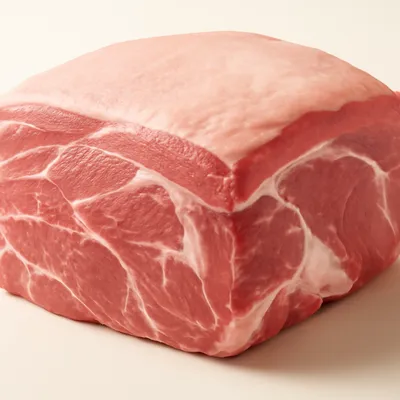
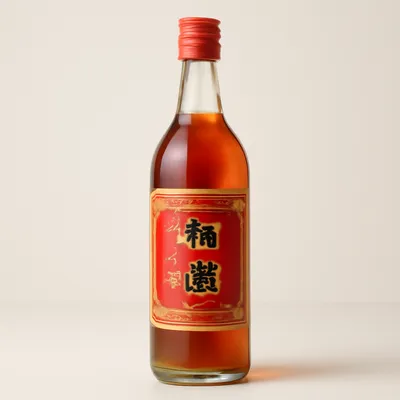
Make the meatball mixture: finely mince 350 g pork shoulder. Add 1 egg white, 1 tbsp water starch, 1 tsp Shaoxing wine, salt, and white pepper. Knead well, then throw the mixture forcefully against the bowl for 5–7 minutes until extremely sticky and elastic. Let rest 10 minutes.
Watch outThrow the meatball mix hard against the bowl until extremely sticky and elastic — that pounding cross-links the myosin so the balls turn springy, not crumbly.
- 35 min
Prepare the stock base: heat 800 ml rich chicken stock in a pot. Add 2 ginger slices, 1 spring onion length, and 1 tsp Shaoxing wine. Bring to a gentle simmer and hold.
- 410 min
Poach the meatballs: bring a separate pot of lightly salted water to 85°C (a steady gentle simmer, not boiling). With wet hands, shape the pork mixture into balls about 4 cm across. Slip into the simmering water and poach for 8 minutes until firm and cooked through. Remove and set aside.
Watch outPoach the meatballs at a steady 85°C, never a rolling boil — a hard boil batters them apart before they firm up.
- 512 min
Simmer the sea cucumber: add the prepared sea cucumber lengths to the simmering chicken stock. Cook gently on low heat for 10 minutes, allowing the cucumbers to absorb the stock flavors fully.
- 625 min
Combine and slow-simmer: add the poached meatballs to the pot with the sea cucumber. Simmer together on the lowest possible heat for 20–25 minutes. Keep the stock at a very gentle bubble—never a rolling boil—so it remains crystal clear. Adjust seasoning with salt.
Watch outKeep the final simmer at the gentlest bubble so the stock stays crystal clear — a rolling boil clouds it and muddies the clean broth.
- 75 min
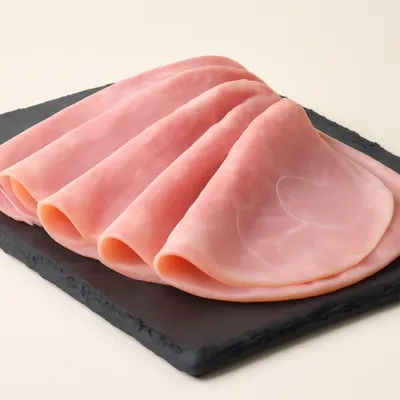
Ladle into a deep serving bowl, placing sea cucumber and meatballs prominently. Garnish with a few drops of sesame oil and 2–3 slices of cooked ham. Serve hot.
Archive tool suggestions — not reviewed
These legacy suggestions have not been evidence-reviewed and are not presented as required tools.


