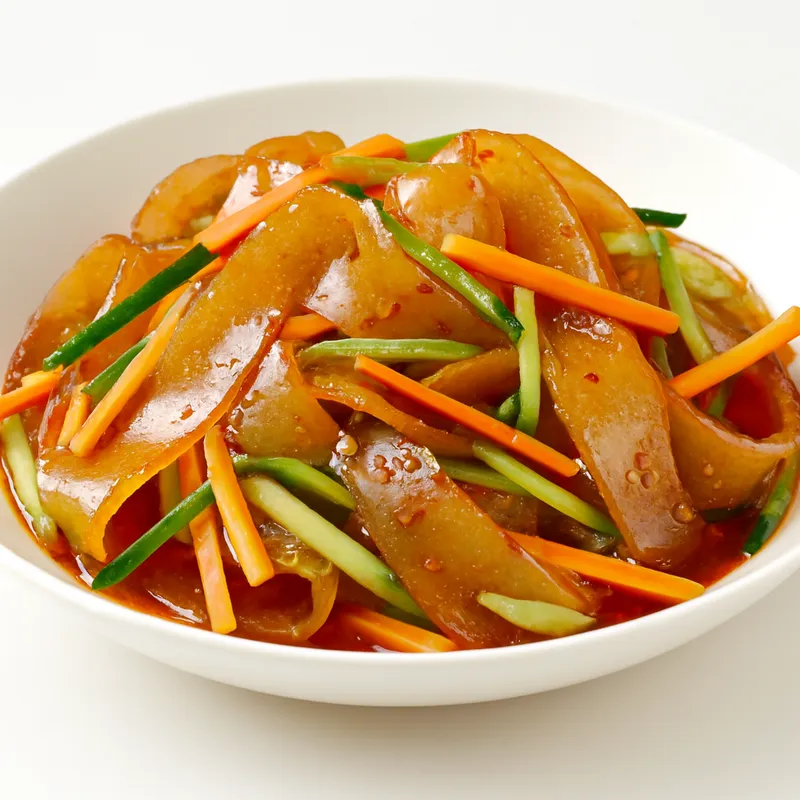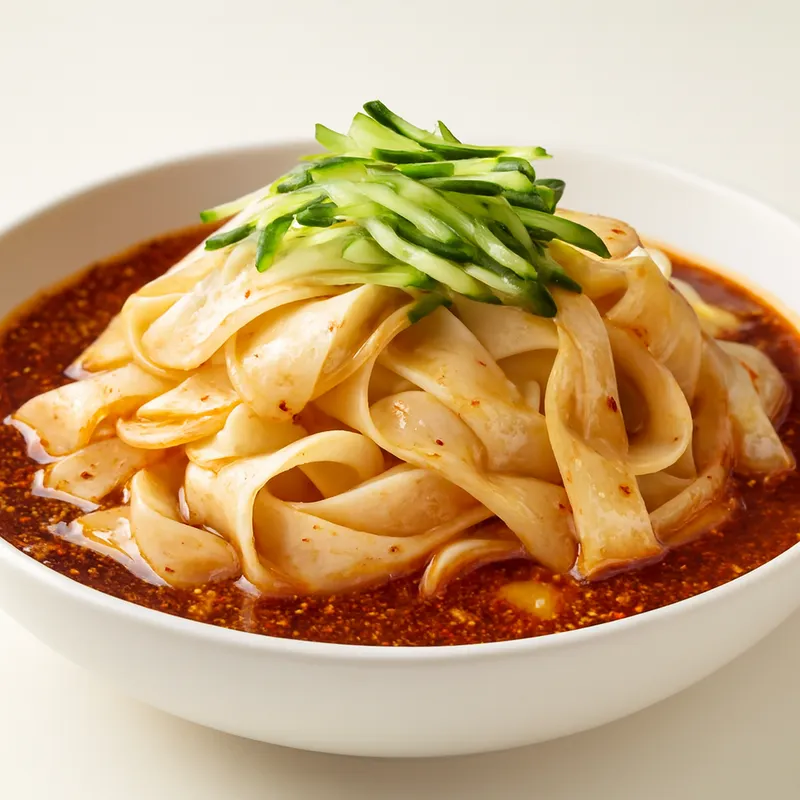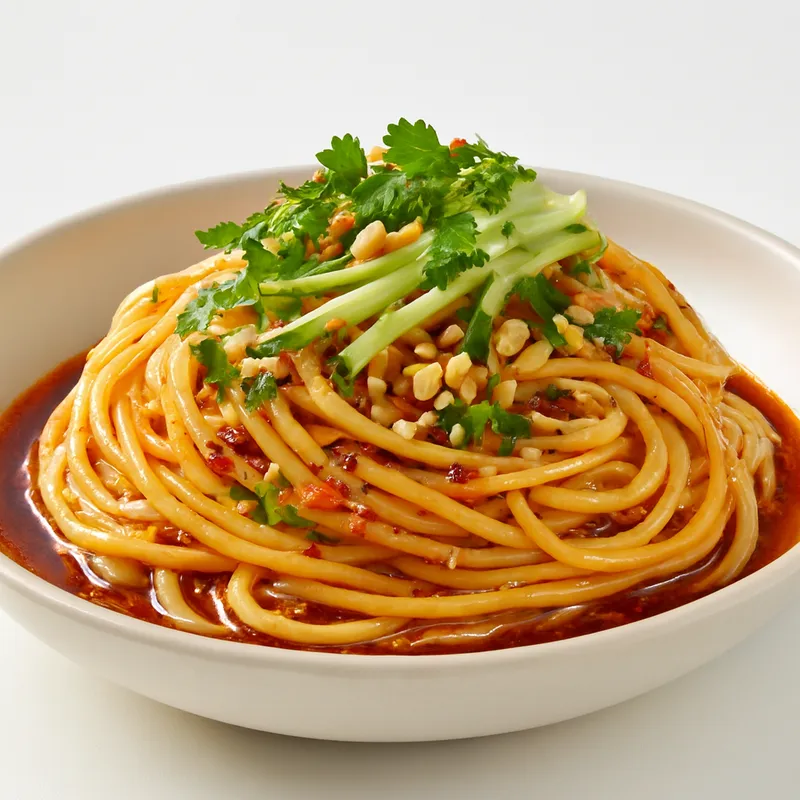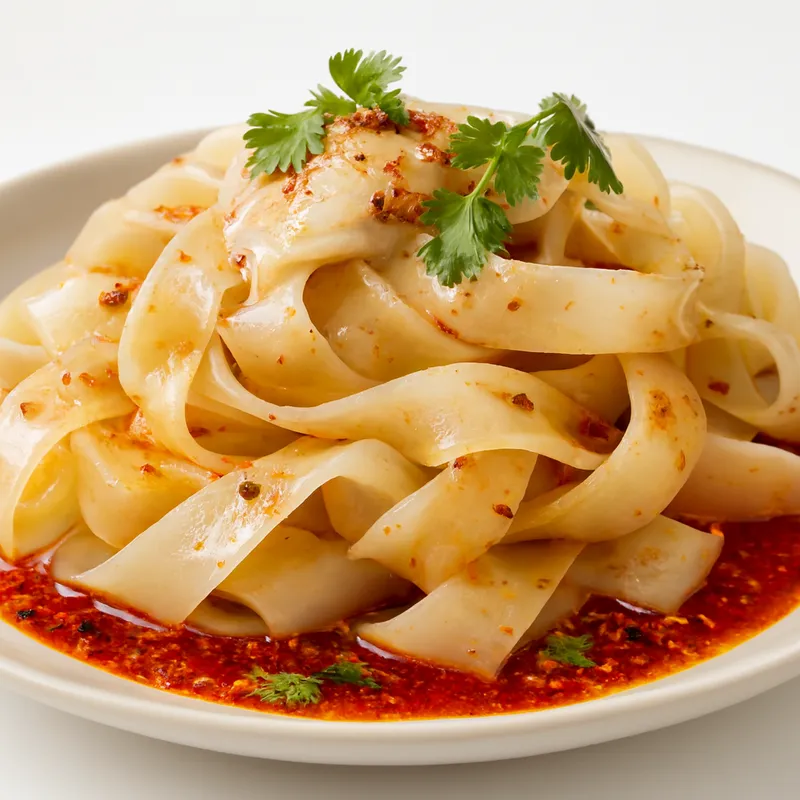
Cold wheat-starch sheets cut into ribbons, dressed with garlic, vinegar, sesame paste, mustard (芥末), and cumin-spiked chili oil, often with cucumber or bean sprouts.






Niang pi is the Gansu cousin of Shaanxi liangpi — both originate in northwest wheat country, both made by the wash-out method that splits flour into starch and gluten. The Gansu version runs slightly thicker, leans on cumin in the chili oil reflecting Hui-Muslim influence along the Hexi Corridor, the character 酿 is read 'ráng' in northwest dialect, and stalls historically wrote it as the full-form 釀皮 before it was simplified to 酿皮 for ease of writing. Lanzhou street vendors keep stacks of pre-cut sheets through summer, dressing each bowl on order.
Gansu's cousin to Shaanxi liangpi, made by the wash-out method that splits flour into starch and gluten. Cumin in the chili oil is the Hui-Muslim Hexi-Corridor signature. Eat within 20 minutes — the sheets toughen as they sit.
Cold and slick — the sheets are gelatinous and slippery, snapping cleanly between teeth rather than chewing like noodles. The gluten pieces are spongy, soaking up dressing like a sponge holds water. Cumin in the chili oil is the giveaway flavor versus Shaanxi liangpi: warmer, more savory, Hui-Muslim in character. Eat within 20 minutes — the sheets toughen as they sit.
The wash-out trick is what defines this entire family of dishes. Niang pi is made by two methods. The wash-out method splits dough into a gluten ball and starch slurry as described. But the more typical Gansu version — including 高担酿皮 — skips washing entirely: the flour is simply mixed into a paste with a little alkali (碱面/碳酸钠, or 蓬灰 in Wuwei), which is what gives the sheet its jade-like milky-yellow color and firm, springy chew. Steam the slurry thin and you get a translucent, gelatinous sheet; steam the gluten and you get a spongy chew. One dough, two completely different textures in one bowl — without this separation, you can't make either.
Variations
Hanzhong-style liangpi from Shaanxi is steamed thinner; Xi'an mí pí (米皮) uses rice flour entirely; Gansu niang pi runs thicker with cumin; the Sichuan-Shaanxi border has a hot version (擀面皮) where the sheet is rolled instead of steamed.
On the Palate
Where Niang Pi sits in the Chinese flavor cloud
Ingredients
Serves 3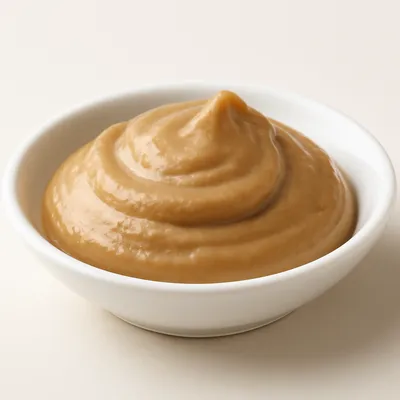



How it's made
6 steps · 45 min active + 2 hours 15 min waiting
- 110 min
Knead 300g high-gluten flour with 150g water and 3g salt for 8 minutes into a stiff dough. Submerge in a bowl of cold water and rest 30 minutes.
- 215 min
Wash the dough in the water — squeeze and knead it under the surface so the starch leaches out into a milky liquid. Change water 4-5 times, collecting all the wash water in a tall container, until what remains in your hands is a yellow-brown elastic mass (the gluten/seitan, called 面筋).
Watch outWash and squeeze under water until the run-off turns from milky to nearly clear and only a yellow-brown elastic lump stays in your hands — that clean rinse is the gluten.
- 35 min
Let the starch water settle 90 minutes minimum (or 2-3 hours for clarity). Pour off the clear water on top, leaving the thick starch sediment. Stir until smooth, adjust consistency to single-cream thickness.
Watch outLet the starch settle until a clear layer sits on top; pour it off and stir the sediment to the thickness of single cream — too thin and the sheet won't set.
- 425 min
Steam the gluten ball whole for 25 minutes until puffed and spongy. Cool, then tear into bite-sized pieces.
- 520 min
Brush a flat metal pan with oil, ladle in 80ml starch slurry to coat the bottom in a 2mm layer, and float the pan in a wok of boiling water. Cover; the slurry sets translucent in 90 seconds. Lift the pan into cold water, peel off the sheet, brush with oil, and stack. Repeat for all batter, then cut sheets into 1.5cm ribbons.
Watch outThe thin layer sets translucent in about 90 seconds — when the surface stops looking wet and turns glassy, plunge the pan into cold water before it toughens.
- 63 min
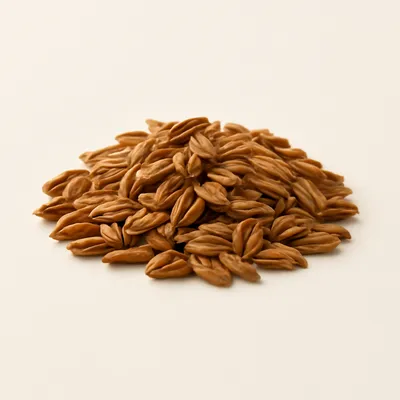
Pile ribbons in a bowl with gluten pieces and blanched mung-bean sprouts. Dress with 2 tablespoons garlic-water (smashed garlic steeped in cold boiled water), 1 tablespoon black vinegar, 1 teaspoon light soy, 1 tablespoon sesame paste loosened with water, 2 tablespoons cumin-chili oil, and a pinch of salt. Toss at the table.
Watch outAdjust the amount of chili oil to taste, as it can vary in spiciness.