The benchmark fish ball of Chaoshan cooking: hand-pounded lizardfish paste formed into snow-white, perfectly round spheres with a clean, springy snap — a national GI-protected product since 2018, produced on Dahao Peninsula in Shantou and served in clear bone broth with flat rice noodles.


Fish ball traditions on Dahao Peninsula trace back, according to local accounts, to the Southern Song dynasty, when fishing families began pounding surplus catch into paste balls to extend shelf life and reduce waste. The product gained its wider reputation during the Kangxi and Qianlong reigns of the Qing dynasty, as Shantou grew into a major South China Sea trading port and Dahao's fish balls reached markets in Guangzhou and Southeast Asia. Dahao's geography is a decisive factor: a peninsula with 92.8 km of coastline and one of China's premier first-class fishing harbours, giving direct access to South China Sea grounds rich in lizardfish (那哥鱼, Saurida species) — the variety prized for tender flesh and minimal connective tissue. A local saying captures the product's reputation: '得味一尝三拍掌,闻香十步九回头' (one taste earns three rounds of applause; the aroma alone stops you mid-stride). In 2018, Dahao fish balls became Haofeng District's first national geographic indication protected product, with annual production exceeding 3,000 tonnes and output value topping 500 million yuan.
Snow-white and perfectly round, each ball bounces back against the teeth with a clean, decisive snap — dense yet yielding — releasing pure, ocean-fresh sweetness with no trace of fishiness; the clear broth amplifies rather than competes.
The signature bounce (弹牙) results from controlled myosin gelation. Hand-pounding at a sustained temperature below 50°C shears muscle fiber bundles and mechanically unfolds myosin heavy chains, exposing hydrophobic domains. When the balls are subsequently cooked at 75–90°C, these hydrophobic regions cross-link to form a dense, three-dimensional actomyosin gel network with high elasticity and strong water retention. A critical low-temperature pre-setting step (35–50°C for 15 minutes before full cooking) allows the gel to begin forming before denaturation is complete, yielding a finer, more homogeneous texture. Lizardfish is selected because its high myosin-to-connective-tissue ratio produces the cleanest, most elastic gel with minimal extraneous flavour.
Variations
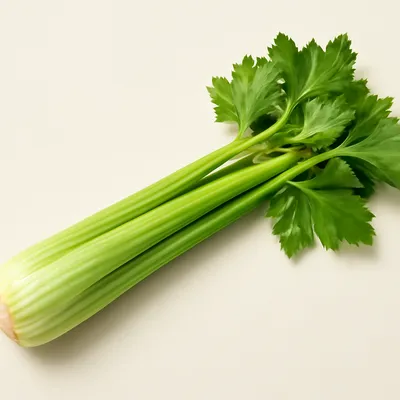
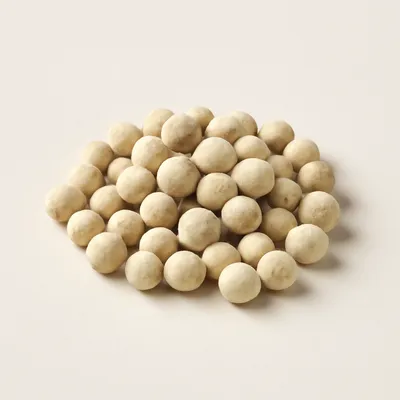
Stuffed fish balls (有馅鱼丸): Dahao-style balls with a pork-lard and scallion centre — biting through the shell releases a burst of savory hot fat, a beloved variation at Teochew noodle stalls. Fish ball and flat rice noodle soup (鱼丸粿条汤): the canonical serving format — balls in clear pork-bone broth with flat rice noodles, celery, and white pepper, available from dawn at Chaoshan street stalls.
On the Palate
Where Dahao District Fish Balls sits in the Chinese flavor cloud
Ingredients
Serves 4
How it's made
7 steps · 30 min
- 120 min
Select very fresh lizardfish; remove scales, head, fins, and all bones; scrape the white flesh away from the skin, discarding skin entirely
- 25 min
Place fish flesh in a clean wooden tub or deep bowl; add cold lightly salted water; begin pounding with two wooden mallets or a heavy pestle in rhythmic alternating strokes
- 340 min
Pound continuously for 35–40 minutes, keeping the paste temperature below 50°C — add a few ice chips if the paste warms; the paste is ready when it holds a peak and springs back cleanly when pressed
Watch outPound the paste 35–40 minutes below 50°C until it peaks and springs back — heat above that kills the bounce, so slip in a few ice chips if it warms.
- 45 min
Add fine salt; mix thoroughly; test a small ball in warm water — it should float and feel firm; adjust seasoning
- 515 min
Squeeze balls through the gap between thumb and index finger; use a wet spoon to scoop uniform spheres directly into a bowl of 35°C water; rest 15 minutes (low-temperature pre-setting)
Watch outRest the shaped balls in 35°C water 15 minutes to pre-set — this gentle head start gives a finer, springier gel before the real cook.
- 610 min
Transfer balls to a fresh pot of water heated to 75–90°C (a steady simmer, not a rolling boil); cook 8–10 minutes until all balls float and are cooked through
Watch outCook at a steady 75–90°C simmer, never a rolling boil — a violent boil knocks the balls apart before the gel sets firm.
- 75 min
Ladle into bowls of simmering clear pork bone broth with flat rice noodles; garnish with celery, white pepper, and a few drops of fish sauce
Archive tool suggestions — not reviewed
These legacy suggestions have not been evidence-reviewed and are not presented as required tools.



