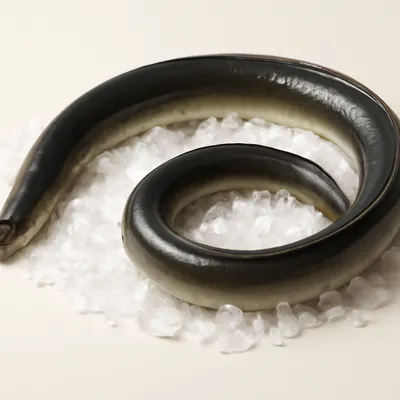
Snow-white, intensely elastic fish balls from Shenhu Town in Jinjiang, made by hand-pounding fresh eel and Spanish mackerel with sweet potato starch until the paste achieves a signature springy resilience. Served in clear bone broth, they bounce when dropped—a quality prized by locals and overseas compatriots for generations.




Shenhu fish balls trace to the fishing harbor of Shenhu Town on Jinjiang's southeastern coast. Song-Yuan period legend links their refinement to Wang Shipeng, a Quanzhou prefect who tasted coarse fish-paste balls at a birthday banquet and improved the recipe at Fashi Temple, combining imperial court technique with the local water-ball (水丸) form. He passed the improved formula to a servant named Ashan, who resettled in Shenhu and founded the town's fish-ball trade. This legend circulates widely in local oral tradition but cannot be historically verified. The documented lineage of the modern craft traces to the Qing Tongzhi period (1862–1875), when merchant Zhang Changpan, inspired by fish-ball practices he encountered in Taiwan and Guangdong, returned home and refined the technique through years of experimentation. His son Zhang Daobıng and grandsons further expanded the business, developing shrimp balls and establishing distribution to Quanzhou and beyond. The manufacturing technique is now inscribed as a Jinjiang municipal intangible cultural heritage (fifth batch), and the product holds a certified geographical indication trademark registered in 2011 by the Jinjiang Shenhu Fishermen's Association.
Snappy and springy, almost bouncy—the fish paste surges back against the bite with clean ocean sweetness before yielding, leaving no trace of fishiness.
Fresh eel and mackerel are rich in myofibrillar proteins—myosin and actin. Extended hand-pounding under salt solubilizes these proteins into a sticky sol; sweet potato starch's branched amylopectin chains interweave within this network, densifying the gel and preventing water separation. Temperature management during cooking is critical: at 50°C, muscle-bound serine proteases aggressively degrade myosin heavy chains, collapsing elasticity. Dropping balls directly into a rolling boil propels the proteins rapidly past this degradation window, locking in maximum springiness.
Variations
Stuffed fish balls (大粒鱼丸) enclose a five-spice pork filling inside the fish paste shell. Shrimp balls (虾丸) substitute fresh shrimp for the fish. Fish rolls (鱼卷) wrap the paste around fillings in a log shape before slicing—a distinct Shenhu specialty alongside the round ball form.
On the Palate
Where Shenhu Fish Balls sits in the Chinese flavor cloud
Ingredients
Serves 4
How it's made
7 steps · 15 min
- 110 min
Scrape meat from eel and mackerel bones; combine in a large ceramic bowl, removing any remaining bones.
- 220 min
Add salt and begin rhythmic hand-pounding and rubbing for 20 minutes until paste becomes sticky and pulls cleanly from the bowl.
Watch outPound and rub the salted fish paste until it turns sticky and peels cleanly off the bowl in a sheet — that pull is the muscle protein dissolving into the springy sol; stop short and the balls won't bounce.
- 315 min
Gradually incorporate sweet potato starch and 3 tbsp cold water while continuing to pound for 15 minutes; paste should be glossy, cohesive, and stretch without breaking.
- 430 min
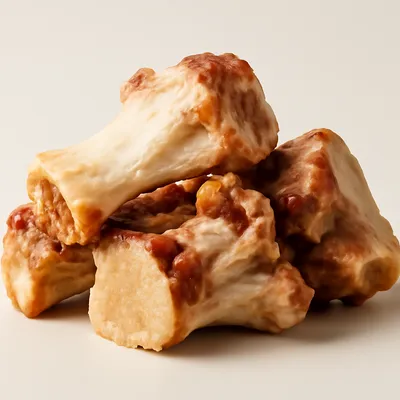
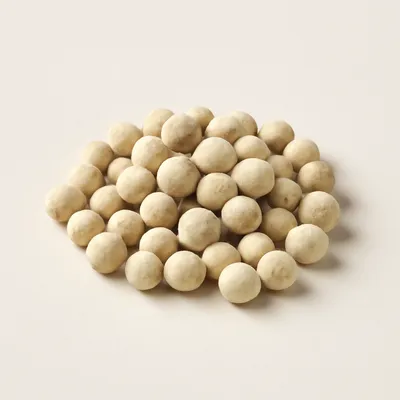
Simmer pork bones in 1.5 liters cold water for 30 minutes; skim foam, season lightly with salt and white pepper.
- 55 min
Bring broth to a vigorous rolling boil. Squeeze fish paste through the palm to form balls and drop directly into the boil—do not pre-shape and rest.
Watch outSqueeze the balls straight into a hard rolling boil — don't pre-shape and let them sit; hitting the boil fast shoots the protein past the fifty-degree window where enzymes would slacken the bounce.
- 64 min
Cook 3–4 minutes until balls float and turn opaque white; remove immediately to prevent overcooking.
Watch outPull the balls the moment they bob up and turn opaque white — three to four minutes is plenty, and any longer over the heat starts to toughen them.
- 73 min
Serve in broth topped with fried shallots, chopped green onion, and a pinch of white pepper.
Archive tool suggestions — not reviewed
These legacy suggestions have not been evidence-reviewed and are not presented as required tools.



