Crisp-fried pork meatballs lacquered in a sweet-tart bayberry glaze that turns them rose-red — each piece engineered to mimic, in colour, size, and flavour, the bayberries ripening on Huizhou's hillsides.


Bayberry-shaped meatballs are a traditional showcase dish of Huizhou banquet cuisine, their name and form derived from the red bayberry that ripens abundantly in the hills of southern Anhui each summer. Huizhou chefs, bound by centuries of austere mountain living yet compelled to impress at lavish merchant banquets, developed this exercise in culinary wit: a humble pork meatball disguised as the season's most prized fruit. The finished dish is rose-red, bayberry-sized, and simultaneously sweet, tart, and savoury — a piece of edible illusionism that has been documented in catalogues of Chinese regional cuisine as a representative Huizhou preparation.
A shatteringly crisp breadcrumb shell gives way to juicy pork; the whole orb is lacquered in a sticky bayberry glaze that delivers a sharp, fruit-forward pucker before dissolving into sweetness and residual meatiness.
The meatballs use a 7:3 lean-to-fat ratio that preserves juiciness through fat rendering during deep-frying at roughly 170°C; the Maillard reaction between meat proteins and reducing sugars in the breadcrumb coating creates a golden, flavour-rich crust. Bayberry juice is rich in anthocyanins (primarily cyanidin-3-glucoside) and citric acid; in the acidic pH maintained by the vinegar glaze, these anthocyanins stabilise in their red oxonium ion form, producing the vivid rose-red colour. The citric acid in the glaze also cleaves surface fat on the meatball, cutting perceived richness and leaving a clean, bright finish.
Variations
When fresh bayberries are unavailable, red rice wine lees (红曲米水) achieve the rosy hue without the tartness; winter versions substitute hawthorn berry juice for a more pronounced acidity; some modern chefs replace breadcrumbs with glutinous rice for a stickier, chewier exterior.
On the Palate
Where Bayberry-Shaped Meatballs sits in the Chinese flavor cloud
Ingredients
Serves 4
How it's made
7 steps · 25 min
- 110 min
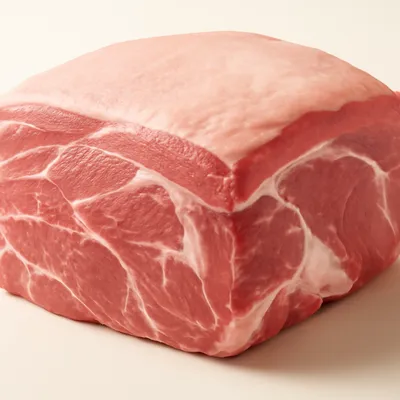
Mince pork (70% lean, 30% fat) into a fine paste; season with salt, white pepper, ginger-scallion juice, egg white, and a pinch of sugar; mix vigorously in one direction until the paste becomes sticky and elastic.
Watch outBeat the paste in one direction until it turns sticky and springs back — that's the protein binding that keeps the balls tender and holding shape.
- 25 min
Wet your palms lightly; portion the paste and roll into 2cm balls (bayberry-sized), yielding about 24–28 balls.
- 35 min
Spread fine breadcrumbs on a tray; roll each ball through the crumbs until evenly coated, pressing gently to adhere.
- 48 min
Heat oil to 170°C in a deep pan; fry the meatballs in batches for 3–4 minutes, turning occasionally, until golden brown and cooked through; drain on a rack.
Watch outHold the oil near 170°C and fry to an even golden brown — too cool and the crumb soaks up grease, too hot and it browns before the center cooks.
- 53 min
In a clean wok, combine fresh bayberry juice, sugar, rice vinegar, and a splash of water; bring to a gentle simmer over medium heat.
- 63 min
Add cornstarch slurry gradually, stirring constantly, until the sauce thickens to a glaze that lightly coats a spoon; adjust tartness with extra vinegar if needed.
Watch outAdd the slurry a little at a time until the glaze just coats the back of a spoon — dumped in at once it goes gluey and dull.
- 72 min
Add the fried meatballs to the wok; toss gently until every ball is coated in the rose-red glaze; plate at once and serve while the crust remains crisp.
Watch outToss briefly and plate at once while the crust is still crisp — sitting in the glaze too long turns it soft.


