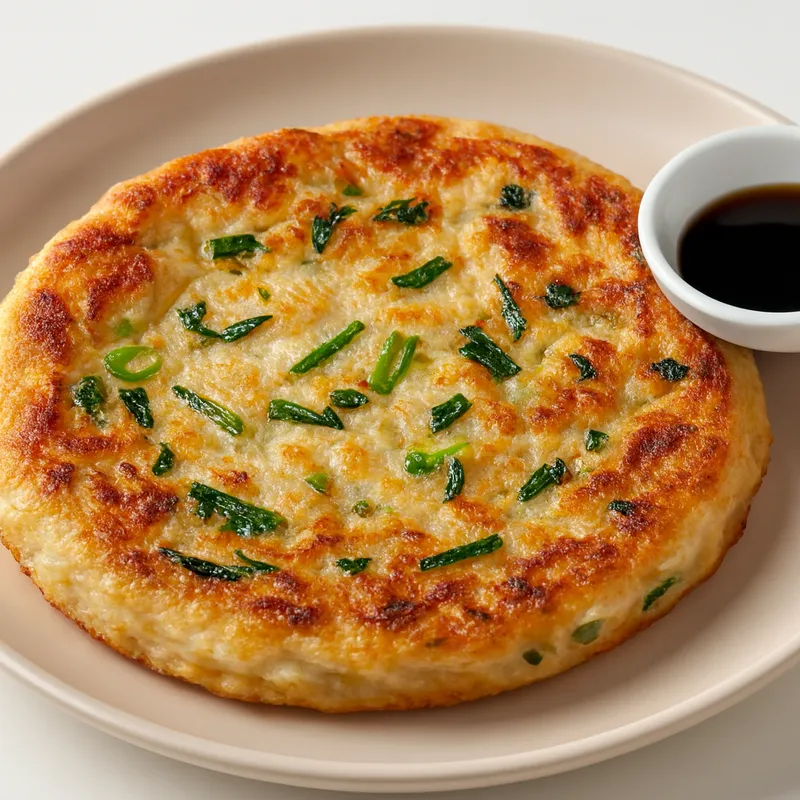
Fresh Bohai silverfish enveloped in 高丽糊—a stiffly beaten egg-white foam batter—then gently fried until the cloud-like crust turns pale gold. The interior stays snow-white and tender, releasing a fragrance likened to autumn cucumber. Served with three dipping sauces: flower-pepper salt, spiced soy, and savory white sauce.





Listed among the twelve official signature Tianjin dishes (津菜系牌菜式) recognized in 1955, Goryeo-battered Silverfish is among the oldest documented preparations in the Tianjin culinary canon. Bohai silverfish—translucent, near-boneless, and with no fishy odor—were historically prized as a Tianjin winter luxury, sourced from the Three-Fork Estuary (三岔河口) where the Hai River meets tidal Bohai waters. The 高丽糊 batter (beaten egg-white foam, akin to a meringue) was adapted into Tianjin's restaurant repertoire by the late Qing period, allowing the delicate small fish to be fried without their flesh breaking apart or losing their pristine white interior.
Bite through the airy, soufflé-like crust and the silverfish flesh dissolves almost immediately—cool, faintly sweet, cucumber-fresh, with a whisper of flower pepper from the dipping salt.
The 高丽糊 batter owes its airiness to ovalbumin and ovomucin networks: vigorous whipping unfolds these egg-white proteins and traps air bubbles within a stabilised foam. In the fryer, heat sets the protein mesh while the trapped air expands, yielding a crust that is simultaneously rigid and porous—neither greasy nor dense. Low-temperature frying (around 120–130°C) prevents rapid moisture loss from the fish, keeping the interior steam-tender even as the exterior crisps. The batter must be cooked immediately after preparation; delay causes the foam to weep liquid and collapse.
Variations
Some Tianjin kitchens substitute shrimp or carp strips for silverfish; other versions add a pinch of salt directly to the batter to season from the outside in. The three classic dipping sauces—flower-pepper salt, Worcestershire-style chilli soy, and savory white sauce—represent three distinct flavour registers for the same base preparation. A festival variant shapes the coated fish into small rolls before frying, producing a cylindrical presentation.
On the Palate
Where Goryeo-battered Silverfish sits in the Chinese flavor cloud
Ingredients
Serves 4
How it's made
7 steps · 20 min active + 5 min waiting
- 15 min
Pat dry 300g fresh silverfish with kitchen paper; season lightly with a pinch of salt and set aside for 5 minutes.
- 28 min
Separate 4 large egg whites into a clean, grease-free steel bowl; beat in one direction continuously until stiff peaks form—test by inserting chopsticks upright; they should stand unsupported.
Watch outBeat the egg whites in a grease-free bowl to stiff peaks that hold chopsticks upright — any fat and the foam won't stiffen, and the crust won't puff.
- 32 min
Sift in 20g cornstarch and 10g plain flour; fold gently to combine without deflating the foam.
Watch outFold the starch in gently without deflating the foam — knock the air out and the batter goes flat and dense instead of airy.
- 43 min
Heat vegetable oil in a wide wok to 120–130°C; test by dropping a tiny piece of batter—it should rise slowly and steadily to the surface.
- 55 min
Working in small batches, coat each fish in batter and lower gently into the oil; fry 2–3 minutes until the crust is pale golden and puffed.
Watch outFry low at 120–130°C so a test drop rises slowly — too hot and the puffed crust colors and toughens before the fish inside stays steam-tender.
- 61 min
Remove with a slotted spoon, drain briefly on paper towels, and arrange on a serving plate.
- 71 min
Serve immediately with separate small dishes of flower-pepper salt, chili soy sauce, and white savory dipping sauce.