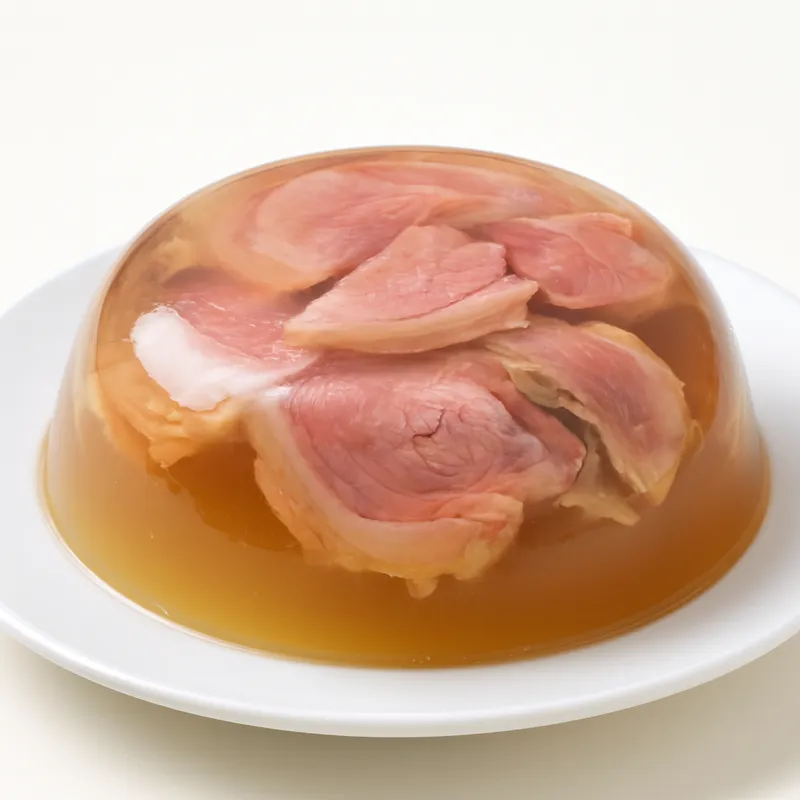
Golden deep-fried hairtail fish segments with a shatteringly crisp flour-and-egg coating and clean, sweet white flesh inside. One of China's most widely eaten fish dishes—distributed as worker welfare to every inland city in the 1950s, it carries a collective food memory that transcends regional divides.




Hairtail holds a place among China's 'four major sea products' (四大海产) alongside large yellow croaker, small yellow croaker, and cuttlefish. The Ming Dynasty scholar Xie Zhaozhe noted in his miscellany Wu Za Zu (五杂俎) that hairtail was 'the cheapest among all fish,' yet appreciated by common households when cooked in oil. Regional gazetteers from the Kangxi and Qianlong eras began praising its flavor. The fish remained a coastal specialty until the 1950s, when three forces pushed it inland simultaneously: its minimal internal organs made it ideal for freezing and transport; expanded industrial fishing sent catches soaring; and improved cold-chain logistics reached inland cities. Large quantities were distributed as worker welfare to industrial cities across the northeast, Beijing, and the interior—creating a shared food memory rooted not in coastal geography but in socialist-era collective life. Deep-frying became the dominant home method because it reliably masked any post-transport fishiness while producing a crust that reheated well the next day.
Gold crust shatters on contact—then bright, clean white flesh, faintly sweet, barely flaky, with almost no fishiness. A splash of vinegar on top lifts every element.
Hairtail's silver sheen comes from a layer of guanine crystals and lipid—not conventional scales. When frying, this lipid layer renders rapidly, basting the flesh from within and contributing to juiciness. The flour-and-egg batter undergoes Maillard browning at approximately 140–165°C, forming the shatteringly crisp crust, while the interior never exceeds 65–70°C, keeping delicate proteins just barely set. Hairtail accumulates higher inosine monophosphate (IMP, 肌苷酸) than most sea fish—the primary nucleotide-umami compound—explaining why the flesh tastes sweeter and more savory than its historically humble reputation would suggest. Double-frying (first at 170°C, second at 190°C) drives out residual moisture from the crust for maximum crispness.
Variations
Red-braised hairtail (红烧带鱼) is the equally popular coastal alternative, cooked in soy sauce, sugar, and vinegar to a glossy sauce. Shanghai versions add Shaoxing wine and sweeten more heavily. Northern households often marinate in soy sauce and five-spice before frying (椒盐带鱼). Nanjing eats it brined and sun-dried before frying (咸带鱼). Chaoshan simmers it in light broth with pickled mustard greens instead of frying.
On the Palate
Where Fried Hairtail Fish sits in the Chinese flavor cloud
Ingredients
Serves 4


How it's made
7 steps · 10 min
- 15 min
Cut hairtail into 6cm segments; score each piece 2–3 times diagonally with a knife to help coating adhere and prevent curling. Pat completely dry.
Watch outScore each piece and pat it bone-dry — surface water makes the batter slide off and spits dangerously in the hot oil.
- 220 min
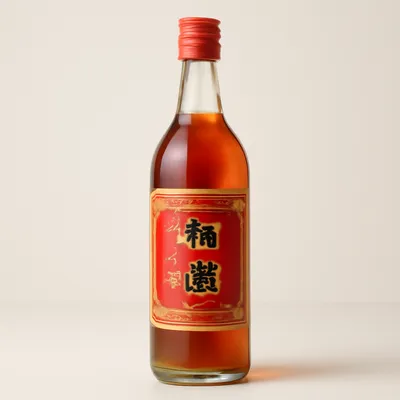
Marinate with salt, soy sauce, Shaoxing wine, sliced ginger, and white pepper for 20 minutes at room temperature.
- 35 min
Beat one egg; mix with flour and cornstarch to a medium-thick batter that coats the back of a spoon evenly.
- 43 min
Heat oil in a wok or deep pan to 170°C; dip each piece in batter, letting excess drip off, then lower carefully into the oil.
Watch outFry at 170°C until golden on all sides — too cool and the batter drinks oil and goes soggy instead of crisp.
- 58 min
Fry in batches without crowding for 4 minutes, turning once, until golden on all sides. Remove and drain.
- 62 min
Raise oil temperature to 190°C; return fish in batches for a 90-second second fry to expel residual moisture and maximize crispness.
Watch outRaise to 190°C for a quick second fry — that blast drives out the last moisture and sets the crust shatter-crisp.
- 72 min
Drain on paper towels; serve immediately with a small dish of rice vinegar and sliced fresh chili on the side.