A Kaifeng market classic of lamb large and small intestines stuffed with seasoned lamb blood, simmered for an hour in spiced broth until the blood sets into a firm burgundy cylinder inside the natural casing. Sliced into rounds — white shell, red interior — and ladled over with clear lamb bone broth, a spoon of sesame paste, scattered chili powder, and fresh coriander. A predawn street food with roots in the slaughterhouse economy of old Kaifeng.




Lamb intestine soup appears in Kaifeng local food writings as having been sold in the city's markets since the Ming dynasty, though Henan provincial gazetteer records suggest it took its current form during the late Qing period; the dish's precise age is debated across sources. The social origin recounted across multiple sources is consistent: a poor slaughterhouse apprentice received lamb offal as wages in lieu of money, cleaned the intestines through the night, stuffed them with blood, and began selling the cooked result from a shoulder pole before dawn, charging one or two copper coins per bowl. This predawn offal economy sat within a much older tradition: during the Northern Song dynasty, when Kaifeng served as the imperial capital, the imperial household alone consumed tens of thousands of sheep annually according to Song administrative records, and the city's markets handled a massive volume of lamb carcasses. The intestine soup represents the lower rungs of that economy — the whole-animal logic of a community that wasted nothing. The name 双肠 (double intestine) specifically refers to using both the large and small intestine together, which is the defining characteristic separating it from single-intestine variants sold elsewhere in Henan.
The intestine casing is silky and tender with a gentle chew; the blood interior is firm but yielding, its mild iron note smoothed and rounded by the sesame paste. The lamb broth underneath is thin but intensely savory. Chili powder and coriander cut the richness, brightening the iron edge, and the flatbread that comes alongside soaks up the last of the broth.
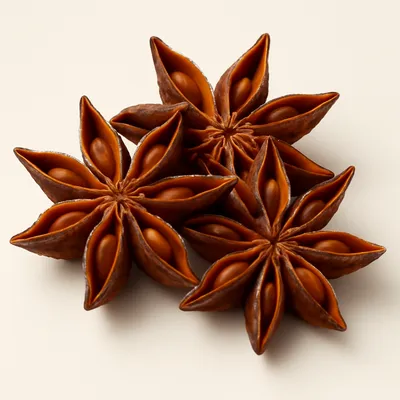
The critical transformation is blood coagulation inside the natural casing. Lamb blood — a suspension of red blood cells and plasma proteins including fibrinogen and albumin — gels when heated to 70–80°C: fibrinogen undergoes irreversible thermal denaturation and converts to insoluble fibrin, forming a tight, cohesive matrix that holds the cylindrical shape of the intestine. Adding a small amount of cornstarch before filling stabilizes the gel further and prevents the blood curd from crumbling when sliced. The intestine wall itself is dense with collagen; during the hour-long gentle simmer it partially solubilizes into gelatin, which passes into the broth and transforms the casing from tough to silky. Sichuan pepper's terpene compounds, star anise's anethole, and ginger's gingerols combine to suppress skatole (3-甲基吲哚) and related indole compounds — the primary source of intestinal off-odor — allowing the clean lamb and blood flavors to come forward.
Variations
Modern vendors have expanded the bowl to include lamb kidneys, external kidneys (外腰), and lamb placenta (羊胎盘), all simmered together. A chili-oil version adds a pool of red oil for heat. Some shops serve it over rice noodles (粉条) for a more filling meal. Lamb霜肠 (a variant with blood stuffed into only the small intestine) is a related dish sometimes sold alongside.
On the Palate
Where Kaifeng Lamb Intestine Soup sits in the Chinese flavor cloud
Ingredients
Serves 2
How it's made
8 steps · 30 min
- 130 min
Clean the intestines meticulously: turn the large intestine inside-out and scrub under cold running water; cut the small intestine open, scrape the inner lining, and rinse repeatedly. Soak both in lightly salted water for 30 minutes to remove residual odor.
- 25 min
Drain and rinse the intestines; tie one end of each length securely with kitchen twine.
- 35 min
Mix fresh lamb blood with a pinch of salt and one teaspoon of cornstarch; stir gently without beating to preserve the blood's structure.
- 410 min
Use a funnel to pour the seasoned blood into the intestine, filling only to 70% capacity to allow for expansion when heated. Tie off the open end tightly.
Watch outFill the casing only 70 percent full — the blood expands as it sets, and a packed intestine bursts in the pot.
- 55 min
Place the stuffed intestines in a large pot; cover with cold water and add ginger slices, scallion stalks, Sichuan peppercorns, and star anise. Bring slowly to just below a boil.
- 660 min
Reduce heat to a very gentle simmer and cook for 50–60 minutes until the blood inside is fully set throughout; maintain just a trembling simmer — vigorous boiling will burst the casing.
Watch outHold a bare trembling simmer, never a boil — the blood must set at 70 to 80 degrees, and vigorous bubbling splits the casing.
- 75 min
Remove the intestines and let cool for 5 minutes; slice into rounds about 1 cm thick and arrange in serving bowls.
- 85 min
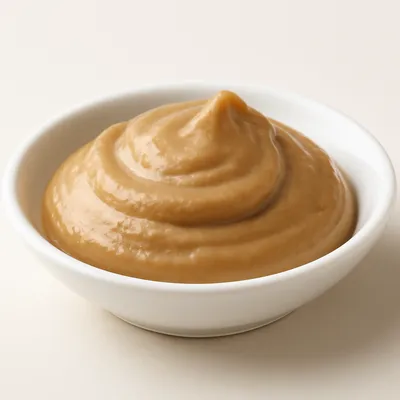
Heat the lamb bone broth; season with salt and ladle generously over the intestine rounds. Top with sesame paste, chili powder, and fresh coriander. Serve immediately with sesame flatbread.
Archive tool suggestions — not reviewed
These legacy suggestions have not been evidence-reviewed and are not presented as required tools.



