The defining fried fish of Ningbo: small yellow croaker jacketed in a green-flecked sea-moss batter that puffs and crisps in the fryer, bone-in, leaving the fish to steam inside its own crackling shell. More maritime than any plain fried fish — the dried coastal seaweed threads bring iodine, mineral depth, and a jade-tinged crunch to every mouthful.




The prototype, plain flour-battered yellow croaker, has been a Ningbo street staple since at least the late Qing. The seaweed upgrade emerged in the early Republican period: competing restaurants around Ningbo's old commercial quarter began folding dried coastal sea-moss — a strand of green alga native to the rocky shores of the Zhoushan archipelago, harvested in winter and spring — into the batter to distinguish their version. By 1960 the dish had risen to national prominence: the Second Ministry of Commerce compiled it into the authoritative 'Chinese Famous Dishes Compendium' (Zhongguo Mingcaipu), the first official national culinary canon, which described it as 'jade-green in colour tinged with gold, aromatic, crispy outside and tender within' — a verdict still apt today.
Bite through the crisp seaweed crust and meet flaky, juicy fish perfumed with iodine and brine. The batter is light, not doughy — airy pockets formed by the leavening keep it from feeling heavy — and the sea-moss threads crackle between the teeth.
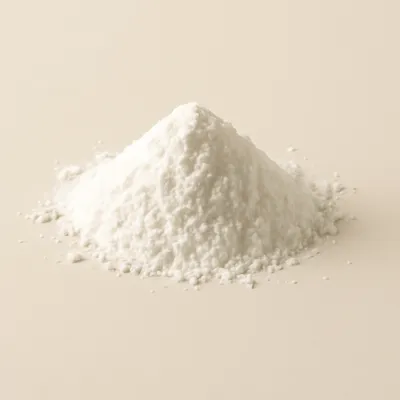
The batter design is the heart of the dish. Baking powder releases carbon dioxide bubbles on contact with water, which expand under heat into a lattice of air pockets that wick oil away during frying, keeping the shell light. Dried seaweed is first briefly toasted or microwaved to drive off moisture and concentrate its chlorophyll and amino-acid content — including glutamate and taurine — before being crumbled into the batter. When the coated fish hits oil at 170–180°C, the surface proteins coagulate instantly into a rigid shell that traps steam from the fish inside; the flesh effectively steams within its crust rather than deep-frying directly, preserving tenderness. The seaweed's vivid green comes from chlorophyll fixed rapidly by the hot oil before oxidation can occur.
Variations
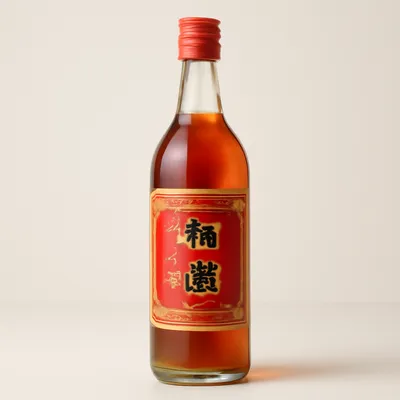
Small yellow croaker is traditional; larger yellow croaker can be filleted and cut into batons when small fish are unavailable. Some cooks add a teaspoon of rice wine to the batter for extra aroma. A handful of Ningbo kitchens incorporate finely chopped fresh spring onion into the batter alongside the seaweed for added fragrance.
On the Palate
Where Seaweed-Battered Yellow Croaker sits in the Chinese flavor cloud
Ingredients
Serves 4How it's made
7 steps · 23 min active + 5 min waiting
- 17 min
Remove heads from small yellow croaker; split each fish along the backbone; remove intestines; leave bone and skin on; marinate with salt and rice wine for 5 minutes.
- 22 min
Briefly microwave or dry-toast dried seaweed for 20 seconds until crisp; crumble into rough fragments.
- 35 min
Combine flour and baking powder; whisk in 30°C warm water, egg, and a pinch of salt to form a smooth, lightly thick batter; fold in crumbled seaweed gently.
Watch outWhisk the batter with baking powder until lightly thick, then fold in seaweed gently — overmixing knocks out the CO2 bubbles that keep the shell light.
- 42 min
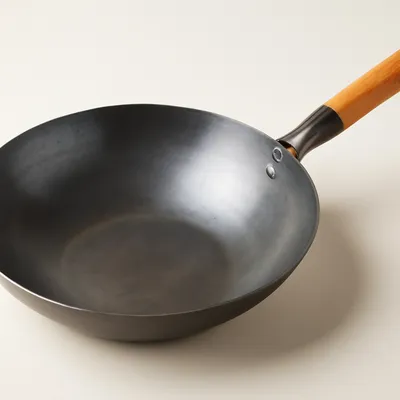
Heat oil in a wok to about 170°C (60–70% heat).
- 52 min
Grip each fish by the tail; drag through the batter to coat fully — this is the first drag (guà hú).
- 68 min
Lower the coated fish tail-first along the wok wall into the oil — the second drag (rù guō); fry in batches 2–3 minutes until the crust is set and golden-green; lift out with a spider strainer — the third drag (chū guō).
Watch outLower the fish tail-first down the wok wall into 170°C oil — too cool and the shell soaks up oil instead of setting rigid; the crust should turn golden-green.
- 72 min
Drain briefly; plate immediately while the crust is still crackling-hot.