
Strong Ceylon-blend black tea pulled through a cotton sock and sweetened with evaporated milk — the cha chaan teng house drink.
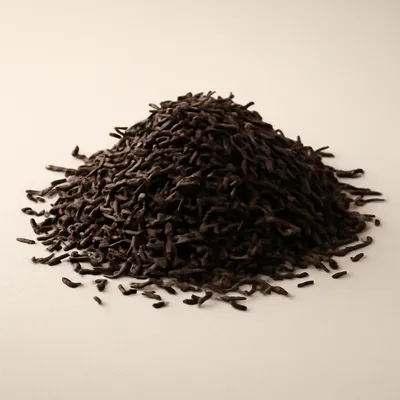


Born in 1950s Hong Kong cha chaan teng (tea-restaurant) culture as a working-class adaptation of the British colonial milk-tea habit. Local cooks swapped fresh milk for evaporated milk because it kept without refrigeration and gave a heavier mouthfeel suited to Cantonese palates. The cotton-sock filter — nicknamed 丝袜 («silk stocking») after long use stained it tan — was added to filter tea fines and oxygenate the brew. UNESCO inscribed Hong Kong-style milk tea preparation as intangible cultural heritage in 2014.
1950s cha chaan teng adaptation of British colonial milk tea — evaporated milk replaced fresh because it kept without refrigeration. UNESCO listed the preparation as intangible heritage in 2014. Fresh milk at 3.5% protein can't fake the body of evaporated at 7%.
First sip is hot and round — the evaporated milk gives it a weight that fresh milk can't fake. The tea reads bitter-edged but not sharp; you can drink it without sugar and it still feels finished. Color is brick red with a pale-tan crema. If your cup tastes thin or watery, the cook skipped the focus step (the 3-minute covered rest after pulling).
Evaporated milk is non-substitutable. Its higher milk-protein density (around 7%) coats the tongue with a body fresh milk (3.5%) can't match, and its caramelized lactose adds a faint cooked-cream sweetness that balances the tea's bitterness. The pull-through-sock isn't theater either — the sock's fine fibers strip dust-grade tea fines while the falling stream aerates the brew, oxidizing astringent tannins into rounder polymers. Skip either step and the drink reads thin and harsh.
Variations
Lan Fong Yuen (Central, claims to have invented the silk-stocking pull); Cha Chaan Teng standard; yuanyang (half coffee, half milk tea); Macau-style tilts sweeter and uses more evaporated milk.
On the Palate
Where Hong Kong Milk Tea sits in the Chinese flavor cloud
Evaporated milk is non-substitutable — its heavier protein and cooked-lactose sweetness give the body fresh milk can't, and pulling the tea through the sock from height aerates it to round off the tannins; skip either and the drink reads thin and harsh.
Ingredients
Serves 2How it's made
5 steps · 5 min
- 12 min
Blend the tea base: 25g coarse Ceylon broken-orange-pekoe, 8g finer Ceylon dust, 4g pu'er for body. Place in a clean cotton tea sock.
- 24 min
Bring 600ml water to a hard boil. Lower the sock into a stainless pot and pour the boiling water over. Simmer 4 minutes — small bubbles, never a rolling boil, or the tea turns harsh.
Watch outHold it at small bubbles only, never a rolling boil, or the tea turns harsh.
- 35 min
Lift the sock and pour the tea back through it from height into a second pot. Repeat the pull 4–5 times — the stream draws air through the leaves and softens the tannins.
Watch outPour from real height so the stream stretches through the leaves and pulls in air.
- 43 min
Return the sock to the pot, cover, rest off heat 3 minutes — this is the «焗» step that builds the heavy mouthfeel.
Watch outCover and rest off heat so the brew steeps heavy; this is the 焗 that builds the body.
- 51 min
Pour 40ml evaporated milk into each warm cup. Strain hot tea over to fill — about 180ml per cup. Sugar at the table; classic order is 茶走 (no sugar, condensed milk swap) or two spoons.
Watch outPour the hot tea over the evaporated milk in the cup, not the other way, so it blends smooth and warm.


