Golden-fried eggplant pockets packed with seasoned pork — the Dongbei New Year's Eve standard, its battered shell shattering to reveal silken eggplant flesh and a burst of savoury pork juice.
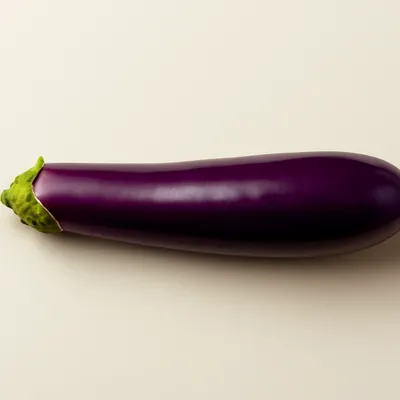





Fried eggplant pockets arrived in Dongbei with Shandong migrants moving northeast during the mass migration known as 'chuang guandong' (闯关东), which accelerated from the mid-nineteenth century onward. Shandong culinary tradition already knew the technique of sandwiching a meat filling between vegetable slices and deep-frying them — most directly in 炸藕合, lotus root fritters stuffed with pork, a recognised Shandong banquet preparation. When Shandong cooks settled in the northeast, they found long purple eggplant growing abundantly on Dongbei's summer plots and adapted the technique to produce 炸茄盒. The dish proved well-suited to northeastern tastes: eggplant's sponge structure holds its shape through the fry and absorbs flavour more readily than lotus root. By the twentieth century it had taken firm root as a New Year's Eve staple and banquet side dish across Heilongjiang, Jilin, and Liaoning, valued equally for its golden, auspicious appearance and its multigenerational staying power on the family table.
The battered crust shatters at the first bite with a dry, papery crackle; inside, the eggplant has gone silken and mild while the pork filling retains its juice — the two unite in a single mouthful of oil-muted richness, best cut with a dip of sharp vinegar and soy.
Dongbei cooks prefer long purple eggplant over round varieties: the long type has a denser sponge structure with smaller air pockets, absorbing roughly half the oil of round eggplant during frying while holding firm enough to keep the stuffed sandwich intact. The batter — flour, cornstarch, and egg — combines two complementary mechanisms: egg white protein sets into a rigid network at around 70°C, while cornstarch gelatinises at 62–72°C before dehydrating in hot oil to form a glassy, rigid shell. Double-frying is the professional technique: the first fry at around 160°C cooks the eggplant flesh and pork filling through without excessive browning; after a short rest, the second fry at 180–190°C applies a rapid burst of Maillard reaction energy to the already-set batter surface, producing the characteristic deep golden colour and paper-thin crisp shell without any risk of overcooking the filling.
Variations
A winter variant substitutes potato slices for eggplant, producing a starchier, crunchier result known as 炸土豆盒; some cooks add a small amount of soft tofu to the pork filling to lighten the texture; Liaoning versions often serve the fritters with a garlic-soy dipping sauce rather than plain vinegar; mushroom-only fillings are prepared for vegetarian occasions.
On the Palate
Where Fried Stuffed Eggplant Pockets sits in the Chinese flavor cloud
Ingredients
Serves 4


How it's made
7 steps · 30 min
- 110 min
Mince pork with scallion and ginger; season with light soy sauce, salt, five-spice powder, and a drop of sesame oil; stir vigorously in one direction until the mixture becomes sticky and cohesive.
- 25 min
Cut long eggplant into 1.5cm thick rounds; make a horizontal cut through the middle of each round from one side, stopping 5mm short of the far edge, to form a hinged pocket.
- 35 min
Stuff each eggplant pocket firmly with pork filling; press the edges together to close and prevent the filling from escaping during frying.
Watch outPress the cut edges shut around the meat so no filling peeks out — a gap lets oil rush in and the pocket bursts while frying.
- 45 min
Whisk together flour, cornstarch, eggs, a pinch of salt, and enough cold water to form a smooth batter that thickly coats the back of a spoon; rest for 5 minutes.
- 57 min
Heat oil to 160°C in a deep pot; dip each stuffed pocket in batter to coat evenly; fry in batches for 3–4 minutes until cooked through and pale golden; drain on a rack.
Watch outFirst fry at moderate heat only to pale gold — you're cooking the meat and eggplant through, not browning the crust yet.
- 63 min
Raise the oil temperature to 185°C; return the fritters in batches and fry a second time for 60–90 seconds until deeply golden and crisply blistered.
Watch outSecond fry hot and fast until the shell blisters deep gold and sounds crisp — a few seconds too long and it darkens and turns bitter.
- 72 min
Drain briefly on a rack; transfer to a serving plate and serve immediately with a dipping sauce of light soy sauce, white vinegar, and minced garlic.


