
A classic banquet sweet of Jilin (吉菜) in China's Northeast. Balls of sweet red-bean paste are enrobed in a thick foam of whipped egg white — stiffened with a little dry starch and sometimes flour — then gently fried in warm rather than hot oil so the coating puffs into a soft, cloud-light shell that stays snow-white instead of browning. The puffs are lifted out, dusted with sugar, and served immediately, while the airy coat is still standing; left to sit, it slowly settles and deflates. Often listed under the name 雪绵豆沙, with the Zhejiang dish 蛋清羊尾 as a southern cousin. It was named one of Jilin's ten classic dishes in the 2018 'Chinese Cuisine' regional roster.





Snow-Coat Bean Paste is a documented classic of Jilin cuisine (吉菜), associated above all with Changchun, where it is described as a banquet sweet with about a century of local history; in 2018 the China Cuisine Association listed it among Jilin's ten classic dishes in its 'Chinese Cuisine' regional roster. By tradition the dish is said to have begun as a Qing-court confection — one folk account holds that an imperial cook devised a soft, white-coated sweet for the aging Qianlong Emperor, and that a Jilin-born palace cook later carried the method back to the Jilin-Ula region late in the dynasty — but this court lineage is poorly documented and is best treated as folk tradition; what is well attested is the dish's identity as a Northeastern banquet sweet. It is very widely known under the alternate name 雪绵豆沙 (the two names denote the same dish), while the Zhejiang sweet 蛋清羊尾 of Linhai is a southern relative built on the same whipped-egg-white technique. The 'snow coat' (雪衣) of the name refers to the snow-white whipped egg-white foam that encases the bean-paste core.
The puff comes off the plate light as a marshmallow, the sugared white shell yielding with almost no resistance, then dissolving into a warm, faintly eggy foam that gives way to the hot, smooth, sweet red-bean core at the center. There is no crunch and no grease — the coat should be tender and dry to the bite, snow-white through and through, and the bean paste just-melting hot. Eaten the moment it lands, it is all cloud and warm sweetness; let it stand and the airy shell sinks and skins over. Done badly it is browned and eggy-bitter from oil that ran too hot, or heavy and oil-soaked, or it has collapsed into a flat slick, or — most common — the coat looks set but the inside is still raw and floury where the starch never cooked.
The dish lives or dies by the egg-white foam. Egg white is roughly nine-tenths water and one-tenth protein; whisking drags air into it and stretches the dissolved proteins — the foaming globulins and the ribbon-like ovomucin chief among them — across the new air-water surfaces, where they unfold (denature) and link arm-in-arm into a thin protein film that walls each bubble in. Whisked far enough, the foam stands stiff enough to hold a chopstick upright. Cleanliness is critical: a trace of fat or even a little egg yolk (around 0.3% is enough) coats the proteins and stops them filming, so the whites will not whip. A spoon of dry starch (and sometimes a little flour) plus sugar thickens the liquid between bubbles and stabilizes the foam against draining and collapse while it waits to be fried. The decisive step is frying in warm, not hot, oil — about 三四成热, roughly 110 to 130°C. At that low heat the trapped air and water vapor expand and puff the coat while the egg and starch proteins coagulate and set the shell from the outside in, and the interior cooks through; crucially the temperature stays well below where the Maillard browning of proteins and sugars runs, so the coat sets snow-white. Too hot and the surface browns and toughens before the inside is done, the foam tears and collapses, and the shell drinks oil; this low-temperature 'soft fry' is what keeps it white, dry, and cloud-light.
Variations
The same dish is very widely sold as 雪绵豆沙; the fillings vary, with red-bean paste the standard but jujube paste (枣泥), hawthorn (山楂), or pieces of fruit also used. It belongs to a whole family of whipped-egg-white fried sweets: the egg-white batter itself is known in the trade as 高丽糊, and 高丽豆沙 (also called 高丽夹沙) is the Shandong-and-Beijing version of the bean-paste sweet built on it. The closest savory-turned-sweet sibling is 炸羊尾 / 蛋清羊尾, originally a Beijing Hui (Muslim) banquet item shaped to resemble a lamb's tail and likewise a bean-paste ball in a whipped-egg-white coat — in Zhejiang's Linhai the same sweet is a noted local snack, 蛋清羊尾. Some cooks fold in a little flour as well as starch for a sturdier coat; some serve it plain-white dusted with sugar, others drizzle a sweet osmanthus or hawthorn syrup.
On the Palate
Where Snow-Coat Bean Paste sits in the Chinese flavor cloud
Ingredients
Serves 4How it's made
8 steps · 20 min active + 5 min waiting
- 15 min
Roll smooth red-bean paste into small balls about 2-3 cm across, dust them lightly all over with dry starch, and set aside; the starch coat gives the wet foam something to grip.
- 21 min
Separate egg whites into a spotlessly clean, grease-free bowl, taking care that no yolk gets in, or the whites will not whip.
Watch outThe bowl and whisk must be spotlessly grease-free with not a speck of yolk — even a trace of fat stops the whites from foaming at all.
- 36 min
Whisk the whites steadily in one direction, beating in plenty of air, until the foam is stiff and white enough to hold an upright chopstick.
Watch outWhisk until the foam stands stiff enough to hold an upright chopstick — under-beaten foam won't puff or stay snow-white in the oil.
- 42 min
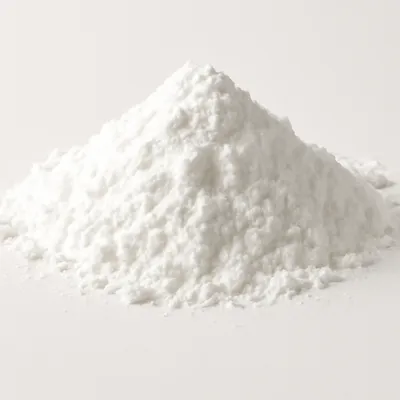
Sift in a spoonful of dry starch (and a little flour, if using) and a little sugar and fold through gently to stabilize the foam into a thick batter.
- 52 min
Heat oil to only about 110 to 130°C (三四成热) — warm, not hot; test with a drop of batter, which should float and slowly puff without browning or sizzling hard.
Watch outKeep the oil only warm, about 110-130C — a test drop of batter should float and slowly puff without browning; any hotter and the snow-white coat colors.
- 66 min
Coat each starched bean-paste ball thickly in the egg-white foam and lower it gently into the warm oil; fry over low heat, spooning oil over and turning, until the coat is puffed, set, and still snow-white.
- 71 min
Lift the puffs out and drain briefly on the spoon or a rack, keeping the oil low throughout so they never color.
- 81 min
Arrange on a plate, dust generously with sugar, and serve at once while the coat is light and standing.


