
A staple noodle dish of Guilin in Guangxi and one of the province's three great rice-noodle traditions, alongside Liuzhou's snail-broth luosifen and Nanning's old-friend laoyoufen. Round rice noodles (圆米粉) pressed from fermented indica rice are blanched and tossed dry with a dark, deeply spiced master broth (卤水) built on beef and pork bone simmered with dozens of spices. The bowl is topped with thin slices of braised meat (卤菜), crisp deep-fried pork called 锅烧, crunchy fried soybeans or peanuts, pickled sour beans and sour bamboo, and scallion. It is eaten 'dry' first, the noodles coated in just the fragrant master broth, after which diners ladle in plain rice-noodle soup (原汤) to drink. It is the classic Guilin breakfast.



Rice noodles are old in Guilin, though their precise origin is unrecorded and most early lore is folk legend. A popular tale ties them to the Qin conquest of the south and the digging of the Lingqu Canal, claiming soldiers unused to southern rice had it ground into noodle form — this is told only as legend (相传) and is not documented. Its exact origin is undetermined; the better-supported textual trail is later: a 'rice-noodle shop village' (米粉店村) is recorded on the Hunan-Guangxi trade road in the Yuan Zhizheng era (mid-14th century), and the Qing-era 《桂林府志》 lists rice noodles among local products in the Kangxi reign. The 'Guilin Rice Noodles' brand took shape from the late Qing through the Republican period and spread widely during the War of Resistance, when refugees and intellectuals passed through the city. On 24 May 2021 the craft of making them — 米粉制作技艺(桂林米粉制作技艺)— was inscribed on China's fifth national list of intangible cultural heritage by the State Council.
The round noodles are slippery and springy, with a clean snap rather than a soft chew, each strand distinct and lightly chewy. Tossed dry first, they carry a dark, savory coat of master broth that tastes of beef bone, soy, and a long roll of warm spice — star anise, cassia, galangal, with a faint sweet-herbal lift from luo han guo. Against that come the salty-fatty slices of braised meat and, above all, the 锅烧: crisp deep-fried pork whose shattering skin contrasts the silky noodles. Fried soybeans and peanuts add a hard crunch, sour beans and sour bamboo cut the richness, and scallion lifts it. Done well the noodles are slick but not sticky, the 锅烧 still crackles, and the master broth is fragrant without being merely salty; done badly the noodles clump and break, the 锅烧 has gone leathery and chewy, and the broth tastes flatly of salt and old spice.
Two things define the dish: the noodle and the master broth. Guilin noodles are pressed from indica (long-grain) rice, which is high in amylose; the rice is soaked, ground to a slurry, and briefly fermented before the dough is steamed, kneaded, and extruded. Fermentation and the high-amylose starch let the strands retrograde into a firm, springy gel that holds a clean bite and does not turn pasty, while a short blanch only reheats them so they stay slick rather than overcooking into mush. The 卤水 is a long-simmered stock of beef and pork bone drawn out with dozens of spices — star anise, cassia, galangal, cao guo, cloves, luo han guo and more, often with fermented black beans (豆豉) — held over many hours so fat-soluble aroma compounds and gelatin from the bones dissolve into a glossy, clinging liquid. Because the dish is eaten dry first, that concentrated broth coats each strand directly instead of being diluted; the plain rice-noodle soup is drunk afterward to round out the meal. The 锅烧 is pork skin-on belly deep-fried so the skin blisters crisp, its shatter set against the soft noodles, and the acid of the pickled beans and bamboo balances the fat and salt.
Variations
The two best-known Guilin types are 卤菜粉 (the everyday dry-tossed bowl with master broth and braised meat described here) and 牛腩粉 (with braised beef brisket and its gravy). 马肉米粉 (horse-meat rice noodles), a famous specialty of the Guilin region traditionally served in many tiny bowls, is recognized as its own intangible-heritage craft. 生菜粉 adds blanched leafy greens; soup-forward bowls are eaten with the broth from the start rather than dry. Within Guangxi's three great rice noodles, the contrast is clear: Guilin's is defined by its dark spiced master broth and crisp 锅烧, Liuzhou's 螺蛳粉 by sour-bamboo and snail broth, and Nanning's 老友粉 by a sour-hot fermented-bean and pickled-vegetable base. The round 米粉 and flat 切粉 are the two cuts of the same noodle.
On the Palate
Where Guilin Rice Noodles sits in the Chinese flavor cloud
Ingredients
Serves 4


How it's made
8 steps · 50 min
- 1240 min
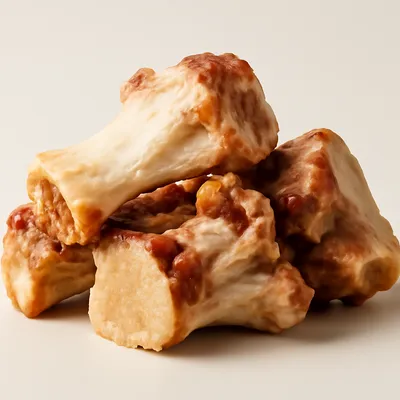
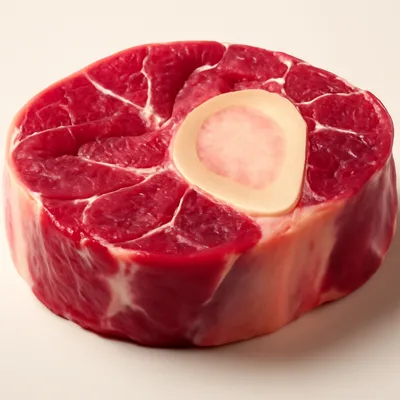
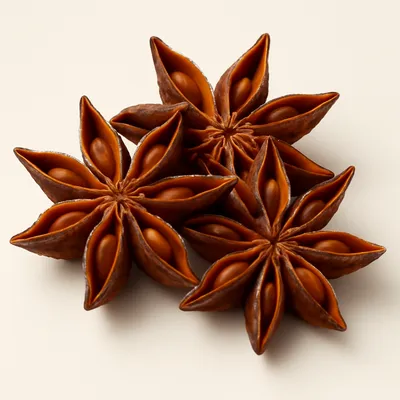
Make the master broth: lightly toast or fry whole spices — star anise, cassia bark, galangal, cao guo, cloves, white pepper and luo han guo — until fragrant, then simmer them with beef and pork leg bones in plenty of water over low heat for several hours.
- 2180 min
Add a piece of beef shank to the broth, braise until tender and lift it out to cool and slice; stir in fermented black beans near the end and let the spiced master broth (卤水) infuse, ideally overnight.
- 320 min
Prepare 锅烧: deep-fry a piece of skin-on pork belly until the skin blisters and turns crisp and golden, then drain and slice thin.
Watch outDeep-fry the belly until the skin blisters crisp and golden — that crackling 锅烧 is the textural counterpoint to the soft noodles.
- 470 min
Soak dried round rice noodles in just-boiled water until pliable, then bring to a brief simmer until they can just be parted with chopsticks; rinse under cold water and drain.
Watch outSoak the dried noodles just until they can be parted with chopsticks, then cold-rinse — overcooked here and they'll go to mush in the hot bowl.
- 51 min
Blanch a portion of noodles in boiling water for a few seconds only to reheat, then lift into a bowl and shake off excess water.
- 61 min
Spoon over two to three tablespoons of the master broth and toss the noodles until each strand is coated and glossy.
Watch outToss the noodles in the master broth until every strand is glossy and coated — that dry-tossed coat is the heart of the bowl before any soup goes in.
- 72 min
Top with sliced braised meat, the crisp 锅烧, fried soybeans or peanuts, pickled sour beans and sour bamboo, and chopped scallion.
- 83 min
Eat dry first; then ladle in plain rice-noodle soup (原汤) to finish the bowl as a drink.
Archive tool suggestions — not reviewed
These legacy suggestions have not been evidence-reviewed and are not presented as required tools.


